


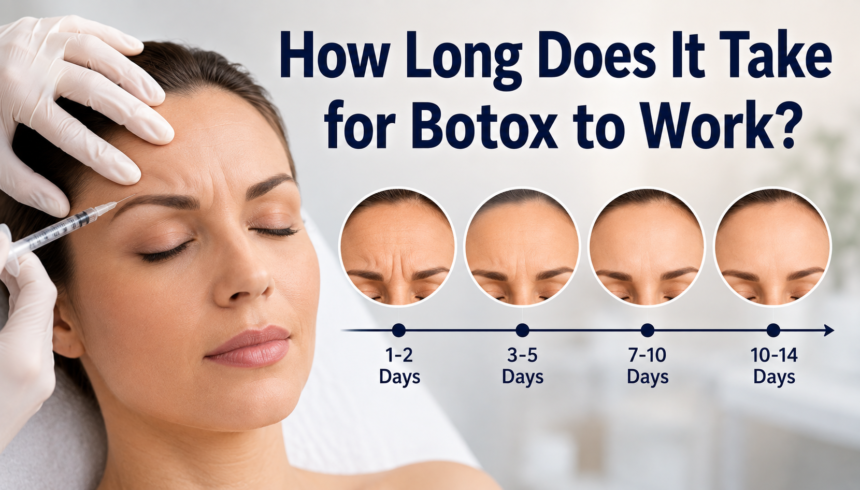
Botox generally begins working within 3 to 5 days after the injection, though some people notice small changes as early as 24 to 48 hours.
The full effect usually takes shape over 10 to 14 days, once the toxin has completely settled into the targeted muscles.
The exact timing depends on several personal factors, including metabolism, dosage, and the specific area being treated.
Because every face reacts a little differently, patience during the first two weeks is the key to judging the true outcome of the treatment.
What Is Botox and How Does It Work?
Botox is a purified form of botulinum toxin that temporarily relaxes targeted facial muscles to reduce the appearance of wrinkles. It works by blocking nerve signals so the muscle cannot contract as forcefully, which smooths the skin above it over time.
The Science Behind Botox
Botulinum toxin interrupts communication between nerve endings and muscle fibers. Once injected, it binds to nerve receptors and prevents the release of a chemical messenger called acetylcholine. Without this signal, the muscle stays relaxed, and the skin covering it gradually appears smoother as repeated contractions stop happening.
Botox vs Fillers: A Quick Clarification
Botox and dermal fillers are often confused, but they serve different purposes entirely. Botox relaxes muscles to soften expression lines like frown lines or crow’s feet, while fillers add volume to areas that have lost fullness, such as cheeks or lips. Understanding this difference helps set the right expectations before treatment.
Botox Timeline: Day-by-Day Breakdown
Most people can expect a gradual, predictable pattern of change rather than an overnight transformation. Below is a general timeline that reflects how the majority of patients experience the process.
| Timeframe | What Typically Happens |
| Day 1–2 | Injection site may look slightly red or swollen; no visible muscle change yet |
| Day 3–5 | First subtle signs of muscle relaxation begin to appear |
| Day 7 | Noticeable smoothing is visible for most patients |
| Day 10–14 | Full results are typically visible |
| Week 2 onward | Peak effect period, results remain stable |
Days 1 to 2: The Settling Phase
During the first two days, the toxin is still spreading through the muscle tissue and has not yet taken full effect. It is common to see minor redness, small bumps, or slight swelling at the injection points, but this is simply part of the natural healing response and not a sign of failure.
Days 3 to 7: Early Visible Changes
This is usually when patients start noticing that certain expressions feel or look different. Forehead lines may soften slightly, and the treated muscles begin to relax noticeably. Many people describe this stage as the moment they first feel Botox “kicking in.”
Days 10 to 14: Full Results Emerge
By the two-week mark, the treatment has generally reached its complete effect. This is considered the ideal time to evaluate the results and, if needed, schedule a follow-up appointment for touch-ups in areas that responded more slowly.
Factors That Affect How Fast Botox Works?
Not everyone responds to Botox at the same speed, and several personal and clinical variables influence how quickly the results appear.
Age and Skin Condition
Younger skin with better elasticity tends to show smoother results sooner, since the muscles respond more predictably. Mature skin with deeper, more established lines may take slightly longer to reveal visible smoothing, even after the toxin has fully taken effect.
Metabolism Rate
People with a faster metabolism often process the toxin more quickly, which can shorten the time it takes to notice initial changes. Conversely, a slower metabolic rate may extend the onset period by a few extra days.
Muscle Strength and Activity
Stronger, more active facial muscles, especially in people who exercise frequently or have naturally expressive faces, may need a little more time to fully relax. Weaker or less active muscles typically show results faster since they require less toxin to relax completely.
Dosage and Injection Technique
The amount of Botox used and the precision of the injection play a major role in both speed and quality of results. A skilled provider who places the correct dosage in the right muscle layer usually produces faster, more even outcomes than inconsistent technique.
Treatment Area
Different facial zones respond at different speeds. Forehead lines and frown lines between the eyebrows often show change within 3 to 5 days, while crow’s feet near the eyes and jawline treatments may take closer to the full two-week window.
First-Time vs Repeat Treatment
First-time users sometimes experience a slightly slower onset since their muscles have not previously been trained to relax. Repeat patients, whose muscles have adapted over multiple sessions, often notice results a little faster in future treatments.
How Long Do Botox Results Last?
On average, Botox results last between three and four months before the muscle gradually regains its normal movement. Some patients maintain results slightly longer, especially with repeated treatments over time.
Average Duration Explained
The three-to-four-month window is considered standard because the body slowly rebuilds new nerve endings, which restores muscle activity. As this happens, expression lines gradually begin to reappear, signaling that another session may be worthwhile.
When to Schedule a Follow-Up
Most providers recommend booking a follow-up appointment around the three-month mark, just before the effects fully wear off. Staying consistent with this schedule often helps maintain smoother, longer-lasting results over successive treatments.
Signs Botox Is Working
Recognizing the early signs of success helps patients feel confident during the waiting period instead of assuming the treatment has failed.
Reduced Muscle Movement
One of the clearest indicators is a noticeable decrease in the ability to fully contract the treated muscle, such as difficulty raising the eyebrows as high as before.
Smoother Skin Appearance
As the muscle relaxes, the skin above it naturally begins to flatten out, making fine lines and creases appear softer and less defined.
Fewer Visible Lines During Expressions
A strong sign of effectiveness is when wrinkles that used to appear during smiling, frowning, or squinting become noticeably less pronounced or disappear altogether.
What If Botox Isn’t Working?
Occasionally, patients feel concerned when results seem delayed or minimal, but this doesn’t always mean the treatment has failed.
Common Reasons for Delayed Results
Delayed onset can result from a lower dosage, a fast metabolism, or simply needing more time for the toxin to fully settle. In rare cases, resistance to the toxin can also play a role, though this is uncommon.
When to Contact Your Provider
If there is no visible change at all after the two-week mark, it is reasonable to reach out to the provider for an evaluation. They can determine whether a touch-up is needed or whether more time is required.
“Not Working” vs “Still Settling”
It’s important to distinguish between a lack of results and results that simply haven’t finished developing. Many patients mistake the settling phase for failure, when in reality the treatment is still progressing normally within the expected window.
Tips to Maximize and Speed Up Botox Results
While the biological process cannot be rushed dramatically, certain habits can support a smoother, more predictable outcome.
- Avoid touching, rubbing, or massaging the treated area for at least 24 hours
- Stay upright and avoid lying down for four to six hours after treatment
- Skip strenuous exercise or heavy workouts for the first 24 hours
- Follow all aftercare instructions provided by your practitioner
- Avoid alcohol on the day of treatment to reduce swelling risk
Facial Exercises: Myth or Fact
There is a common belief that repeatedly moving the treated muscles helps Botox work faster. In reality, this claim is not strongly supported, and excessive movement right after treatment may actually cause the toxin to spread beyond the intended area.
Common Myths About Botox Timing
Several misconceptions continue to circulate about how quickly Botox should work, often leading to unnecessary worry.
Myth: Results Are Instant
Many people expect to see changes immediately after leaving the clinic, but this is simply not how the treatment functions biologically, since the toxin needs several days to take effect.
Myth: More Units Mean Faster Results
Using a higher dosage does not necessarily speed up the process. It may lead to stronger or longer-lasting results, but the onset timeline generally remains similar regardless of dosage.
Myth: You’ll Look Frozen Right Away
The “frozen” appearance some people fear is neither instant nor guaranteed. Skilled injectors calibrate dosage carefully so that results look natural, with expression softened rather than eliminated.
Frequently Asked Questions
How soon can I see results? Most people notice initial changes within 3 to 5 days, with full results visible by the two-week mark.
Can I speed up the Botox process? There is no proven method to significantly speed up the biological process, though following aftercare guidelines supports a smoother outcome.
Why does it take longer for some people? Metabolism, muscle strength, dosage, and treatment area all influence how quickly the effects become visible.
Is it normal to see partial results at day 3? Yes, partial changes at this stage are completely normal and often indicate the treatment is progressing as expected.
How often should I get Botox? Most patients repeat treatment every three to four months to maintain consistent results.
Conclusion
Understanding how long does it take for Botox to work helps set realistic expectations from the very first appointment. While initial signs often appear within a few days, full results generally take up to two weeks to fully develop.
Comparing this article with other guides on the topic shows that most sources agree on the same 3-to-14-day window, though this piece adds a clearer day-by-day breakdown and practical troubleshooting advice not always covered elsewhere. Patience, realistic timelines, and proper aftercare remain the most reliable path to satisfying results.
RELATED POST’S
Dental Bone Graft Specialist: Procedure, Recovery, & Risks Guide
Jeuveau vs Botox: Key Differences, Cost & Which Is Better
Best Footwear for Achilles Tendonitis: Podiatrist-Backed Picks for 2026
Hally Health: Complete Guide to Features, Wellness Programs, and Healthcare Services
Xeroform Gauze: Uses, Benefits, Application & Complete Guide


