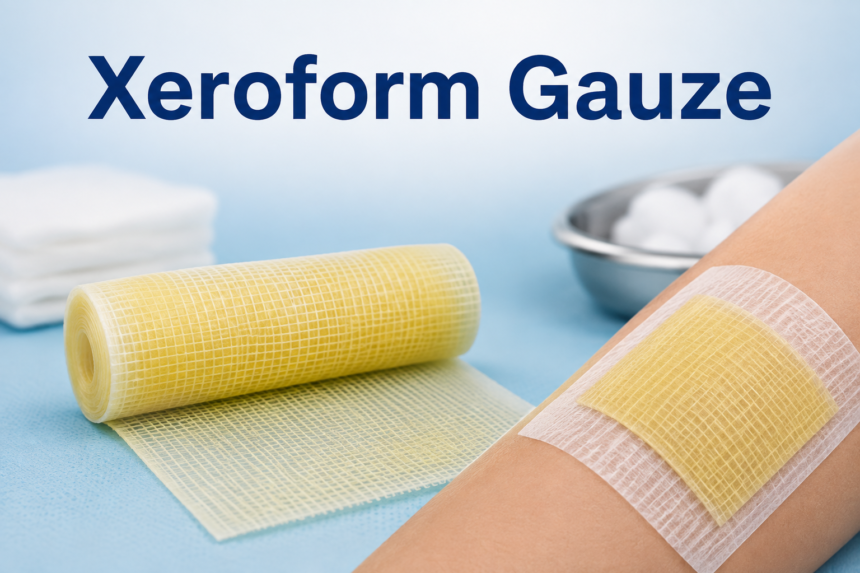
Xeroform gauze is a specially treated wound dressing that combines fine-mesh cotton gauze with petrolatum and a small amount of bismuth tribromophenate. This blend gives the dressing its familiar yellow tint and its ability to sit gently on a wound without sticking to it.
Doctors, nurses, and home caregivers rely on xeroform gauze for burns, surgical wounds, and skin graft sites because it protects healing tissue while allowing air and moisture to stay balanced.
Unlike plain gauze, it does not pull away scabbing or new tissue during removal, which makes dressing changes far less painful. The sections below explain every aspect of xeroform gauze in simple, easy-to-follow language.
Composition & Structure
Xeroform gauze is built from three main components working together. Understanding what goes into this dressing helps explain why it behaves so differently from ordinary gauze pads.
What Xeroform Gauze Is Made Of
At its core, xeroform gauze is a cotton mesh fabric soaked in a petrolatum blend. This base fabric gives the dressing enough strength to be handled easily while still remaining soft against injured skin. The mesh weave is intentionally fine and open.
Role of Petrolatum
Petrolatum, commonly known as petroleum jelly, coats every strand of the mesh. This coating stops the fabric from bonding with dried blood or new tissue. It also creates a light barrier that keeps the wound bed from drying out too quickly.
Role of Bismuth Tribromophenate
A small concentration of bismuth tribromophenate, usually around three percent, is added to the petrolatum mix. This ingredient gives xeroform gauze mild antiseptic properties and helps control odor from the wound. It is also responsible for the dressing’s pale yellow appearance.
Fine-Mesh Weave and Color
The open weave pattern allows wound drainage to pass through into a secondary absorbent dressing instead of pooling underneath. The yellow color is purely a byproduct of the bismuth compound and has no bearing on the dressing’s effectiveness.
How Does Xeroform Gauze Work?
The way xeroform gauze functions comes down to a few simple mechanical and chemical properties. Together, these properties create a gentler healing environment than dry dressings alone.
Non-Adherent Property
Because the fibers are coated in petrolatum, the gauze does not fuse with the wound surface as it dries. This means removal during dressing changes causes minimal disruption to fragile new skin cells forming underneath.
Moisture-Retentive Environment
Wound healing research consistently shows that a moderately moist environment speeds up tissue repair compared to a completely dry one. Xeroform gauze helps maintain that balance without oversaturating the wound.
Mild Antibacterial Action
The bismuth compound offers a light antibacterial effect on the wound surface. While it is not a substitute for prescribed antibiotics, it does help reduce surface bacteria between dressing changes.
Deodorizing Effect
Many wounds, particularly burns and ulcers, produce noticeable odor as tissue breaks down and heals. The bismuth component in xeroform gauze helps neutralize some of this smell, making the healing process more comfortable for patients.
Uses & Indications
Xeroform gauze is used across a wide range of wound types in both clinical and home-care settings. Its gentle, non-stick nature makes it suitable for delicate healing tissue in many situations.
Burn Wound Dressing
Burns, especially partial-thickness burns, are one of the most common reasons xeroform gauze is prescribed. It protects the raw surface while reducing the friction and pain associated with regular dressing removal.
Skin Graft Sites
Both the donor site, where skin is removed, and the recipient site, where it is placed, benefit from xeroform gauze. It keeps the fragile grafted tissue undisturbed while healing bonds take hold.
Post-Surgical Incisions
Surgeons often apply xeroform gauze directly over fresh incisions to shield the stitched area from friction with clothing or secondary dressings. It also lowers the chance of the dressing sticking to sutures.
Chronic Wounds and Ulcers
Pressure sores, diabetic ulcers, and other slow-healing wounds are frequently dressed with xeroform gauze because repeated dressing changes are needed and pain reduction becomes especially important over time.
Minor Cuts, Scrapes, and Abrasions
For everyday injuries, xeroform gauze offers a simple way to protect the area from dirt and further trauma without the discomfort of dressing removal that plain gauze can cause.
How to Apply Xeroform Gauze?
Applying xeroform gauze correctly makes a real difference in comfort and healing speed. The process is straightforward but should be done carefully and, when possible, under guidance from a healthcare provider.
Cleaning the Wound First
Before placing any dressing, the wound should be gently cleaned with saline or a mild solution recommended by a clinician. Removing debris and dried fluid reduces the risk of infection under the new dressing.
Sizing and Cutting the Gauze
Xeroform gauze usually comes in sheets or strips that can be trimmed with clean scissors to match the wound’s shape. It should extend slightly beyond the wound edges without excessive overlap.
Placing the Dressing
The gauze is laid directly onto the wound surface, petrolatum side facing the tissue. Smoothing it gently helps avoid air pockets that could trap moisture unevenly.
Securing with a Secondary Dressing
Since xeroform gauze itself is not adhesive, it needs to be held in place with a secondary layer such as absorbent pads, rolled gauze, or medical tape applied to surrounding healthy skin.
Frequency of Dressing Changes
Most healthcare providers recommend changing the outer dressing daily or every other day, while the xeroform layer itself may stay in place longer if it remains intact and clean.
Benefits of Using Xeroform Gauze
Xeroform gauze offers several practical advantages over standard dry dressings, which is why it remains a staple in wound care kits and hospital supply rooms.
| Benefit | Why It Matters |
| Reduced pain during removal | Prevents tearing of new tissue at dressing changes |
| Balanced moisture control | Supports faster natural healing |
| Mild antiseptic action | Helps limit surface bacteria growth |
| Odor control | Improves comfort for patients with draining wounds |
| Easy handling | Simple for caregivers to cut, place, and secure |
These combined benefits explain why xeroform gauze continues to be recommended by burn units, surgical teams, and home health nurses alike.
Precautions, Risks & Side Effects
While xeroform gauze is generally considered safe, a few precautions should be kept in mind before and during use.
Allergic Reactions
Some individuals may react to bismuth compounds or petrolatum, showing redness, itching, or unusual irritation around the wound edges. Any such reaction should be reported to a healthcare provider promptly.
Signs of Infection to Watch For
Increasing redness, warmth, swelling, foul odor beyond normal, or fever alongside the wound are signs that require medical attention rather than continued home dressing alone.
When Not to Use It
Xeroform gauze is generally avoided on wounds requiring heavy absorption of drainage, since its light petrolatum coating is not designed to soak up large amounts of fluid.
Interaction with Other Topical Treatments
Combining xeroform gauze with other ointments or creams should only be done on medical advice, as layering products can sometimes interfere with the intended moisture balance.
Xeroform vs Other Wound Dressings
Comparing xeroform gauze with similar products helps clarify when it is the right choice versus alternatives available on the market.
| Dressing Type | Key Difference from Xeroform Gauze |
| Plain sterile gauze | Sticks to wounds and causes more pain on removal |
| Petroleum (Vaseline) gauze | Lacks the added antiseptic bismuth compound |
| Adaptic-style dressings | Uses a different non-adherent coating, often silicone-based |
| Hydrocolloid dressings | Better suited for heavier drainage but less breathable |
Overall, xeroform gauze sits in a middle ground, offering gentle non-stick protection with a mild antibacterial edge, while dressings like hydrocolloids are better reserved for wounds with significant fluid output.
Storage, Shelf Life & Handling
Proper storage keeps xeroform gauze effective and safe for use whenever it is needed.
Storage Conditions
Sealed packages should be kept in a cool, dry place away from direct sunlight to preserve the petrolatum coating and prevent the packaging from degrading over time.
Shelf Life
Most manufacturers list a shelf life of a few years when the packaging remains unopened and undamaged. The expiration date printed on the box should always be checked before use.
Sterility Considerations
Once a package is opened, the remaining gauze should not be considered sterile for future use. Each dressing change should use a fresh, unopened piece whenever possible.
Special Populations & Considerations
Certain groups of patients require slightly closer attention when xeroform gauze is part of their wound care plan.
Diabetic Wound Care
Because diabetic wounds often heal more slowly and carry a higher infection risk, xeroform gauze is frequently paired with more frequent monitoring and professional wound assessments.
Post-Operative and Plastic Surgery Use
Plastic surgeons often favor xeroform gauze for its gentle handling of delicate, cosmetically sensitive incisions, helping to reduce scarring caused by dressing friction.
Frequently Asked Questions
Can I shower with xeroform gauze on? It depends on the wound type and provider instructions, but generally light water contact is avoided until the secondary dressing is changed.
How long can xeroform gauze stay on a wound? This varies by wound severity, though it is commonly left in place for one to several days as directed by a healthcare professional.
Is xeroform gauze available over the counter? Yes, smaller packs are often available at pharmacies, though larger clinical use typically comes through hospital or physician supply.
Does xeroform gauze expire? Yes, like most medical dressings it has a shelf life printed on the packaging, after which it should not be used.
Conclusion
Xeroform gauze remains a trusted, gentle option for burns, surgical wounds, grafts, and chronic ulcers because of its non-adherent, moisture-balancing, and mildly antiseptic qualities.
When compared with plain gauze or heavier alternatives, it strikes a practical balance between protection and comfort.
Anyone using xeroform gauze at home should still follow guidance from a healthcare provider to ensure the wound heals safely and correctly.
Related Articles
Invisalign vs Braces: Which Is Right for You? 2026 Guide
BBL Laser Treatment: Guide to BroadBand Light Skin Therapy
Signs of Impending Death After Stroke: What to Expect
Why Is Therapy So Expensive? Real Cost of Mental Health Care