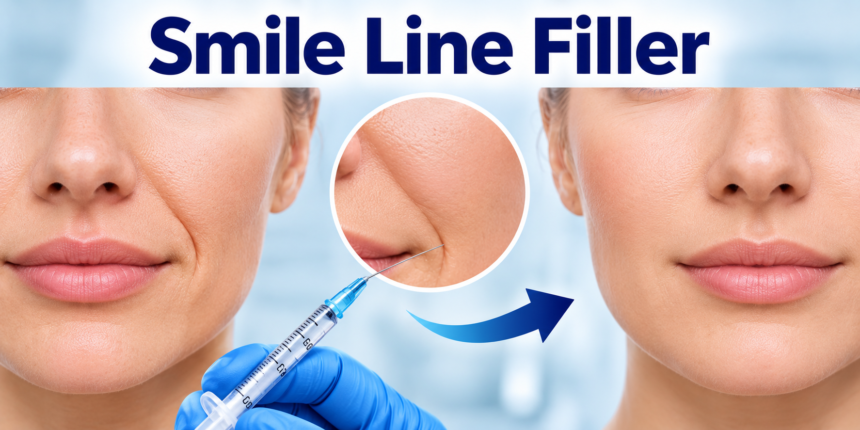
Smile line filler is a non-surgical cosmetic treatment designed to soften the creases that form between the nose and the corners of the mouth, medically known as nasolabial folds. These lines become more noticeable when a person smiles, which is why they are commonly called smile lines.
As skin loses collagen and elasticity with age, these folds deepen and can make the face look tired or older than it actually is. Smile line filler works by restoring lost volume beneath the skin, which lifts the fold and smooths its appearance.
This treatment has become one of the most requested procedures in aesthetic medicine because it delivers visible results without surgery or extended downtime. The sections below explain what causes smile lines, the types of fillers used to treat them, the procedure itself, and what results a person can realistically expect.
What Are Smile Lines?
Smile lines are the folds that run diagonally from the sides of the nose down to the corners of the mouth. They appear in almost everyone at some point, but they become more pronounced with age, sun exposure, and repeated facial movement.
Why Nasolabial Folds Form?
Nasolabial folds form mainly because the skin gradually loses collagen, elastin, and natural fat pads that once kept the mid-face full and supported. As this underlying support fades, the skin above it begins to sag inward, creating a visible crease each time the face moves. Genetics, sun damage, smoking, and long-term weight fluctuations can all speed up this process, making the folds appear earlier or deeper than expected.
Smile Lines vs. Marionette Lines
Smile lines and marionette lines are often confused because both relate to facial aging, but they sit in different locations and form for slightly different reasons. Smile lines run from the nose to the mouth corners, while marionette lines extend from the mouth corners down toward the chin. Because they are positioned differently, treatment plans and filler placement for each area are usually customized separately for the best natural result.
What Is a Smile Line Filler?
Smile line filler refers to injectable dermal fillers placed directly into or beneath the nasolabial fold to restore lost volume. The filler adds structure under the skin, which physically lifts the fold and reduces the shadow it creates.
How Dermal Fillers Restore Volume?
Once injected, filler material integrates with the surrounding tissue and adds cushioning where natural volume has been lost. This lifts the overlying skin from beneath, which softens the depth of the fold rather than simply covering it. Because the effect works with the skin’s own structure, results tend to look natural rather than overly smoothed or artificial when the treatment is performed correctly.
Who Is a Good Candidate?
Good candidates are typically adults with mild to moderate nasolabial folds who want a non-surgical way to refresh their appearance. People in overall good health, without active skin infections in the treatment area, and with realistic expectations about the results tend to have the best outcomes. A consultation with a qualified injector is the best way to confirm suitability based on individual skin condition and facial anatomy.
Types of Fillers Used for Smile Lines
Several filler categories are used to treat smile lines, and each one behaves differently in the skin. The three main types are explained below before the comparison table.
Hyaluronic Acid Fillers
Hyaluronic acid fillers are the most commonly used option for smile lines because hyaluronic acid is a substance the body already produces naturally. These fillers attract and hold water, which creates a soft, hydrated volume effect that blends smoothly with surrounding tissue. They are also reversible with a dissolving enzyme, which adds an extra layer of safety for patients trying the treatment for the first time.
Calcium Hydroxylapatite (Radiesse)
Calcium hydroxylapatite is a thicker filler that provides more structural lift, making it a common choice for deeper nasolabial folds. Beyond adding immediate volume, it is known to stimulate the skin’s own collagen production over time, which can extend and enhance results as the body responds to the material.
Poly-L-Lactic Acid (Sculptra)
Poly-L-lactic acid works differently from the other two options because it does not provide instant volume. Instead, it gradually stimulates collagen production across multiple sessions, leading to a slow and natural-looking improvement in the treated area. This option is often chosen by people who prefer a gradual change rather than an immediate, noticeable difference.
Comparison Table: Common Smile Line Fillers
The table below summarizes the three main filler types used for smile lines, along with their typical brand names, how long results usually last, and which situations they suit best.
| Filler Type | Brand Examples | Typical Duration | Best For |
| Hyaluronic Acid (HA) | Juvederm, Restylane, Belotero | 6-12 months | Mild to moderate folds, natural-looking results |
| Calcium Hydroxylapatite | Radiesse | 12-15 months | Deeper folds, added collagen stimulation |
| Poly-L-Lactic Acid | Sculptra | Up to 2 years | Gradual volume build-up over several sessions |
The Procedure: Step by Step
The smile line filler procedure is a straightforward, in-office treatment that most patients complete within a single appointment. Understanding each stage can help set realistic expectations before the visit.
Consultation and Assessment
Before any injections take place, the provider examines the depth of the nasolabial folds, discusses the patient’s aesthetic goals, and reviews medical history to rule out contraindications. This step also includes selecting the most suitable filler type based on the severity of the folds and the patient’s skin characteristics.
Injection Process
The treatment area is typically cleaned and numbed with a topical anesthetic to reduce discomfort. The provider then injects small amounts of filler at precise points along the fold, often massaging the area between injections to ensure even distribution and a smooth, natural contour.
Aftercare Instructions
After treatment, patients are usually advised to avoid touching or applying pressure to the area for several hours and to skip strenuous exercise for a day or two. Applying a cold compress can help reduce swelling, and avoiding excessive sun exposure in the days following treatment supports smoother healing.
Benefits of Smile Line Filler
Smile line filler offers several practical advantages that make it a popular choice among people looking to soften facial aging signs without surgery.
Immediate Results
Unlike many other cosmetic treatments, hyaluronic acid and calcium hydroxylapatite fillers show a visible difference right after the appointment. This immediate feedback allows the provider and patient to assess the result together and make small adjustments if needed during the same session.
Non-Surgical, Minimal Downtime
Because the treatment does not involve incisions or general anesthesia, most people return to their normal activities the same day or the day after. This makes smile line filler an appealing option for those who want visible improvement without taking significant time away from work or daily routines.
Risks and Side Effects
Like any injectable treatment, smile line filler carries some risks, ranging from mild and temporary to rare but more serious complications.
Common Side Effects
The most frequently reported side effects include swelling, bruising, redness, and mild tenderness at the injection sites. These reactions are generally temporary and tend to resolve within a few days as the treated area settles and the filler integrates fully with the surrounding tissue.
Rare but Serious Risks
Although uncommon, more serious risks can include lumps under the skin, asymmetry between the two sides of the face, or in very rare cases, vascular occlusion if the filler is accidentally injected into a blood vessel. Choosing an experienced, qualified injector significantly reduces the likelihood of these complications.
Cost of Smile Line Filler
The cost of smile line filler treatment varies widely depending on the provider’s experience, geographic location, and the specific filler brand used.
On average, patients can expect to pay several hundred dollars per syringe, with total treatment cost depending on how many syringes are needed to achieve the desired result. It is worth requesting a detailed quote during the consultation so there are no surprises regarding the final price.
How Long Does It Last?
The longevity of smile line filler depends on the type of filler used, the treated area, and individual factors such as metabolism and lifestyle.
Hyaluronic acid fillers generally last between six months and a year, calcium hydroxylapatite can last slightly longer, and poly-L-lactic acid results tend to build gradually and last up to two years. Maintenance appointments are usually recommended to preserve the desired look over time.
Alternatives to Smile Line Filler
For those who prefer not to use injectable filler, a few other options exist that can also help soften the appearance of smile lines.
Thread Lifts
Thread lifts use dissolvable sutures to gently lift sagging skin along the mid-face, which can indirectly reduce the depth of nasolabial folds. This option is sometimes chosen by people looking for a longer-lasting lifting effect without traditional surgery.
Laser Resurfacing
Laser resurfacing works by stimulating collagen renewal in the skin’s surface layers, gradually improving texture and firmness around the treated area. While it does not add volume the way filler does, it can complement filler treatment or serve as a standalone option for milder folds.
FAQs
Is smile line filler painful?
Most patients report only mild discomfort, especially since a topical numbing cream is typically applied before injections begin.
How soon will I see results?
Hyaluronic acid and calcium hydroxylapatite fillers show visible results immediately, while poly-L-lactic acid builds gradually over several weeks and sessions.
Can smile line filler be reversed?
Hyaluronic acid fillers can be dissolved with an enzyme if the result is not satisfactory, offering a safety net that other filler types do not provide.
Are the results natural-looking?
When performed by an experienced injector using an appropriate amount of product, results are designed to look like a natural, refreshed version of the patient’s own face.
Conclusion
Smile line filler offers a practical, non-surgical way to soften nasolabial folds and refresh overall facial appearance.
With several filler types available, ranging from hyaluronic acid to longer-lasting collagen-stimulating options, patients can choose a treatment that matches their goals and desired longevity.
Consulting a qualified provider remains the best way to determine the right filler type, amount, and technique for a natural, satisfying result.
Related Posts
SNAP-8 Peptide: Complete Guide to This Anti-Aging Ingredient
Can a Gum Infection Kill You? Symptoms, Risks, Treatment & Prevention
Emsculpt Before and After: Real Results, & What to Expect
DAO Botox: The Complete Guide to Fixing a Downturned Smile
Does Nicotine Cause Acne? What Science Really Says About Nicotine and Breakouts