


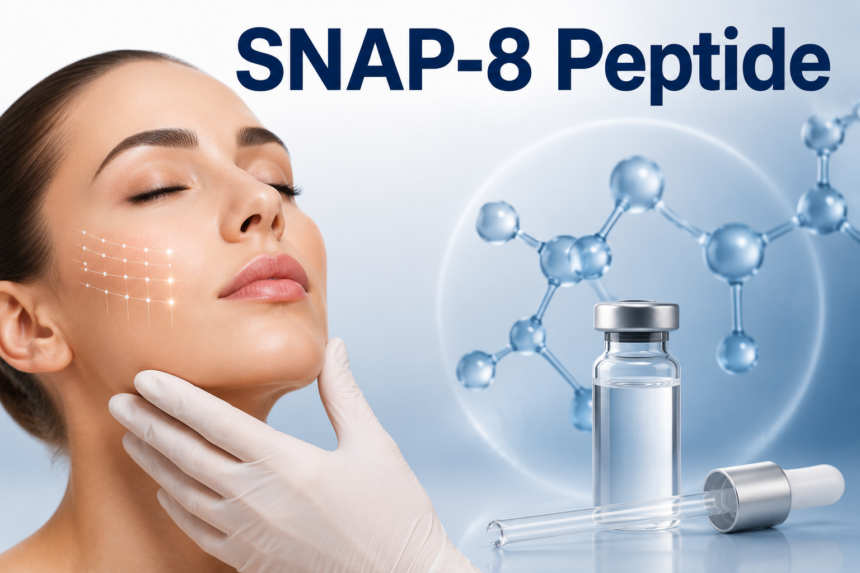
SNAP-8 peptide has become one of the most talked-about ingredients in modern skincare formulations, especially among people searching for gentler alternatives to injectable treatments. This synthetic peptide is designed to target the visible signs of expression lines by working on a muscular level rather than sitting only on the skin’s surface.
Many serums and creams now list snap 8 peptide as a headline ingredient because of its association with smoother, more relaxed-looking skin around the forehead and eye area. Unlike many trending skincare buzzwords, this ingredient actually has a defined chemical structure and a specific mechanism that researchers have studied in cosmetic science.
This guide breaks down what SNAP-8 is, how it functions, and how it fits into a realistic skincare routine, written in simple language so anyone can understand it without a science background.
What Is SNAP-8 Peptide?
SNAP-8 is a laboratory-created peptide built from a chain of amino acids that mimics part of a natural protein structure found in nerve cells. It belongs to a category of cosmetic ingredients known as neuropeptides, which are specifically designed to interact with the signals that control tiny facial muscle movements.
Chemical Classification
This ingredient falls under the broader family of oligopeptides, meaning it is made up of a short chain of amino acids linked together. Cosmetic chemists classify it separately from moisturizing peptides because its job is not hydration but rather muscle-signal modulation. It is typically listed on ingredient labels under its INCI name, which skincare shoppers can look for directly on product packaging.
How It Was Developed
SNAP-8 was created as an extended version of an earlier peptide, with researchers adding extra amino acids to the chain in an attempt to improve its performance. The goal behind its development was to offer a topical option that could visually soften the appearance of lines without the need for injections or invasive procedures. Since its introduction, it has been adopted widely across serums, creams, and targeted eye treatments.
The Science Behind SNAP-8
The way this peptide works is rooted in its amino acid sequence, which is longer than similar peptides used for the same purpose. This structural difference is the main reason it is often described as a more advanced version of earlier neuropeptide technology.
Amino Acid Sequence
The sequence of SNAP-8 contains eight amino acids arranged in a specific order, which is where the ingredient gets its name. This extended chain allows it to interact with a slightly broader range of proteins involved in muscle-signal transmission compared to shorter peptide chains. Manufacturers highlight this longer structure as a key selling point in product marketing.
Comparison to SNARE Proteins
SNARE proteins are naturally occurring structures in nerve cells responsible for helping transmit signals that trigger muscle contractions. Snap 8 peptide is designed to interact with this same protein family, essentially inserting itself into the communication process between nerves and muscles. This interaction is the foundation of how the ingredient is marketed to reduce the appearance of expression-related lines.
How SNAP-8 Works? (Mechanism of Action)
At its core, this peptide is believed to interrupt part of the chemical signaling process that tells facial muscles to contract repeatedly. When this signal is dialed down slightly, the repeated folding of skin that leads to expression lines may become less pronounced over time.
SNARE Complex Inhibition Explained Simply
Think of SNARE proteins as tiny messengers that deliver instructions from nerves to muscles, telling them when to tighten. SNAP-8 is thought to partially block this messenger system, meaning the instruction to contract does not come through as strongly. This is a gentler, topical version of the concept used in stronger injectable muscle-relaxing treatments.
Effect on Neurotransmitter Release
By interfering with this signaling pathway, the peptide is thought to reduce the release of certain neurotransmitters responsible for triggering muscle movement. Less neurotransmitter activity in the targeted area can translate to reduced muscle tension in the skin above it. This is why the ingredient is frequently associated with areas prone to repetitive movement, such as the forehead and around the eyes.
The “Topical Botox Alternative” Analogy
Marketing materials often compare this peptide to a mild, non-invasive version of injectable treatments because both target muscle activity rather than just the skin surface. However, the comparison is more about the concept of muscle-signal interruption than about matching the strength or speed of results. Actual muscle-relaxing injections work through a completely different and far more potent biological pathway.
SNAP-8 vs Argireline (Acetyl Hexapeptide-8)
Argireline was one of the earlier peptides developed for this same purpose, and SNAP-8 is often positioned as its upgraded successor in skincare formulations.
| Feature | SNAP-8 | Argireline (Acetyl Hexapeptide-8) |
| Amino acid chain length | 8 amino acids | 6 amino acids |
| Introduced | Later, as an extension of Argireline | Earlier peptide generation |
| Marketed potency | Claimed to be stronger due to longer chain | Considered milder in comparison |
| Common use | Forehead lines, crow’s feet | Similar target areas |
| Typical product type | Serums, creams, eye treatments | Serums, creams, eye treatments |
Key Benefits of SNAP-8
The reported benefits of this peptide mostly center around visible smoothing effects in areas where skin folds repeatedly due to muscle movement. Product formulators highlight several specific advantages when this ingredient is included in a routine.
- Helps reduce the visible appearance of expression lines caused by repetitive facial movement
- May soften the look of forehead wrinkles with consistent, long-term use
- Often included in eye creams targeting crow’s feet and under-eye fine lines
- Offers a non-invasive option for people who want to avoid injectable treatments
- Formulated for daily topical use as part of a regular skincare routine
- Frequently combined with other actives for a more complete anti-aging approach
How to Use SNAP-8 in a Skincare Routine?
Getting the most out of this peptide depends less on using large amounts and more on consistent, correct application within a well-structured routine.
Application Steps
Most products containing this peptide are applied to clean, dry skin before heavier creams or oils, since serums typically absorb better on a bare face. A small amount is usually enough, gently patted into areas prone to expression lines such as the forehead and around the eyes. Consistency matters more than quantity, as visible changes are generally gradual rather than immediate.
Best Pairing Ingredients
This peptide is commonly paired with hydrating ingredients like hyaluronic acid to support the skin barrier while the peptide works on the muscle-signal side of things. Niacinamide is another popular pairing since it helps with overall skin texture and tone without interfering with peptide function. Retinol can also be layered in, though it is often recommended to introduce it on alternate nights to avoid overloading sensitive skin.
AM/PM Usage and Patch Testing
Many formulations are designed for twice-daily use, though some brands recommend nighttime application only, so checking product-specific instructions is important. Before adding any new peptide product into a routine, a small patch test on the inner arm or jawline for a couple of days is a sensible precaution. This helps identify any sensitivity before applying the product directly to the face.
Products That Contain SNAP-8
This peptide shows up across a wide range of product formats rather than being limited to one type of cosmetic item.
| Product Type | Common Use Case |
| Anti-wrinkle serums | Targeted application on lines and creases |
| Night creams | Overnight repair-focused formulations |
| Eye creams | Crow’s feet and under-eye fine lines |
| Multi-peptide complexes | Combined with other peptides for layered benefits |
Concentration levels vary between brands, and most companies do not publicly disclose exact percentages, so checking ingredient order on the label can give a rough idea of how prominently it features in a formula.
Scientific Evidence & Research Status
Much of what is known about this peptide comes from studies conducted or funded by ingredient manufacturers rather than large-scale independent clinical trials. This does not mean the findings are invalid, but it does mean the results should be viewed with a reasonable degree of caution.
Summary of Existing Studies
Available research generally points toward modest improvements in the appearance of fine lines after weeks of consistent use, based on manufacturer-sponsored testing. These studies often rely on self-reported satisfaction or imaging techniques rather than long-term dermatological follow-up. As with many cosmetic peptides, results tend to vary from person to person.
Limitations and Need for Independent Research
Because much of the existing data originates from the companies that produce or sell the ingredient, there is a natural need for more independent, peer-reviewed research to confirm long-term efficacy. Consumers are generally encouraged to treat marketing claims as a starting point rather than a guarantee. Independent verification would help clarify how this peptide compares to other anti-aging options under neutral testing conditions.
Safety, Side Effects & Who Should Avoid It
Generally speaking, this peptide is considered well tolerated by most skin types when used as directed in cosmetic formulations.
Skin Sensitivity and Allergy Considerations
Some individuals with particularly reactive or sensitive skin may experience mild redness or irritation, especially when the peptide is combined with other active ingredients. Discontinuing use and consulting a dermatologist is advisable if persistent irritation occurs after application. Reading the full ingredient list is also useful for anyone with known sensitivities to specific compounds.
Pregnancy, Breastfeeding, and General Caution
There is limited dedicated safety research specifically addressing use during pregnancy or breastfeeding, so many dermatologists suggest a cautious approach during these periods.
Consulting a healthcare provider before introducing new peptide-based products is a reasonable step for anyone in this situation. A patch test remains a simple, low-risk way to check for any adverse reaction before regular use begins.
SNAP-8 vs Other Anti-Aging Ingredients
Comparing this peptide to other well-known anti-aging ingredients helps clarify where it fits within a broader skincare strategy.
| Ingredient | Primary Mechanism | Invasiveness | Typical Results Timeline |
| SNAP-8 peptide | Muscle-signal interruption | Non-invasive, topical | Several weeks of consistent use |
| Retinol | Cell turnover and collagen stimulation | Non-invasive, topical | Weeks to months |
| Botulinum toxin injections | Direct muscle-nerve blocking | Invasive, injectable | Days to weeks, more pronounced |
| General peptides | Support skin structure and repair | Non-invasive, topical | Weeks to months |
Frequently Asked Questions
Does SNAP-8 peptide really work? Many users report subtle smoothing effects with consistent use, though results are generally milder than injectable treatments and vary between individuals.
How long until results show? Most formulations suggest visible changes may begin appearing after several weeks of daily, consistent application.
Can I use it with retinol? Yes, though introducing retinol gradually on alternate nights can help minimize any potential sensitivity when layering actives.
Is SNAP-8 safe for all skin types? It is generally well tolerated, but patch testing is recommended for those with sensitive or reactive skin.
Is SNAP-8 the same as Botox? No, it works through a much milder topical mechanism and is not comparable in strength or speed to injectable treatments.
Conclusion
SNAP-8 peptide offers a non-invasive, topical option for people looking to soften the appearance of expression lines through consistent skincare use rather than injectable procedures.
While the science behind its muscle-signal-based mechanism is genuinely interesting, most available evidence currently comes from manufacturer-backed studies rather than large independent trials.
For realistic expectations, it is best viewed as a supportive addition to a broader skincare routine rather than a dramatic standalone solution. Anyone with specific skin concerns or sensitivities should consider a patch test first and consult a dermatologist for personalized advice.
RELATED ARTICLES
What Causes Lower Back Pain in Females? Full Guide
How Much Does a Prosthetic Leg Cost? A Complete Guide
Why Do My Legs Hurt on My Period? Causes, & When to Worry
How Long Does Invisalign Take? Full Treatment Timeline Guide


