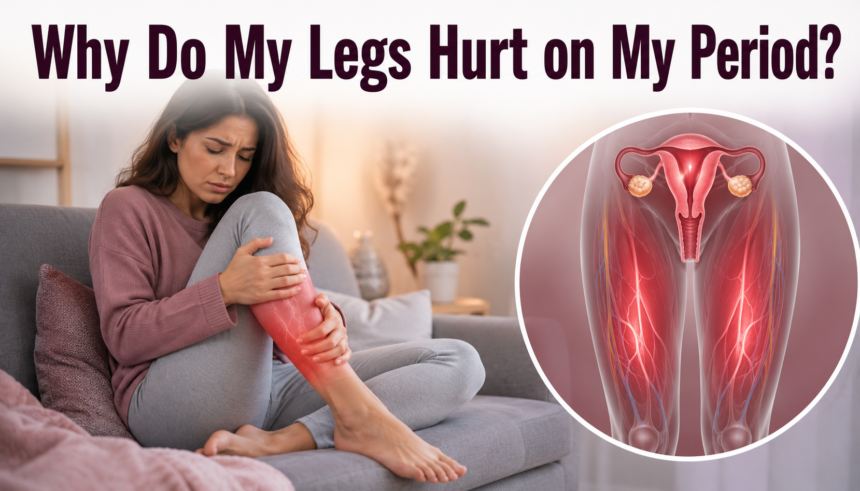
Many women ask themselves, “why do my legs hurt on my period,” especially when the ache spreads to the thighs, calves, or lower back during their cycle. This discomfort is more common than most people realize, and it usually happens because of natural hormonal changes that affect the uterus and nearby muscles.
In most cases, this pain is harmless and temporary, lasting only a few days around your period. However, understanding the actual causes can help you manage it better and know when it might signal something that needs medical attention. This article breaks down every possible reason behind period-related leg pain in simple, easy-to-understand language.
What Is Period-Related Leg Pain?
Period-related leg pain is a dull, aching, or cramping sensation that spreads from the pelvic area into the legs during menstruation. It often feels different from regular menstrual cramps because it settles into the muscles rather than the abdomen.
How It Feels
Most women describe this pain as a heavy, throbbing ache in the thighs or calves rather than a sharp cramp. It can come and go throughout the day and often feels worse when standing for long periods. Some people also notice mild swelling alongside the discomfort.
Where It Usually Occurs
The pain commonly appears in the upper thighs, lower back, and sometimes travels down to the calves. This happens because the nerves connected to the uterus also run close to the leg muscles. In some cases, one leg may feel more affected than the other, though this is usually still normal.
How It Differs From Regular Cramps
Regular menstrual cramps stay centered in the lower abdomen and feel sharp or squeezing. Leg pain, on the other hand, feels more like muscle soreness or heaviness. Recognizing this difference helps you understand that your body is reacting to hormonal shifts rather than a separate injury.
Main Causes of Leg Pain During Periods
There isn’t just one reason why legs hurt during periods; instead, several biological factors work together to create this discomfort. Below are the most common and scientifically supported causes.
Prostaglandins and Uterine Contractions
Prostaglandins are natural chemicals your body releases to help the uterus contract and shed its lining. When these chemicals rise, they don’t just affect the uterus but can also trigger tightness in nearby muscles, including those in the legs. Higher prostaglandin levels are directly linked to more intense period pain overall.
Referred Pain Through Shared Nerves
The uterus and legs share several nerve pathways in the lower body. When the uterus contracts strongly, these nerve signals can travel outward and be felt as aching in the thighs or calves. This is known as referred pain, and it explains why the discomfort isn’t limited to the abdomen alone.
Hormonal Fluctuations
Estrogen and progesterone levels shift dramatically just before and during your period. These hormonal changes can affect muscle tension, blood vessel behavior, and even pain sensitivity throughout the body. As hormone levels drop, many women become more sensitive to aches they wouldn’t normally notice.
Water Retention and Bloating
Hormonal changes also cause the body to retain more water than usual in the days leading up to menstruation. This extra fluid can build up in the legs, creating a feeling of heaviness, tightness, or mild swelling that adds to the overall discomfort.
Magnesium and Mineral Deficiencies
Magnesium plays a key role in relaxing muscles, and levels of this mineral can dip during your cycle. Low magnesium is strongly associated with muscle cramps, including in the legs, making period week a common time for these deficiencies to show symptoms.
Reduced Blood Circulation
Some women experience mild changes in blood flow during their period due to hormonal shifts affecting blood vessel width. This can lead to a heavy or sluggish feeling in the legs, particularly if you sit or stand in one position for extended periods.
Muscle Tension From Posture Changes
When dealing with period discomfort, many women unconsciously change how they sit, stand, or walk to ease pelvic pain. This shift in posture can place extra strain on the leg muscles, leading to soreness that lingers even after the main cramps subside.
When Leg Pain Signals Something More Serious
While mild leg pain during periods is usually normal, certain underlying conditions can cause more intense or prolonged discomfort. It’s important to recognize these possibilities so you can seek proper care if needed.
Endometriosis
Endometriosis occurs when tissue similar to the uterine lining grows outside the uterus, sometimes near nerves that connect to the legs. This condition can cause much stronger, longer-lasting leg pain than typical period discomfort, especially if it worsens each cycle.
Adenomyosis
Adenomyosis happens when uterine lining tissue grows into the muscular wall of the uterus itself. This condition often causes heavier periods along with deep, radiating pain that can extend into the lower back and legs, sometimes even outside the menstrual window.
Fibroids
Uterine fibroids are non-cancerous growths that can press against nearby nerves and muscles depending on their size and location. When fibroids grow large enough, they may contribute to persistent leg heaviness or discomfort that intensifies during menstruation.
Deep Vein Thrombosis Warning Signs
Deep vein thrombosis, or DVT, is a blood clot that forms in a deep leg vein and requires urgent medical care. Unlike normal period pain, DVT usually causes pain in only one leg along with swelling, warmth, and redness that doesn’t improve with rest.
Sciatic Endometriosis
In rare cases, endometrial tissue can grow near the sciatic nerve, causing pain that shoots down one leg in a pattern similar to sciatica. This type of pain tends to be sharper and more localized compared to the general achiness of typical period-related leg discomfort.
Symptoms That Warrant a Doctor’s Visit
Most period-related leg pain resolves on its own within a few days, but certain warning signs mean it’s time to consult a healthcare provider rather than waiting it out.
| Warning Sign | Why It Matters |
| Pain in only one leg | May indicate a blood clot rather than normal hormonal pain |
| Visible swelling or redness | Could point to circulation issues needing prompt evaluation |
| Warmth around the painful area | Often associated with clotting or infection |
| Pain that doesn’t ease with rest | Suggests a cause beyond typical muscle fatigue |
| Shortness of breath alongside leg pain | Requires immediate emergency medical attention |
If any of these symptoms appear, it’s safer to get checked promptly rather than assuming it’s just a normal part of your cycle.
Home Remedies and Relief Strategies
Fortunately, most period-related leg pain responds well to simple, at-home care. Combining a few of these methods often brings noticeable relief within a day or two.
Heat Therapy
Applying a heating pad or taking a warm bath helps relax tight muscles and improves blood flow to the affected area. Heat therapy is one of the most effective and accessible ways to ease both cramps and leg soreness during your period.
Gentle Stretching and Yoga
Light stretches targeting the hamstrings, calves, and hips can release built-up tension in the legs. Gentle yoga poses like child’s pose or reclined butterfly are particularly helpful because they relax the pelvic muscles connected to leg discomfort.
Light Exercise and Walking
Although it may feel counterintuitive, gentle movement like a short walk can actually reduce leg pain by improving circulation and releasing natural pain-relieving endorphins. Staying completely inactive often makes the heaviness feel worse.
Over-the-Counter Pain Relief
Nonsteroidal anti-inflammatory drugs, such as ibuprofen, work by directly reducing prostaglandin production. Since prostaglandins are a major cause of period-related leg pain, these medications can address the root of the discomfort rather than just masking it.
Hydration Tips
Drinking enough water throughout your cycle helps reduce the water retention that contributes to leg heaviness. Staying hydrated also supports better circulation, which can ease the sluggish feeling many women notice in their legs during their period.
Magnesium-Rich Foods and Supplements
Foods like spinach, almonds, bananas, and dark chocolate are naturally rich in magnesium and can help relax cramping muscles. For some women, a magnesium supplement taken in the days before their period may reduce leg pain intensity noticeably.
Massage Techniques
Gently massaging the thighs and calves with slow, circular motions can loosen tense muscles and improve local blood flow. Adding a warm oil or lotion during the massage can enhance relaxation and provide additional comfort.
Sleep Positioning Tips
Sleeping with a pillow placed under your knees can reduce pressure on the lower back and legs overnight. This small adjustment often leads to noticeably less morning stiffness and leg soreness during your period.
Lifestyle and Preventive Tips
Making a few consistent lifestyle adjustments can reduce how often and how intensely your legs hurt during your period over time.
Eating a balanced diet rich in leafy greens, whole grains, and lean proteins in the week before your period can help stabilize hormone levels and reduce inflammation. Regular moderate exercise throughout the month, not just during your period, strengthens muscles and improves circulation, making cramps and leg pain less severe when your cycle arrives.
Managing stress through deep breathing, journaling, or light meditation can also lower cortisol levels, which otherwise tend to worsen muscle tension and pain sensitivity. Finally, tracking your menstrual cycle with an app or calendar allows you to anticipate symptoms and start preventive care, like increasing magnesium intake or scheduling lighter workdays, a few days before your period begins.
Frequently Asked Questions
Is leg pain a normal PMS symptom? Yes, leg pain is a fairly common and normal symptom experienced by many women in the days leading up to and during their period.
How long does period leg pain typically last? It usually lasts between two to four days, often peaking on the first or second day of the period and gradually easing afterward.
Can birth control help reduce leg pain? Certain hormonal birth control methods can lower prostaglandin levels and stabilize hormones, which may reduce both cramps and related leg discomfort for many women.
Does leg pain get worse with age? For some women, conditions like fibroids or endometriosis develop over time, which can make period-related leg pain feel more intense in later years.
Can dehydration cause period leg pain? Yes, dehydration can worsen muscle cramping and circulation issues, making leg pain feel more pronounced during your menstrual cycle.
Conclusion
Leg pain during your period is usually a normal response to prostaglandins, hormonal shifts, and temporary water retention rather than a cause for alarm. Simple remedies like heat therapy, gentle movement, hydration, and magnesium-rich foods can bring effective relief within a day or two.
However, if the pain is severe, one-sided, or paired with swelling and warmth, it’s important to consult a doctor to rule out conditions like DVT or endometriosis. Listening to your body and applying these practical tips each cycle can make your periods noticeably more comfortable over time.
RELATED ARTICLES
How Long After Fluoride Treatment Can I Eat?
How Long Does Hip Bursitis Take to Heal? Recovery Timeline
Xeroform Gauze: Uses, Benefits, Application & Complete Guide
Can a Chiropractor Help with Knee Pain? A Complete Guide
Dermatologist on Acne Scars: Causes, Types, and Proven Treatment Options