


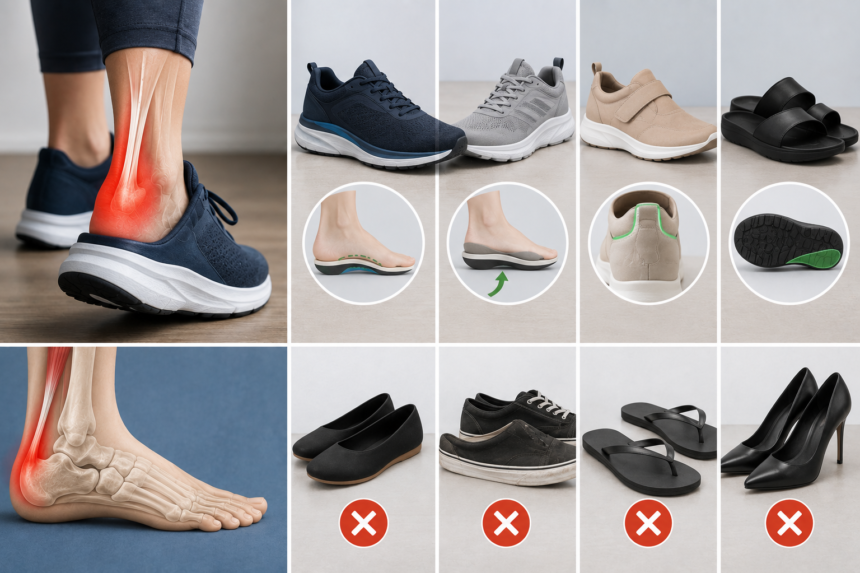
The best footwear for Achilles tendonitis combines a raised heel, a deep and cushioned heel cup, and a firm midsole that eases tension on the tendon with every step. If you’ve been limping through your morning walk or dreading that first painful step out of bed, the wrong shoes are likely making a stubborn injury worse.
This guide breaks down exactly what to look for, which shoes podiatrists actually recommend, and which styles to avoid while you heal. You’ll also find a side-by-side comparison table, a buying checklist, and answers to the questions people search most about Achilles tendonitis footwear. Whether you’re recovering from a flare-up or trying to prevent one, the right pair makes a measurable difference.
| Key Takeaways• A heel-to-toe drop of 8–12mm is the feature podiatrists cite most often for reducing Achilles tendon strain.• Zero-drop and minimalist shoes are generally discouraged during active Achilles tendonitis because they lengthen the tendon on every step.• Podiatrist-favored 2026 picks include the Hoka Bondi 9, Brooks Ghost 17, and ASICS Gel-Nimbus 27.• A removable heel lift insert can add extra relief inside almost any supportive shoe.• Pain lasting beyond 6–8 weeks of footwear and activity changes warrants a podiatrist visit. |
What Causes Achilles Tendonitis, and Why Your Shoes Matter?
Achilles tendonitis develops when the tendon connecting your calf muscles to your heel bone becomes irritated, usually from repeated overuse rather than one single injury. According to Mayo Clinic, the condition often shows up in runners who suddenly increase training intensity, and in middle-aged weekend athletes who play sports like tennis only occasionally.
The Two Types of Achilles Tendonitis
• Non-insertional tendonitis: Fibers in the middle of the tendon break down and thicken. Cleveland Clinic notes this form is more common in people who are more active.
• Insertional tendonitis: Affects the point where the tendon attaches to the heel bone. A rigid or high heel counter tends to aggravate this type directly.
Footwear plays a direct role in both. Mayo Clinic Health System lists poor footwear — including running in worn-out shoes or gear inappropriate for the activity — as a recognized risk factor for developing Achilles tendonitis in the first place.
| Pro TipA shoe that irritates your Achilles doesn’t always hurt right away — friction and pressure can quietly build up over several days before you notice pain. |
Key Achilles Tendonitis Shoe Features to Look For
Not every cushioned shoe is built to protect an irritated Achilles. These five features matter most, based on podiatrist guidance and clinical explanations of tendon load:
• Heel-to-toe drop of 8–12mm: Reduces the resting length of the tendon, which lowers peak tension during walking, according to podiatrist Dr. Tom Biernacki, DPM, of Balance Foot & Ankle.
• Cushioned, contoured heel counter: Pads the exact spot where the tendon inserts into the heel bone and cuts down on friction.
• Firm-but-flexible midsole: Controls excess pronation while still letting the tendon bend naturally through push-off.
• Rocker-style sole: Shifts some of the ankle’s workload away from the tendon at the point of toe-off.
• Roomy, padded collar: Avoids direct pressure on the back of the heel, a common pain trigger.
Why Does Heel Drop Matters Most for Achilles Tendon Pain?
Achilles tendon tension peaks when the ankle bends upward, a motion called dorsiflexion. Highett Podiatry advises patients to wear shoes with a minimum 12mm heel-to-toe drop specifically to reduce that peak tension while the tendon heals.
| WarningRunning through moderate-to-severe Achilles pain in unsupportive shoes raises the risk of a partial or full tendon rupture. Stop any activity that produces pain above 3 out of 10, and see a healthcare provider if pain is sudden or severe. |
Top Shoes for Achilles Tendonitis in 2026
We cross-checked podiatrist recommendation guides and running-shoe testing labs to shortlist the models that show up again and again for Achilles tendonitis support. Pricing reflects approximate manufacturer MSRP and can vary by retailer.
1. Hoka Bondi 9
A maximalist cushioned trainer with Hoka’s thickest midsole to date and a 5mm heel drop.
• Best for: All-day standing, walking, and recovery-phase wear
• Pricing: Approximately $175 MSRP
• Pros: Exceptional shock absorption, wide and extra-wide options, smooth rocker geometry
• Cons: Lower drop than the 8–12mm target; some wearers feel heel-collar pressure right at the Achilles insertion
2. Brooks Ghost 17
Brooks’ long-running daily trainer, updated with a 10mm heel-to-toe drop and a new mesh upper.
• Best for: Walking and easy running during active recovery
• Pricing: Approximately $145 MSRP
• Pros: Smooth heel-to-toe transition, consistent ride, wide-size availability
• Cons: Less plush than maximalist options; narrower forefoot than Hoka models
3. ASICS Gel-Nimbus 27
A max-cushioned trainer combining GEL and FF Blast+ foam for a protective, padded ride.
• Best for: Flat feet that need extra arch support alongside cushioning
• Pricing: Approximately $160 MSRP
• Pros: Padded heel collar reduces friction, firm arch support, durable outsole
• Cons: Firmer underfoot feel than Hoka or Brooks; premium price point
4. New Balance Fresh Foam X 1080v14
A plush daily trainer with a wide, stable platform and an updated, more breathable upper.
• Best for: Wide feet or overpronation paired with Achilles pain
• Pricing: Approximately $165 MSRP
• Pros: Soft, forgiving landing, broad size run, improved breathability over the prior version
• Cons: Slightly heavier than competitors; some testers report a break-in period
5. Hoka Clifton 10
A lighter, everyday version of Hoka’s cushioned lineup, popular for both running and daily wear.
• Best for: Wearers who want Hoka’s cushioning in a lighter daily shoe
• Pricing: Approximately $145 MSRP
• Pros: Roomy toe box, lightweight for a max-cushion shoe, smooth rocker transition
• Cons: Less structured heel support than the Bondi 9; not ideal for significant overpronation
6. Brooks Ghost Max 2
A maximalist spinoff of the Ghost with a taller stack and a firmer, more stable feel underfoot.
• Best for: People on their feet all day who also want orthotic-friendly room
• Pricing: Approximately $150 MSRP
• Pros: Firmer, more stable cushioning than the Bondi 9; roomy, orthotic-compatible fit
• Cons: Heavier than the standard Ghost; limited color options
Quick Comparison Table
| Shoe | Heel Drop | Best For | Price | Standout Feature |
| Hoka Bondi 9 | 5mm | All-day standing & recovery | $175 | Maximum cushioning |
| Brooks Ghost 17 | 10mm | Walking & easy running | $145 | Smooth transitions |
| ASICS Gel-Nimbus 27 | 8mm | Flat feet, arch support | $160 | Padded heel collar |
| New Balance 1080v14 | 6mm | Wide feet & overpronation | $165 | Stable wide platform |
| Hoka Clifton 10 | 5mm | Lightweight daily wear | $145 | Roomy toe box |
| Brooks Ghost Max 2 | 6mm | All-day wear, orthotic use | $150 | Firm, structured cushion |
How to Choose the Right Shoes for Your Achilles Tendon Pain?
1. Get a quick gait check. A podiatrist or running-specialty store can tell you if you overpronate, which changes which shoe last fits you best.
2. Prioritize heel drop first. Aim for 8–12mm while your tendon is actively inflamed, ahead of style or brand preference.
3. Try it with your real setup. Wear your usual socks and, if you use one, your heel lift insert — fit changes with added volume.
4. Walk on a hard floor in-store. A well-fitted shoe shouldn’t press on the back of your heel at all.
5. Replace worn-out pairs. Swap shoes once the midsole visibly compresses, typically after 300–500 miles of walking or running.
| Hypothetical Example (for illustration purposes)Consider a 42-year-old recreational runner who develops non-insertional Achilles tendonitis after increasing weekly mileage too quickly. Switching from a zero-drop trainer to a 10mm-drop daily shoe, adding a temporary heel lift, and cutting mileage lets morning stiffness ease over several weeks, alongside a physical therapist’s eccentric-loading program.Note: This scenario is illustrative. Actual results vary by individual, footwear, and treatment plan. |
Shoes and Styles to Avoid With Achilles Tendonitis
• Zero-drop and barefoot-style shoes: Force the tendon into a lengthened position on every single step.
• Flat fashion sneakers and flip-flops: Offer no heel elevation and no real heel-cup support.
• Worn-out running shoes: A compressed midsole loses the cushioning that protects the tendon, and worn footwear is a recognized risk factor for Achilles tendonitis.
• High, rigid heel counters: Dig directly into the Achilles insertion point, especially with insertional tendonitis.
• Stiff dress shoes and boots: Restrict the natural bend the foot needs at toe-off.
Other Ways to Support Achilles Tendonitis Recovery Alongside Better Shoes
Footwear works best paired with the conservative care most patients start with first. Mayo Clinic notes that self-care, guided by a healthcare professional, resolves most cases of Achilles tendinitis without further treatment.
• Rest and activity modification: Reduce the frequency or intensity of whatever activity aggravates the tendon.
• Ice: Mayo Clinic Health System recommends about 15 minutes after exercise or whenever pain flares.
• Eccentric calf-strengthening exercises: Typically guided by a physical therapist for the best results.
• OTC pain relievers: Mayo Clinic notes ibuprofen or naproxen sodium can help with short-term pain relief.
• A removable heel lift or orthotic insert: Adds further reduction in tendon tension inside almost any supportive shoe.
For more on cushioning and arch support beyond shoes themselves, see our best orthotic insoles for foot pain guide.
| WarningSeek medical care right away for sudden, severe pain or an inability to rise onto your toes — these can signal an Achilles tendon rupture. |
Frequently Asked Questions
What is the best type of shoe for Achilles tendonitis?
Shoes with an 8–12mm heel-to-toe drop, a cushioned heel counter, and a firm-but-flexible midsole are generally best. They reduce tension on the tendon while still letting your foot move naturally through each step.
Are zero-drop shoes bad for Achilles tendonitis?
Yes, during an active flare-up. Zero-drop shoes keep the ankle more dorsiflexed on every step, which lengthens an already irritated tendon and can slow healing.
Should I use a heel lift insert with my shoes?
A removable heel lift can provide extra relief, especially for insertional Achilles tendonitis. Podiatrists often suggest a 5–8mm lift placed inside a supportive shoe.
Can wearing the wrong shoes actually cause Achilles tendonitis?
Yes. Mayo Clinic Health System lists poor footwear, including running in worn-out or activity-inappropriate shoes, as a recognized risk factor for developing the condition.
How much do Achilles tendonitis-friendly shoes cost?
Podiatrist-recommended models typically run $140 to $175 at MSRP, though sales, older versions, and outlet pricing often bring that down.
How long does it take for the right shoes to help Achilles tendonitis pain?
Many people notice less morning stiffness within a few weeks of switching shoes and adjusting activity, though full recovery varies and can take several months.
When should I see a doctor instead of just changing shoes?
See a healthcare provider if pain persists beyond 6–8 weeks despite footwear and activity changes, or immediately if you feel a sudden pop or cannot rise onto your toes.
Conclusion
Achilles tendonitis rarely improves while you’re still wearing shoes that strain the tendon on every step. An 8–12mm heel drop, cushioned heel counter, and supportive midsole aren’t cosmetic details — they measurably cut the tension driving your pain.
Podiatrist-favored picks like the Brooks Ghost 17 and Hoka Bondi 9 give you that support without sacrificing daily comfort. Zero-drop and worn-out shoes work against recovery, no matter how good the exercises are.
Pair the right footwear with rest, ice, and eccentric calf strengthening for the fastest results. Add a removable heel lift if your podiatrist recommends one for extra relief.
RELATED POSTS
Forearm Muscle Pain: Causes, Relief & When to See a Doctor
Natural Ways to Get Rid of Headache While Pregnant (Safe, Drug-Free Remedies)
Can Hyaluronic Acid Cause Acne? What Dermatologists Actually Say


