


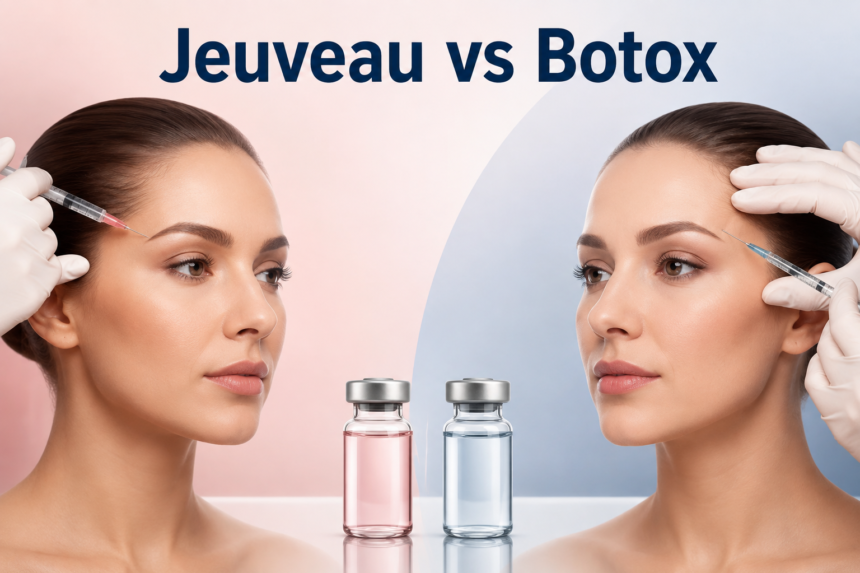
Jeuveau and Botox are both botulinum toxin type A injections used to smooth facial wrinkles, especially the frown lines between the eyebrows. Botox has been available since 2002 and holds a wide range of FDA approvals, including migraine treatment, excessive sweating, and muscle spasms.
Jeuveau, approved in 2019, is a newer option that is currently approved only for cosmetic use. Both treatments work by temporarily relaxing the targeted facial muscles, which reduces the appearance of wrinkles for several months.
The choice between jeuveau vs botox often comes down to treatment goals, cost, and how long a patient wants results to last. This guide compares both options in detail so you can make an informed decision before your appointment.
What Is Botox?
Botox is one of the most recognized names in cosmetic medicine and has been used safely for over two decades. Before comparing jeuveau vs botox in detail, it helps to understand how Botox actually works and what it is approved to treat.
How Botox Works
Botox contains botulinum toxin type A, a purified protein that blocks nerve signals to targeted muscles. When injected, it temporarily prevents the muscle from contracting, which softens wrinkles caused by repeated facial movement such as frowning or squinting. The effect is not permanent, and normal muscle movement gradually returns after a few months.
FDA History and Approved Uses
Botox received FDA approval for cosmetic use in 2002 and has since been approved for several additional conditions. These include chronic migraines, excessive underarm sweating, overactive bladder, TMJ-related jaw tension, and certain muscle spasm disorders. This broader medical approval is one of the biggest differences in the jeuveau vs botox comparison, since Botox is used well beyond cosmetic treatment.
What Is Jeuveau?
Jeuveau is a newer botulinum toxin product that entered the market with a strong focus on cosmetic treatment. Understanding how it differs from older options is central to any jeuveau vs botox discussion.
How Jeuveau Works
Like Botox, Jeuveau uses botulinum toxin type A to block nerve signals and relax the targeted muscle. This reduces the appearance of dynamic wrinkles that form from repeated facial expressions. The underlying mechanism is essentially the same, though the manufacturing process differs slightly between the two products.
FDA Approval and Current Use
Jeuveau was approved by the FDA in 2019 specifically for treating moderate to severe frown lines between the eyebrows in adults. Unlike Botox, it does not currently carry approval for medical conditions such as migraines or excessive sweating. Its use remains focused on cosmetic improvement rather than broader therapeutic treatment.
Why It Is Called “Newtox”
Jeuveau earned the nickname “Newtox” because it was the first new botulinum toxin product approved by the FDA for cosmetic use in several years. The name reflects its position as a fresh alternative in a market that had long been dominated by Botox. This branding also helped it gain quick attention among patients comparing jeuveau vs botox options.
Jeuveau vs Botox: Key Differences
The two treatments share the same basic mechanism but differ in approval history, pricing, and manufacturer. The table below summarizes the main points of comparison at a glance.
| Factor | Botox | Jeuveau |
| Manufacturer | Allergan / AbbVie | Evolus |
| FDA Approval Year | 2002 | 2019 |
| Approved Uses | Cosmetic + medical (migraines, sweating, TMJ, muscle spasms) | Cosmetic only (frown lines) |
| Onset of Results | 3–7 days | 3–7 days |
| Duration of Results | Roughly 3–4 months | Roughly 3–4 months |
| Average Cost per Unit | Slightly higher | Often 10–20% lower |
| Clinical Track Record | Over 20 years of data | Newer, fewer long-term studies |
Effectiveness and Results
Both treatments are effective at softening dynamic wrinkles, but patients often want to know how quickly results appear and how long they last.
Onset Time
Most patients begin noticing visible changes within three to seven days after treatment with either Jeuveau or Botox. Full results typically develop within one to two weeks as the muscle gradually relaxes. Onset time is not considered a major differentiator between the two products.
Duration of Results
Results from both Jeuveau and Botox generally last around three to four months, though this can vary based on individual metabolism and the treated area. Some patients report slightly faster or slower fading with one product versus the other, but clinical data shows comparable overall duration. Repeat treatments are needed to maintain results over time.
Clinical Study Findings
Botox has the advantage of more than two decades of published clinical research supporting its safety and effectiveness across many conditions. Jeuveau’s clinical trials, including the studies submitted for its FDA approval, showed comparable results to Botox for treating frown lines specifically. However, Botox still has a larger overall body of long-term data due to its longer time on the market.
Cost Comparison
Price is often a deciding factor for patients weighing jeuveau vs botox, since both require repeat sessions to maintain results.
Average Price per Unit
Botox is typically priced slightly higher per unit compared to Jeuveau, reflecting its longer market presence and broader brand recognition. Jeuveau is often positioned as a more budget-friendly alternative, with many providers pricing it ten to twenty percent lower. Exact pricing varies by clinic, location, and provider experience.
Factors That Affect Total Cost
The total cost of treatment depends on the number of units needed, which is influenced by the treatment area and the severity of wrinkles. Geographic location and the experience level of the injector also play a role in final pricing. Patients should request a personalized quote during a consultation rather than relying on average prices alone.
Safety and Side Effects
Both treatments are considered safe when administered by a qualified provider, though they share a similar side effect profile.
Common Side Effects
Mild bruising, redness, and swelling at the injection site are the most commonly reported side effects for both Jeuveau and Botox. Some patients also experience temporary headaches following treatment. These effects are usually short-lived and resolve within a few days.
Rare or Serious Side Effects
In rare cases, botulinum toxin injections can cause drooping eyelids, difficulty swallowing, or muscle weakness beyond the treated area. These effects are uncommon and are more likely when the toxin spreads beyond the intended injection site. Choosing an experienced, licensed injector significantly lowers this risk.
Who Should Avoid These Treatments
Pregnant or breastfeeding individuals are generally advised to avoid both Jeuveau and Botox as a precaution. People with certain neuromuscular conditions, such as myasthenia gravis, should also consult a doctor before treatment. A thorough medical history review during consultation helps identify any contraindications.
| When to See a DoctorAnyone experiencing severe swelling, difficulty breathing, or muscle weakness spreading beyond the injection site after treatment should seek medical attention promptly, as these can be signs of a rare but serious reaction. |
How to Choose Between Jeuveau and Botox?
Deciding between jeuveau vs botox usually comes down to a few practical factors rather than one product being universally better than the other.
Based on Treatment Goals
Patients who only want cosmetic wrinkle reduction may find Jeuveau a suitable and often more affordable choice. Those who need treatment for a medical condition, such as migraines or excessive sweating, will need Botox since it carries the relevant FDA approvals. Discussing specific goals with a provider helps clarify which option fits best.
Based on Budget
For patients focused primarily on cost, Jeuveau’s typically lower per-unit pricing can make it an attractive option for ongoing cosmetic maintenance. Botox may cost more but offers a longer track record that some patients value enough to pay a premium for. Comparing quotes from a trusted provider is the most reliable way to judge value.
Choosing a Licensed Injector
Regardless of which product is chosen, results and safety depend heavily on the skill of the injector. Always confirm that the provider is licensed and experienced specifically with botulinum toxin injections. A qualified injector will also help determine the right dosage and injection pattern for natural-looking results.
Frequently Asked Questions
Is Jeuveau better than Botox?
Neither product is universally better; Jeuveau and Botox produce similar cosmetic results, so the better choice depends on budget, treatment goals, and whether a medical use beyond cosmetics is needed.
Does insurance cover either treatment?
Cosmetic use of both Jeuveau and Botox is generally not covered by insurance, though Botox may be covered when prescribed for approved medical conditions like chronic migraines.
Can you switch between Jeuveau and Botox?
Yes, many patients switch between the two products without issue, since both use the same type of botulinum toxin and work through a similar mechanism.
How soon will you see results?
Most patients notice initial changes within three to seven days after treatment with either Jeuveau or Botox, with full results visible within about two weeks.
Conclusion
Both Jeuveau and Botox offer effective, similarly timed results for reducing facial wrinkles, with the main differences coming down to FDA-approved uses, pricing, and clinical history. Botox remains the broader option due to its medical approvals and decades of research, while Jeuveau appeals to cost-conscious patients seeking cosmetic-only treatment.
Many existing comparisons online cover only the basics without explaining the practical decision factors, such as budget and treatment goals, that this guide addresses. Ultimately, a consultation with a licensed injector is the best way to decide which option fits your needs.
Related Posts
SBI Protect: Complete Guide to Gut and Immune Health Support
Spectra S2 Breast Pump: The Complete Guide for New and Pumping Moms
Can Lack of Sleep Cause Dizziness? Causes, Symptoms & Solutions
Painful Lump Behind Ear: Causes, Symptoms, Diagnosis, Treatment & Complete Easy Guide


