


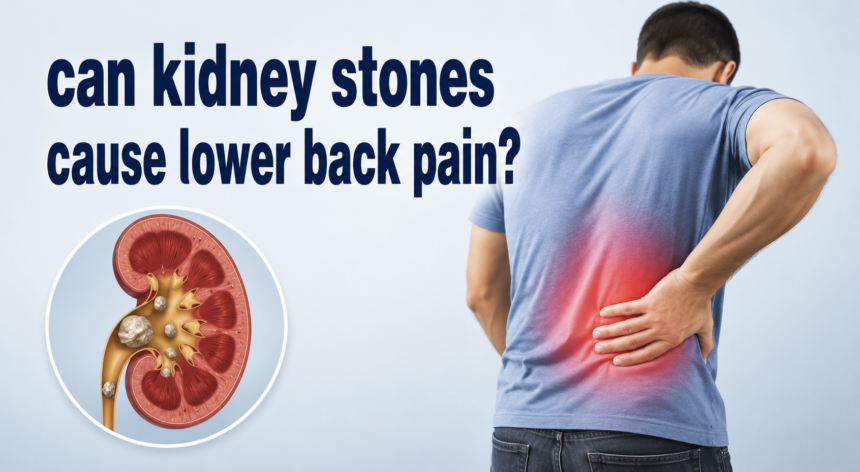
Yes, kidney stones can cause lower back pain, and this is one of the most common ways the condition first shows up. When a stone forms inside the kidney and starts to move, it can irritate the inner lining of the urinary tract, causing sharp or cramping pain in the lower back and side.
This pain, known medically as renal colic, often begins below the ribs and can spread toward the lower abdomen and groin. The intensity usually depends on the size of the stone and how much it blocks the normal flow of urine. Many people mistake this pain for a muscle strain at first, but kidney stone pain has a distinct pattern that sets it apart from ordinary back discomfort.
Key Takeaways
- Kidney stones commonly cause lower back or flank pain that can radiate to the abdomen and groin.
- The pain often comes in waves and tends to be more intense than typical muscular back pain.
- Blood in the urine, nausea, and painful urination frequently accompany kidney stone back pain.
- Fever or chills alongside back pain can signal an infection and needs urgent medical care.
- Imaging tests such as CT scans or ultrasounds are used to confirm kidney stones.
- Treatment ranges from home hydration and pain relief to medical procedures for larger stones.
- Diet and fluid intake play a major role in preventing future kidney stones.
How Kidney Stones Cause Back Pain?
Kidney stones cause back pain when a hardened mineral deposit blocks or scrapes against the urinary tract, triggering swelling and irritation near the kidney. The pain travels along the same nerve pathways that connect the kidneys to the lower back, which is why the discomfort is felt in that area even though the stone itself may be moving further down the urinary system.
Where the Kidneys Are Located
The kidneys sit toward the back of the body, just below the rib cage on either side of the spine. Because they are positioned close to the lower back muscles and nerves, any swelling or blockage inside a kidney is often felt as pain in that same region. This is why kidney related pain is so frequently confused with a back injury.
How a Stone Triggers Pain Signals
When a stone blocks the ureter, the tube carrying urine from the kidney to the bladder, urine backs up and causes the kidney to swell. This swelling stretches the kidney’s outer covering, which is rich in nerve endings, and sends strong pain signals to the brain. The larger the blockage, the more intense the pain tends to feel.
Why Pain Radiates to the Back and Side
As the stone shifts position within the urinary tract, the pain can move from the back toward the side, lower abdomen, and even the groin. This shifting pattern happens because the nerves along the urinary tract overlap with nerves serving nearby areas, so the brain interprets the signal as coming from a wider region rather than one fixed spot.
What Does Kidney Stone Back Pain Feel Like?
Kidney stone back pain has a few recognizable traits that separate it from ordinary aches. It tends to be sudden, one sided, and severe enough to interfere with daily activities rather than being a dull, constant soreness.
Location and Side (Flank Pain)
The pain is usually felt on one side of the lower back, just under the ribs, in an area doctors call the flank. It rarely affects both sides at once, since kidney stones typically form and move through one kidney at a time. This one sided pattern is a strong clue that the pain may be coming from a kidney stone rather than a general back problem.
Pain Intensity and Pattern (Comes in Waves)
Unlike muscle pain that stays fairly steady, kidney stone pain often comes in waves, building up to a peak, easing off slightly, and returning again. These waves are caused by the ureter contracting as it tries to push the stone along, and many people describe this pain as one of the most intense they have ever felt.
Pain That Radiates to Groin or Abdomen
As a stone travels further down the urinary tract, pain frequently spreads to the lower abdomen and groin. This happens because the lower ureter shares nerve connections with these regions, and this shifting pattern is a hallmark sign of a kidney stone in motion.
Kidney Stone Back Pain vs. Other Causes of Back Pain
Lower back pain has many possible causes, and it helps to know how kidney stone pain differs from more common issues like muscle strain or a herniated disc. The table below compares the key differences side by side.
| Feature | Kidney Stone Pain | Muscular Back Pain | Herniated Disc | Urinary Tract Infection |
| Location | One sided flank, may shift to abdomen/groin | Usually centered, both sides possible | Lower back, may shoot down the leg | Lower back and pelvic area |
| Pain Pattern | Comes in waves, colicky | Steady ache, worsens with movement | Sharp, worsens with bending or sitting | Dull ache, constant |
| Triggers | No clear movement trigger | Lifting, twisting, poor posture | Bending, lifting, prolonged sitting | Not movement related |
| Accompanying Symptoms | Blood in urine, nausea, painful urination | Stiffness, muscle spasm | Numbness, tingling, leg weakness | Burning urination, urgency, cloudy urine |
| Response to Rest | Does not improve with rest | Often improves with rest | May improve with rest | Does not improve with rest alone |
Other Symptoms That Accompany Kidney Stone Pain
Kidney stones rarely cause back pain in isolation. Recognizing the additional symptoms that travel alongside the pain can help confirm whether a kidney stone is the underlying cause.
Urinary Symptoms
Many people with kidney stones notice blood in their urine, which may appear pink, red, or brownish. Burning during urination and a frequent urge to urinate are also common, especially as the stone moves closer to the bladder. These urinary changes often appear at the same time as the back pain.
Nausea and Vomiting
The nerve pathways connecting the kidneys to the digestive system mean that kidney stone pain often triggers nausea and vomiting. This reaction can make the overall experience more distressing and is sometimes mistaken for a stomach issue rather than a urinary one.
Fever and Chills
Fever and chills alongside back pain are warning signs that an infection may have developed along with the stone. This combination should never be ignored, since an infected, blocked kidney can become a medical emergency if not treated promptly.
When to See a Doctor or Seek Emergency Care
Not every case of kidney stone pain needs an emergency room visit, but certain warning signs mean urgent medical attention is necessary.
Fever above 101°F combined with back pain, an inability to keep fluids down due to vomiting, blood clots in the urine, or pain so severe that it cannot be managed at home are all signs that a person should seek care right away.
A stone that completely blocks urine flow can also lead to kidney damage if left untreated, so persistent symptoms lasting more than a day or two should always be evaluated by a healthcare provider.
How Kidney Stones Are Diagnosed?
Diagnosing a kidney stone usually starts with a discussion of symptoms and a physical exam, followed by imaging tests to confirm the stone’s presence, size, and location.
Physical Exam and History
A doctor will typically ask about the location, intensity, and pattern of the pain, along with any urinary or digestive symptoms. Pressing gently on the flank area to check for tenderness is a common part of this initial evaluation.
Imaging Tests
A CT scan is considered the most accurate way to detect kidney stones and is often used in emergency settings. Ultrasound is another option, useful for pregnant patients or those avoiding radiation, though it may miss very small stones.
Urinalysis
A urine sample is analyzed to check for blood, signs of infection, and crystal formations that suggest the type of stone involved. This test also helps rule out a urinary tract infection as the cause of symptoms.
Treatment Options for Kidney Stone Pain Relief
Treatment for kidney stone pain depends largely on the size of the stone and whether it is likely to pass on its own or requires medical intervention.
At-Home Pain Management
For small stones, doctors often recommend over the counter pain relievers, increased water intake, and medications that relax the ureter to help the stone pass more easily. Staying active rather than lying down can sometimes assist movement of the stone through the urinary tract.
Medical Procedures
Larger stones that cannot pass naturally may require procedures such as shock wave lithotripsy, which breaks the stone into smaller fragments using sound waves, or ureteroscopy, where a thin scope removes or breaks up the stone directly. In more complex cases, surgical removal may be necessary.
Hydration and Natural Passing
Drinking plenty of water remains one of the most effective ways to help a stone pass and to ease pain, since it increases urine flow and helps flush the urinary tract. Most small stones pass within a few days to a few weeks with adequate hydration and pain management.
Preventing Future Kidney Stones
Once someone has experienced a kidney stone, taking preventive steps can significantly lower the chances of forming another one.
Dietary Changes
Reducing salt intake, limiting foods high in oxalates such as spinach and nuts, and moderating animal protein consumption can help prevent the mineral buildup that leads to stone formation. A doctor or dietitian can offer guidance tailored to the specific type of stone a person has had.
Hydration Habits
Drinking enough water throughout the day, rather than in large amounts occasionally, keeps urine diluted and makes it harder for minerals to crystallize into stones. Pale yellow urine is generally a good sign of adequate hydration.
Medical Follow-Up
People with recurrent kidney stones may benefit from metabolic testing to find underlying causes, along with regular check-ins with a healthcare provider to monitor kidney function.
Frequently Asked Questions
Can kidney stones cause pain only on one side? Yes, kidney stone pain is typically one sided since stones usually form and move through one kidney at a time, causing flank pain on that same side.
How long does kidney stone back pain last? Pain can last from a few hours to several days, often coming in waves until the stone either passes or is treated medically.
Can kidney stones cause pain without other symptoms? It is possible, though most cases eventually involve urinary changes such as blood in the urine or a frequent urge to urinate as the stone moves.
Is kidney stone back pain worse at night? Some people report worse pain at night, possibly due to lying down changing how urine flows through the ureter, though this varies from person to person.
Conclusion
Kidney stones can and often do cause lower back pain, typically presenting as sharp, wave like pain on one side that may spread to the abdomen or groin.
Recognizing the accompanying symptoms, understanding when the pain calls for urgent care, and following proper diagnosis and treatment steps can make the experience far more manageable.
Staying hydrated and making mindful dietary choices remain the best long term strategies for preventing kidney stones from recurring.
Related Posts
Do Pimple Patches Work on Blackheads? Here’s the Truth
Does Mucinex Make You Cough More? What You Should Know
Will a Heart CT Scan Show Lung Cancer? Full Explanation


