
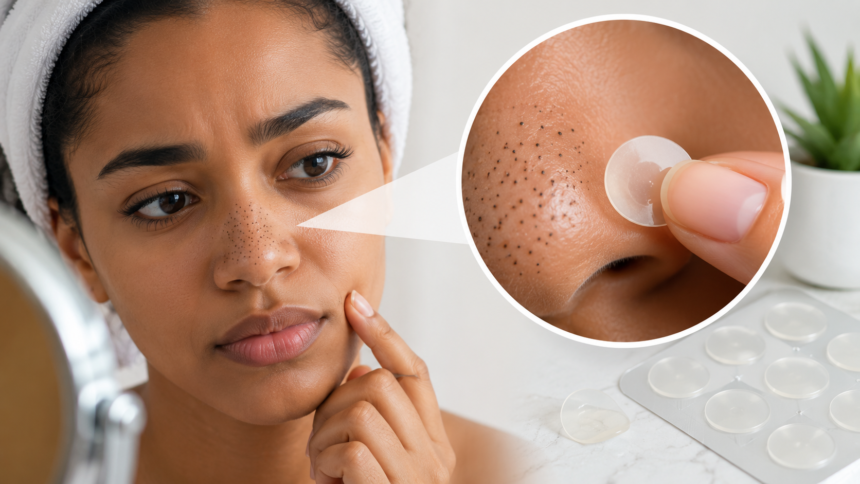
Pimple patches do not work on blackheads because they are designed to absorb fluid and pus from active, inflamed breakouts. Blackheads are open pores clogged with oxidized oil and dead skin cells, not fluid-filled lesions, so there is nothing for the patch to draw out.
Hydrocolloid patches are excellent for popped pimples, whiteheads, or oozing acne, but they offer little to no benefit for the dark, textured bumps caused by blackheads.
If you are dealing with blackheads specifically, ingredients like salicylic acid, retinoids, and clay-based treatments are far more suitable. Understanding the difference between these two skin concerns is the first step toward choosing the right treatment.
What Are Pimple Patches and How Do They Work?
Pimple patches are small adhesive stickers that stick directly onto a blemish to speed up healing. Their function depends entirely on the type of blemish they are placed on.
Hydrocolloid Technology Explained
Most pimple patches are made from hydrocolloid, a material originally developed for wound care. When placed on a pimple, the hydrocolloid creates a moist environment that pulls fluid, oil, and pus upward and away from the skin. This is why the patch often turns white or cloudy after several hours of wear, showing that it has absorbed material from the blemish underneath.
What Patches Are Designed to Treat
These patches work best on pimples that are already inflamed, popped, or leaking fluid. They are also useful for protecting a healing spot from bacteria, dirt, and accidental touching. However, their absorption mechanism only works when there is actual fluid present to pull out, which is a key detail that explains their limitation with other types of blemishes.
What Are Blackheads, Exactly
Blackheads look different from typical pimples and form through a completely separate process inside the skin.
Open Comedones vs. Whiteheads
Blackheads are technically called open comedones. Unlike whiteheads, which are closed and covered by a thin layer of skin, blackheads have an open pore that exposes the clogged material to air. This exposure is what causes the dark color, as the trapped oil oxidizes and turns from yellowish to black or dark brown over time.
Why Blackheads Form
Blackheads develop when excess sebum mixes with dead skin cells and gets trapped inside a pore. Since the pore remains open, this mixture is not covered or sealed, so no pus or inflammatory fluid builds up the way it does in a typical pimple. The result is a firm, textured plug rather than a soft, fluid-filled bump.
Why Pimple Patches Don’t Work Well on Blackheads
The core issue lies in the mismatch between how patches function and what blackheads actually contain.
No Fluid or Pus for the Patch to Absorb
Since pimple patches rely on absorbing liquid, they have nothing to draw out of a blackhead. The clogged material inside a blackhead is thick, oxidized, and solid in texture, not something that hydrocolloid can pull upward the way it does with an oozing pimple. Wearing a patch on a blackhead for hours will typically show no change in the patch’s appearance, confirming that no absorption has taken place.
Blackheads Are Not Inflamed or Open Wounds
Pimple patches were originally designed with wound-healing principles in mind, meaning they work best on irritated, broken, or leaking skin. Blackheads are neither irritated nor open wounds in the medical sense, even though the pore itself is technically “open.” This means the moist sealed environment created by the patch does not interact with blackhead material in any meaningful way, leaving the blackhead unchanged after removal.
When Patches Might Offer Minor Benefit
While pimple patches are not a real blackhead treatment, they are not entirely useless in related situations either.
Preventing Picking or Touching
Placing a patch over a blackhead-prone area can physically stop you from picking, squeezing, or touching the spot with your fingers. Since manual picking often worsens blackheads or leads to scarring, this indirect barrier effect can be helpful even though the patch itself is not treating the blackhead.
Some Patches With Added Salicylic Acid
A newer category of patches includes salicylic acid mixed into the adhesive material. These are different from plain hydrocolloid patches because the acid can help loosen and dissolve the oil plug inside a blackhead over repeated use. If you want a patch-style product that genuinely helps with blackheads, this ingredient-enhanced version is the only variety worth considering.
Comparison Table: Pimple Patches vs. Blackhead Treatments
The table below compares common treatment options so you can see clearly which ones are actually suited for blackheads versus regular pimples.
| Treatment Type | Best For | How It Works | Effective on Blackheads? |
| Plain Hydrocolloid Patch | Popped pimples, oozing spots | Absorbs fluid and pus from open wounds | No |
| Salicylic Acid Patch | Mild blackheads, clogged pores | Acid loosens oil plug over time | Somewhat |
| Salicylic Acid Cleanser/Toner | Blackheads, oily skin | Exfoliates inside the pore lining | Yes |
| Retinoids | Blackheads, texture, fine lines | Speeds up cell turnover, prevents clogging | Yes |
| Clay or Charcoal Mask | Oily areas, surface buildup | Draws out oil and impurities from pores | Yes, mildly |
| Professional Extraction | Stubborn or deep blackheads | Manual removal by trained esthetician | Yes |
This comparison makes it clear that blackhead-specific ingredients and professional techniques outperform standard patches, which remain far better suited to inflamed acne rather than comedonal congestion.
What Actually Works for Blackheads
If your main concern is blackheads rather than active pimples, these options are backed by dermatological understanding of how comedones form and clear.
Salicylic Acid (BHA)
Salicylic acid is oil-soluble, meaning it can penetrate directly into the pore lining where blackheads form. Regular use in a cleanser or leave-on treatment helps break down the oil and dead skin mixture from the inside, gradually reducing blackhead buildup over several weeks.
Retinoids or Retinol
Retinoids work by speeding up skin cell turnover, which prevents dead cells from accumulating and clogging pores in the first place. This makes them one of the most effective long-term options for reducing both existing blackheads and future formation.
Clay and Charcoal Masks
These masks work on the surface level by absorbing excess oil and drawing out some of the loose material sitting near the pore opening. They are not as deeply effective as salicylic acid or retinoids, but they can complement a routine as a weekly treatment.
Professional Extraction
For deep or stubborn blackheads, a licensed esthetician can perform manual extraction using sterile tools. This method physically removes the plug without relying on chemical breakdown, making it a fast option when at-home products are not enough.
Frequently Asked Questions
Can I use a pimple patch overnight on a blackhead?
You can wear it overnight, but it will not meaningfully treat the blackhead since there is no fluid for the patch to absorb.
Do nose strips work better than patches for blackheads?
Nose strips can physically pull out some surface debris, offering a temporary improvement, though blackheads often return without ongoing pore care.
Can pimple patches make blackheads worse?
Patches are unlikely to worsen blackheads, but they may trap oil under the adhesive if the skin underneath is already very congested.
How long does salicylic acid take to show results on blackheads?
Most people notice visible improvement after four to six weeks of consistent use, since pore clearing happens gradually.
Are there patches made specifically for blackheads?
Yes, some brands offer salicylic acid-infused patches designed for clogged pores, though results vary and they work slower than daily topical treatments.
Conclusion
Pimple patches are effective tools for active, fluid-filled pimples, but they are not designed to treat blackheads, which form through a different process involving oxidized oil rather than pus.
For real improvement, treatments like salicylic acid, retinoids, and professional extraction remain the most reliable choices. Understanding this distinction helps you build a skincare routine that targets the right problem with the right solution.
Related Posts
Why Is My Root Canal Tooth Hurting After Years? Causes & Fixes
Behavioral Health Billing: Complete Guide to Process, Coding, Claims, and Compliance
How Long Do Dentist Appointments Take? A Complete Time Guide
Microneedling Before and After Acne Scars: Complete Guide to Results, Recovery, and Benefits