


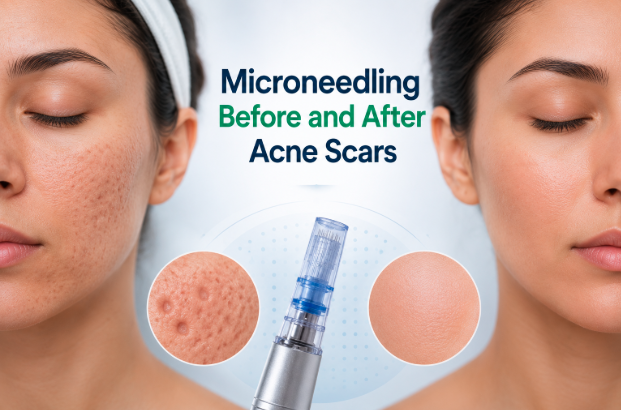
Acne scars can remain long after active acne has disappeared. For many people, these scars affect skin texture, confidence, and overall appearance. Among the various treatments available today, microneedling has become one of the most popular options because it helps improve acne scars naturally by stimulating the skin’s own healing process.
If you are researching microneedling before and after acne scars results, understanding how the treatment works and what outcomes you can realistically expect is important before making a decision.
Microneedling, also known as collagen induction therapy, uses tiny sterile needles to create controlled micro-injuries in the skin.
These tiny punctures encourage the body to produce new collagen and elastin, which are essential proteins responsible for smooth, firm, and healthy-looking skin. Over time, this process helps reduce the appearance of acne scars and improves overall skin texture.
Understanding Acne Scars
Acne scars develop when inflamed acne lesions damage the deeper layers of the skin. During the healing process, the body may produce either too much or too little collagen. When insufficient collagen is produced, depressed scars can form, leaving uneven areas on the skin.
The most common types of acne scars include rolling scars, boxcar scars, and ice pick scars. Rolling scars create a wave-like appearance on the skin, while boxcar scars have defined edges and a sunken look. Ice pick scars are narrow but deep, making them more challenging to treat.
Not all scars respond equally to treatment. Microneedling generally works best for rolling and boxcar scars because collagen stimulation can gradually fill in the depressed areas. Ice pick scars may require combination treatments for optimal results.
Can Microneedling Remove Acne Scars?
One of the most common questions people ask is whether microneedling can completely remove acne scars. The answer depends on the severity and type of scarring. While complete removal is not always possible, significant improvement can often be achieved after a series of treatments.
The goal of microneedling is not to erase scars overnight but to gradually improve skin texture and reduce scar visibility. Many patients notice smoother skin, softer scar edges, and a more even complexion after several sessions. Results continue to improve over time as collagen production increases.
The effectiveness of treatment depends on several factors:
| Factor | Impact on Results |
|---|---|
| Scar Type | Rolling and boxcar scars respond best |
| Scar Severity | Mild scars improve faster than deep scars |
| Number of Sessions | Multiple treatments produce better outcomes |
| Age | Younger skin may heal faster |
| Aftercare | Proper skincare supports better healing |
Preparing for Microneedling Treatment
Preparation plays an important role in achieving successful microneedling before and after acne scars results. Most skincare professionals recommend avoiding harsh exfoliants, retinoids, and chemical peels for several days before treatment. Excessive sun exposure should also be avoided because irritated skin may become more sensitive during the procedure.
A consultation with a qualified dermatologist or skincare specialist is recommended before beginning treatment. During this consultation, the professional will assess your skin type, scar condition, medical history, and treatment goals.
People with active acne breakouts, skin infections, or certain medical conditions may need to postpone treatment until their skin is healthier.
What Happens During the Procedure?
Microneedling is a relatively simple and minimally invasive procedure. Before treatment begins, a numbing cream is usually applied to reduce discomfort. Once the skin becomes numb, a specialized microneedling device is moved across the treatment area.
The device contains fine needles that create thousands of microscopic channels in the skin. Although this may sound uncomfortable, most patients describe the sensation as mild and tolerable.
A typical session lasts between 30 and 60 minutes, depending on the size of the treatment area. After the procedure, the skin may appear red and slightly swollen, similar to a mild sunburn.
Microneedling Before and After Acne Scars: Healing Timeline
Understanding the recovery process helps set realistic expectations. The skin requires time to repair itself and generate new collagen after each session.
Day 1
Immediately after treatment, redness and mild swelling are common. The skin may feel warm, tight, and sensitive. Some people experience slight pinpoint bleeding during treatment, but this typically resolves quickly.
Days 2 to 3
Redness gradually decreases, although the skin may still feel dry and rough. Mild peeling can occur as damaged surface cells begin to shed. This stage is a normal part of the healing process.
Days 4 to 7
Most visible signs of treatment begin to fade. Skin texture often starts feeling smoother, and many individuals notice an early glow. However, significant scar improvement is not yet visible because collagen production takes time.
Weeks 2 to 4
The body continues producing collagen beneath the skin’s surface. Skin tone may appear more even, and minor texture improvements often become noticeable.
Months 1 to 6
This is when the most meaningful changes occur. As collagen remodeling continues, acne scars gradually become less noticeable. Skin appears firmer, smoother, and healthier over time.
Before and After Results for Acne Scars
The phrase microneedling before and after acne scars is frequently searched because people want to see visible proof of improvement. While results vary from person to person, most patients experience gradual changes rather than dramatic overnight transformations.
Common improvements include:
- Reduced scar depth.
- Smoother skin texture.
- Improved skin elasticity.
- More even skin tone.
- Smaller-looking pores.
- Healthier overall appearance.
Patients with mild to moderate acne scarring often see noticeable improvements after three to six treatment sessions. Severe scars may require additional treatments or combination therapies.
Results Based on Scar Type
Different scar types respond differently to microneedling treatment.
| Scar Type | Expected Improvement |
| Rolling Scars | Excellent response |
| Boxcar Scars | Good to excellent response |
| Ice Pick Scars | Moderate response |
| Mixed Scarring | Variable results |
Rolling scars typically show the most improvement because collagen production helps smooth the skin’s uneven surface. Boxcar scars also respond well, particularly when combined with other professional treatments. Ice pick scars may require procedures such as chemical reconstruction or laser treatments in addition to microneedling.
How Many Sessions Are Needed?
Microneedling is not usually a one-time treatment. Most skincare professionals recommend a series of sessions to achieve the best results.
The number of sessions often depends on scar severity:
- Mild acne scars: 3 to 4 sessions.
- Moderate acne scars: 4 to 6 sessions.
- Severe acne scars: 6 or more sessions.
Treatments are generally spaced four to six weeks apart to allow adequate healing and collagen formation between sessions.
Patience is essential because collagen production occurs gradually. Consistent treatment often produces more noticeable and longer-lasting improvements.
Benefits of Microneedling for Acne Scars
Microneedling has become popular because it offers several advantages compared to more aggressive procedures.
One major benefit is that it stimulates natural collagen production rather than relying on artificial fillers. This means improvements continue developing long after the procedure is completed.
Another advantage is minimal downtime. Most people can return to normal activities within a few days. The treatment is also suitable for a wide range of skin tones, making it an attractive option for individuals who may not be ideal candidates for certain laser treatments.
Additionally, microneedling can improve more than just acne scars. Many patients notice reduced fine lines, improved skin firmness, and a brighter complexion.
Potential Risks and Side Effects
Although microneedling is generally considered safe when performed by trained professionals, some side effects can occur.
Common temporary side effects include redness, swelling, dryness, and mild irritation. These reactions usually resolve within several days.
Less common complications may include infection, prolonged redness, or changes in pigmentation. Following proper aftercare instructions significantly reduces these risks.
Choosing an experienced provider and maintaining good skincare practices are essential for achieving safe and effective results.
Aftercare Tips for Better Results
Proper aftercare is a critical part of achieving successful microneedling before and after acne scars outcomes.
During the first few days after treatment, the skin is more sensitive than usual. Gentle skincare products should be used, and harsh exfoliants should be avoided.
Important aftercare recommendations include:
- Use a gentle cleanser.
- Apply a dermatologist-approved moisturizer.
- Avoid direct sun exposure.
- Wear broad-spectrum sunscreen daily.
- Avoid picking or scratching the skin.
- Follow professional skincare advice carefully.
Good aftercare supports healing and helps maximize collagen production.
Common Mistakes to Avoid
Many people make mistakes that can slow recovery or reduce treatment effectiveness. One common mistake is expecting immediate results. Because collagen production takes time, visible improvements may require several weeks or months.
Another mistake is returning to active skincare ingredients too quickly. Products containing strong acids, retinoids, or exfoliants can irritate healing skin.
Skipping sunscreen is also problematic because newly treated skin is more vulnerable to sun damage and pigmentation changes.
Avoiding these mistakes can improve overall treatment outcomes.
Frequently Asked Questions
Does microneedling hurt?
Most patients experience minimal discomfort because numbing cream is applied before treatment.
Is microneedling safe for all skin types?
Yes, microneedling is generally considered safe for most skin tones and skin types when performed correctly.
How long do results last?
Results can last for years, especially when supported by a healthy skincare routine and occasional maintenance treatments.
Can microneedling worsen acne scars?
When performed improperly, complications may occur. However, professional treatment is designed to improve, not worsen, acne scars.
Can makeup be worn after treatment?
Most professionals recommend waiting at least 24 hours before applying makeup to allow the skin to begin healing.
Final Thoughts
Microneedling has earned its reputation as one of the most effective non-surgical treatments for acne scars. By stimulating the body’s natural collagen production, it gradually improves skin texture, reduces scar depth, and promotes a healthier complexion. While results vary based on scar type and severity, many individuals achieve significant improvements after a series of treatments.
When evaluating microneedling before and after acne scars results, it is important to remember that patience is key. The best outcomes develop gradually as collagen rebuilds beneath the skin’s surface. With proper treatment, realistic expectations, and good aftercare, microneedling can be a valuable option for those seeking smoother, more confident-looking skin.
Related Articles
Can Vaping Cause Acne? Understanding the Connection Between Vaping and Breakouts
Can Being Sick Cause Acne? Causes, Symptoms, and Complete Skin Guide
Heart Pain While Exercising: Causes, Warning Signs, and When to Call 911
Hally Health: Complete Guide to Features, Wellness Programs, and Healthcare Services
Bone Spurs on Spine: Causes, Symptoms, Treatment Options, and Prevention Tips


