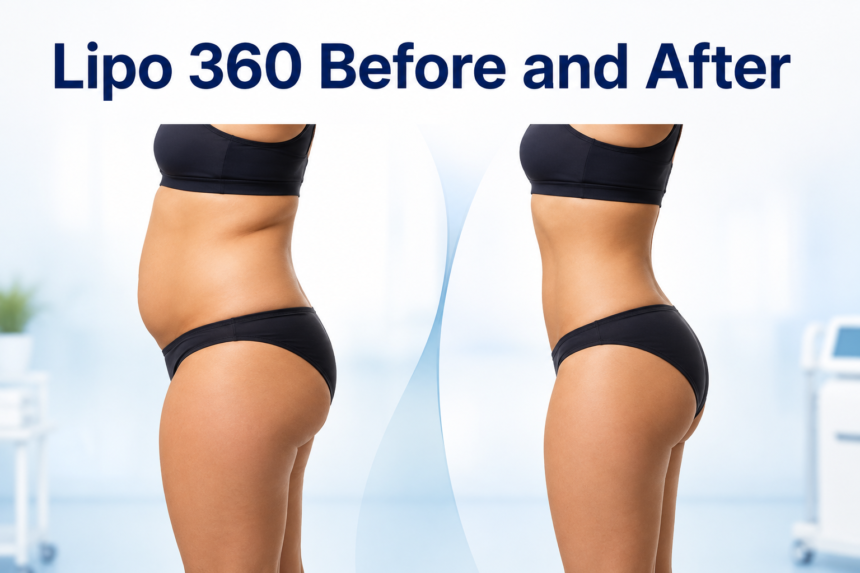
Lipo 360 before and after photos are one of the most searched topics among people considering body contouring surgery, because seeing real transformations helps set honest expectations.
This guide walks through what the procedure actually involves, how results develop over time, what changes you can realistically expect to see, and how to judge before-and-after photos with a critical eye.
By the end, you will understand exactly how a Lipo 360 before and after journey unfolds from consultation to final results.
What Is Lipo 360?
Lipo 360 is a full-circumference liposuction technique that reshapes the entire midsection rather than just one area. The name “360” simply refers to the fact that fat is removed all the way around the waist instead of from a single spot.
Areas Treated in Lipo 360
Unlike older liposuction methods that focused on just the stomach or just the flanks, Lipo 360 targets the upper and lower abdomen, both flanks, the lower back, and sometimes the upper back. Treating all these regions together allows the surgeon to create one continuous, balanced contour rather than isolated pockets of improvement. This is a major reason patients see more dramatic Lipo 360 before and after differences compared to traditional spot liposuction.
How It Differs From Traditional Liposuction
Traditional liposuction usually addresses one or two areas in isolation, which can sometimes leave the waistline looking uneven or asymmetrical. Lipo 360 treats the midsection as a single connected unit, blending the front, sides, and back together. This comprehensive approach is what gives Lipo 360 before and after photos their signature hourglass-style contour, especially in the waist and hip area.
Who Is a Good Candidate
Good candidates are generally close to their goal weight, have firm and elastic skin, and are dealing with stubborn fat pockets that do not respond to diet and exercise. It is not a weight-loss surgery; it is a body-contouring procedure meant to refine shape rather than cause major weight change. People with realistic goals about what liposuction can and cannot do tend to be happiest with their outcome.
How Lipo 360 Works?
The procedure begins with a detailed consultation and is performed under anesthesia using specialized fat-removal techniques. Understanding this process helps explain why Lipo 360 before and after results take time to fully appear.
The Consultation and Planning Process
During the consultation, the surgeon examines skin quality, fat distribution, and overall body shape to design a customized treatment map. Photos are usually taken at this stage, which later become the “before” half of the before-and-after comparison. This planning step is critical because it determines how balanced and natural the final contour will look.
Techniques Used During Surgery
Surgeons may use tumescent liposuction, power-assisted liposuction, laser-assisted liposuction, or VASER ultrasonic technology, depending on the patient’s needs. Each technique loosens and removes fat slightly differently, but the shared goal is precise, even fat removal around the entire waistline. The technique chosen can influence how quickly swelling resolves and how soon visible Lipo 360 before and after changes appear.
Before the Procedure
Preparation plays a major role in both safety and the quality of final results. Patients typically receive a checklist of steps to follow in the weeks leading up to surgery.
Pre-Surgery Preparation Checklist
Patients are usually asked to stop smoking, avoid certain medications and supplements that thin the blood, maintain a stable weight, and arrange for post-surgery transportation and help at home. Staying hydrated and eating a balanced diet in the weeks before surgery can also support smoother healing. Following these steps closely reduces the risk of complications and supports a cleaner recovery.
What “Before” Photos Typically Show
Before photos are usually taken from the front, back, and both side angles under neutral lighting and in fitted clothing or minimal clothing so that body shape is clearly visible. These photos capture the natural fat distribution, any asymmetry, and skin laxity before any changes are made. They serve as the baseline against which every future improvement is measured.
Recovery Timeline: How Lipo 360 Before and After Results Develop
Results do not appear overnight; they unfold gradually as swelling reduces and tissues settle into their new shape. The table below breaks down what typically happens at each stage of recovery.
| Recovery Stage | Timeframe | What to Expect |
| Immediate post-op | Day 1–3 | Swelling, tightness, and soreness are highest; compression garment is worn continuously |
| Early healing | Week 1–2 | Bruising and swelling begin to reduce; light walking is encouraged |
| Settling phase | Week 3–6 | Body starts adjusting to its new contour; some swelling still present |
| Early visible results | Month 2–3 | Waistline shape becomes noticeably clearer; most people return to normal routines |
| Near-final results | Month 3–6 | Swelling largely resolves; contour looks close to the final outcome |
| Final results | Month 6–12 | Skin has fully retracted and settled, revealing the complete Lipo 360 before and after transformation |
Because full results take several months to appear, patients are encouraged to be patient and avoid judging their outcome too early. Comparing photos at each of these stages, rather than just day one versus day thirty, gives a far more accurate picture of progress.
What Before-and-After Photos Actually Show
Before-and-after galleries are meant to illustrate realistic change, but they can be interpreted differently depending on how the photos are taken and presented.
Common Angles Used in Comparison Photos
Most galleries include front-facing shots, side profile shots, and back-view shots, since fat is removed from all these directions. Viewing all three angles together gives a fuller sense of how balanced the final contour is, rather than relying on just one flattering angle. A trustworthy Lipo 360 before and after gallery will usually include multiple angles for the same patient.
How to Evaluate Photos Critically
Lighting, posing, and even camera distance can make results look more dramatic than they actually are, so it helps to look for consistent lighting and identical poses between the before and after shots. Genuine galleries usually show a range of body types and modest, realistic improvements rather than only the most extreme transformations. Being aware of these details helps set expectations that match what is truly achievable for your own body.
Factors That Affect Lipo 360 Before and After Results
Results vary from person to person, and several physical and lifestyle factors influence the final outcome.
Skin Elasticity and Age
Patients with firmer, more elastic skin tend to see smoother contours because the skin can retract neatly over the treated area. Older patients or those with looser skin may still see excellent fat reduction, but the skin-tightening effect may be more limited. This is one of the biggest reasons why two patients with similar starting bodies can have noticeably different final results.
Surgeon Skill, Technique and Aftercare
An experienced surgeon’s technique directly affects how even and natural the final shape looks, since uneven fat removal can create visible irregularities. Equally important is how closely the patient follows aftercare instructions, including wearing compression garments and easing back into activity gradually. Together, surgical skill and disciplined recovery are the two biggest controllable factors behind a successful outcome.
Benefits Highlighted in Before-and-After Comparisons
People reviewing Lipo 360 before and after galleries are usually looking for a few consistent improvements, which commonly include the following:
- A more defined waist-to-hip ratio that creates a smoother silhouette
- Even, blended contours across the front, sides, and back rather than isolated flat spots
- Better fit in fitted clothing, since the waistline sits more consistently
- Reduction of common trouble spots like the “muffin top” above the waistband and rolls along the lower back
These benefits are the reason Lipo 360 has become popular compared to treating just one area, since the circumferential approach avoids leaving untreated sections that stand out against the newly contoured areas.
Risks and Realistic Expectations
Like any surgical procedure, Lipo 360 carries some risks that are important to understand before moving forward. Temporary swelling, bruising, numbness, and fluid buildup are common in the weeks following surgery, and most of these resolve naturally during healing. Less common risks include infection, contour irregularities, or reaction to anesthesia, which is why choosing an experienced, board-certified surgeon matters so much. It is also worth remembering that significant weight gain after surgery can affect long-term results, since remaining fat cells can still expand. Maintaining a stable weight through diet and regular activity is the best way to protect your results over time.
Choosing a Provider Based on Their Before-and-After Gallery
A provider’s photo gallery can tell you a lot about their skill and consistency, but only if you know what to look for.
Red Flags to Watch For
Be cautious of galleries with inconsistent lighting, different poses between before and after shots, or images that appear cropped to hide certain angles.
Heavily filtered or overly polished photos can also be a sign that results are being exaggerated rather than shown honestly. A pattern of only showing dramatic transformations without any modest, average results is another warning sign worth noting.
Questions to Ask Before Booking
Ask whether the photos shown are of the surgeon’s own patients, how many Lipo 360 procedures they perform regularly, and whether they are board-certified in plastic surgery.
It also helps to ask how the timeline in the photos was tracked, since accurate photos are usually labeled with clear timeframes such as three months or six months post-surgery.
Providers who answer these questions transparently are generally more trustworthy sources of realistic Lipo 360 before and after expectations.
Cost Considerations
Lipo 360 pricing varies widely depending on several factors, summarized in the table below.
| Cost Factor | How It Affects Price |
| Number of areas treated | More regions treated around the waist typically increases total cost |
| Technique used | Advanced technologies like laser or ultrasonic-assisted methods can cost more than standard liposuction |
| Surgeon experience | Highly experienced, board-certified surgeons often charge more |
| Geographic location | Prices vary significantly between cities and countries |
| Facility and anesthesia fees | Operating room, anesthesia provider, and post-op garments add to the total cost |
Many clinics offer payment plans or financing options, so it is worth asking about these during the consultation rather than assuming the full cost must be paid upfront.
Frequently Asked Questions
How long do Lipo 360 results last? Results can last for many years as long as weight remains stable, since removed fat cells do not return, though remaining cells can still grow with weight gain.
When will I see my final results? Most patients see close-to-final results between three and six months, with complete settling by around twelve months.
Is Lipo 360 painful? There is soreness and tightness during early recovery, but this is generally manageable with prescribed pain relief and improves within the first couple of weeks.
Can fat come back after Lipo 360? The treated fat cells are permanently removed, but significant weight gain can still cause remaining fat cells elsewhere to expand.
How is Lipo 360 different from a tummy tuck? Lipo 360 removes fat and contours the waistline, while a tummy tuck also removes excess skin and tightens abdominal muscles, making the two suited to different concerns.
Conclusion
A genuine Lipo 360 before and after journey unfolds gradually, shaped by surgical skill, skin quality, and how closely recovery guidelines are followed.
Reviewing photos across multiple angles and timeframes, rather than a single dramatic image, gives the most realistic sense of what to expect.
Choosing an experienced, board-certified provider and maintaining a stable weight afterward are the two most reliable ways to protect and enjoy long-lasting results.
Related Posts
Does Mucinex Make You Cough More? What You Should Know
Do Pimple Patches Work on Blackheads? Here’s the Truth
Can Kidney Stones Cause Lower Back Pain? Causes, Symptoms & Relief