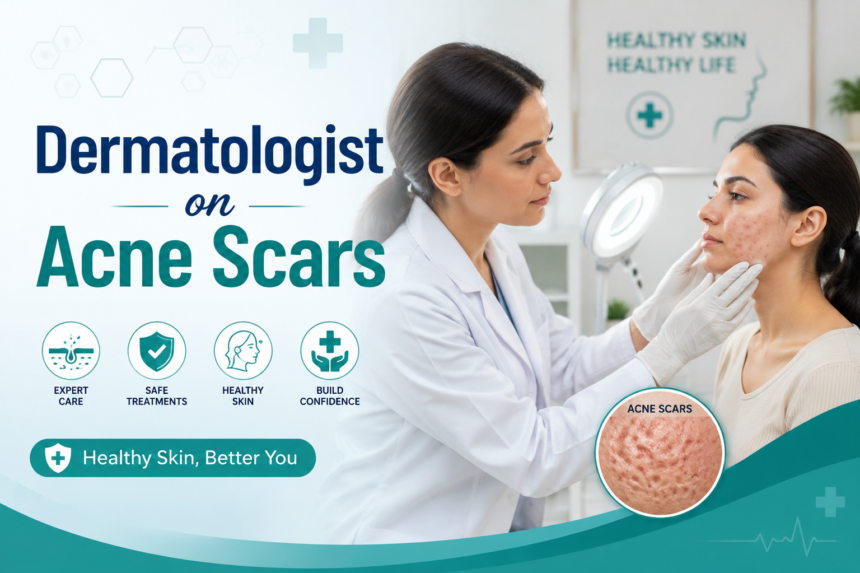
Acne scars are one of the most common skin concerns people bring up with a skincare specialist, since these marks often last much longer than the breakouts that caused them.
Getting advice from a dermatologist on acne scars helps in understanding why scars form and which treatments actually work for different skin types. Many people try various home remedies before realizing that professional guidance gives faster and more reliable results.
In this article, we will discuss the different types of acne scars and the dermatologist-recommended treatments that can help restore smoother skin.
What Are Acne Scars?
Acne scars are marks left on the skin after a pimple, cyst, or inflamed breakout heals. They form when the skin’s deeper layers are damaged during the healing process, which disrupts the normal production of collagen.
It is important to separate true scars from temporary acne marks. Acne marks, also called post-inflammatory hyperpigmentation, are flat, discolored patches that usually fade on their own within a few months. Scars, on the other hand, involve a change in the skin’s texture, either through indentations or raised tissue, and these changes do not disappear without treatment.
A dermatologist on acne scars will almost always start by checking whether a person actually has scarring or simply lingering discoloration, since the treatment path for each is very different.
Types of Acne Scars
There are two broad categories of acne scars, and each one looks and behaves differently on the skin. Knowing which type you have makes it much easier to understand why a dermatologist suggests a particular treatment.
Hypertrophic and Keloid Scars
These scars form when the skin produces too much collagen while healing, causing the area to rise above the surrounding skin. Hypertrophic scars stay within the boundary of the original wound, while keloid scars can grow beyond it. They are more common in people with darker skin tones and tend to appear on the chest, back, and jawline more than on the face.
Atrophic scars
Atrophic scars are the opposite of raised scars. They form when there is not enough collagen produced during healing, leaving behind a sunken or pitted area. This is the most common type of acne scarring seen on the face, and it is usually divided into three subtypes.
Boxcar scars
Boxcar scars have sharp, defined edges and a wider base, giving the skin a slightly box-like indentation. They often appear on the cheeks and jawline.
Ice-pick scars
Ice-pick scars are narrow but go deep into the skin, almost like a small puncture mark. These are considered one of the harder scar types to treat because of how deep they sit.
Rolling scars
Rolling scars create a wave-like texture on the skin because the tissue underneath has formed bands that pull the surface down at certain points. These scars tend to be wider and shallower compared to boxcar or ice-pick scars.
What Causes Acne Scarring?
Acne scarring does not happen to everyone who gets acne, and it usually comes down to a combination of how the skin reacts to inflammation and how the breakout is treated. The deeper and longer an inflamed pimple lasts, the more likely it is to leave a permanent mark behind.
Several common factors increase the chances of scarring:
- Severe inflammation that damages the surrounding skin tissue and collagen structure.
- Picking, squeezing, or popping pimples, which pushes infection deeper and increases tissue damage.
- Delaying treatment for active acne, allowing breakouts to worsen over time.
- Genetic factors, since some people naturally produce more or less collagen during healing.
A dermatologist on acne scars will usually ask about acne history, including how long breakouts lasted and whether they were picked at, since this history helps predict the type of scarring a person is dealing with.
How Dermatologists Diagnose Scar Type?
Before recommending any treatment, a dermatologist needs to correctly identify the scar type, since boxcar, ice-pick, rolling, and raised scars all respond differently to procedures. Skipping this step often leads to disappointing results, even with advanced treatments.
Diagnosis is usually done through a simple visual and physical examination of the skin under good lighting, sometimes combined with stretching the skin gently to see how the scar tissue behaves.
In some cases, dermatologists use a handheld magnifying tool or dermoscope to get a closer look at the scar’s depth and edges. This assessment also helps determine whether a person has one dominant scar type or a mix of several, which is common for people who have had long-term or severe acne.
Dermatologist-Recommended Treatments
Treatment for acne scars has improved significantly, and dermatologists now have several options depending on scar depth, type, and the patient’s skin tone. Most treatments work by encouraging new collagen production or physically reshaping the scarred tissue.
The table below summarizes the most commonly used treatments and what they are generally best suited for.
| Treatment | Best For | How It Works |
| Topical retinoids | Mild scarring, texture issues | Speeds up skin cell turnover and boosts collagen |
| Chemical peels | Surface discoloration, mild scars | Removes outer skin layers to reveal smoother skin |
| Microneedling | Rolling and boxcar scars | Creates tiny punctures to trigger collagen healing |
| Laser resurfacing | Boxcar and rolling scars | Removes damaged layers and stimulates new tissue |
| Dermal fillers | Shallow depressed scars | Adds volume beneath the scar to even out the surface |
| Subcision | Rolling scars | Releases fibrous bands pulling the skin down |
| Punch excision | Deep ice-pick scars | Surgically removes the scar and closes the area |
| Steroid injections | Hypertrophic and keloid scars | Reduces excess collagen and flattens raised tissue |
Most dermatologists do not rely on a single treatment alone. Instead, they often combine two or more methods, such as microneedling followed by a chemical peel, to get better and longer-lasting results.
Which Treatment Works Best for Each Scar Type?
Matching the right treatment to the right scar type is one of the most important parts of getting good results, and this is exactly why professional guidance matters so much.
For raised scars like hypertrophic and keloid types, steroid injections are usually the first choice, sometimes paired with laser treatment to flatten the tissue further. For boxcar scars, a mix of laser resurfacing and microneedling tends to work well since both methods target the defined edges and depth.
Ice-pick scars often respond best to punch excision because their narrow, deep shape makes surface-level treatments less effective on their own. Rolling scars usually improve the most with subcision combined with filler or microneedling, since releasing the underlying tissue bands is key to smoothing the surface.
At-Home Care vs. Professional Treatment
Many people try to manage acne scars at home before seeing a specialist, and while some products can help with mild cases, they rarely match the results of professional treatment for deeper scarring.
Over-the-counter products containing ingredients like vitamin C, niacinamide, or low-strength retinoids can improve skin texture and fade lingering discoloration over time. However, these products cannot rebuild collagen the way in-clinic procedures can, which means they are usually ineffective on true atrophic or hypertrophic scars.
A dermatologist on acne scars is typically necessary once scarring becomes noticeable in normal lighting or affects a person’s confidence, since professional tools can reach deeper skin layers that home products simply cannot access.
Prevention Tips
While not all scarring can be avoided, several habits can significantly lower the risk of acne leaving a lasting mark.
- Treat active acne early instead of waiting for it to worsen on its own.
- Avoid picking, popping, or squeezing pimples, even when they seem ready to burst.
- Apply sunscreen daily, since UV exposure can darken healing marks and slow recovery.
- Stick to a consistent, gentle skincare routine that supports the skin barrier during breakouts.
These habits will not guarantee scar-free skin, but they reduce the severity of scarring in most cases, especially when combined with timely acne treatment.
What to Expect: Timeline and Results
Acne scar treatments take time, and dermatologists are usually upfront about the fact that visible improvement does not happen after a single session. Most procedures, including microneedling and laser resurfacing, require three to six sessions spaced several weeks apart to allow the skin to heal and rebuild collagen properly.
It is also realistic to expect noticeable improvement rather than complete removal, especially for deeper scars like ice-pick or severe boxcar types. Skin tone, scar depth, and how the body responds to treatment all play a role in the final outcome, which is why dermatologists often set expectations early in the process rather than promising perfect results.
Cost Considerations
The cost of acne scar treatment varies widely depending on the procedure, the number of sessions needed, and the clinic’s location. Simple treatments like chemical peels are generally more affordable, while advanced options such as laser resurfacing or punch excision tend to cost more due to the equipment and expertise involved.
Insurance coverage for acne scar treatment is uncommon since these procedures are usually classified as cosmetic rather than medically necessary. Some clinics offer package deals for multiple sessions, which can reduce the overall cost compared to paying per visit.
FAQs
Can acne scars disappear completely?
Most acne scars can be significantly improved, but complete removal is uncommon, especially for deep ice-pick or boxcar scars. The goal of treatment is usually to make scars far less noticeable rather than erase them entirely.
Is there a best age to start treatment?
There is no strict age requirement for acne scar treatment, though many dermatologists recommend waiting until active acne is under control before starting procedures, since new breakouts can interfere with healing.
Do home remedies actually work for acne scars?
Home remedies and over-the-counter products can help with mild texture issues and discoloration, but they are generally not strong enough to treat deeper atrophic or raised scars on their own.
Will acne scars get worse if left untreated?
Acne scars do not usually worsen on their own once a breakout heals, but sun exposure or new breakouts in the same spot can make them more noticeable over time.
Can diet or skincare products alone fix deep acne scars?
They can improve skin health and surface texture slightly, but deep scars like boxcar or ice-pick types usually need professional treatment to see real change.
How long does it take to see results after starting treatment?
Mild improvement often shows after two to three sessions, while full results from treatments like microneedling or laser resurfacing usually take a few months.
Conclusion
Understanding what a dermatologist on acne scars typically recommends can make the entire treatment journey feel less overwhelming. From identifying the exact scar type to choosing a treatment plan that fits the skin’s needs, professional guidance plays a major role in achieving real, lasting improvement.
While patience is required since results build up over multiple sessions, working with a qualified dermatologist remains the most reliable way to reduce the appearance of acne scars and restore smoother, healthier-looking skin.
Related Articles
Fungal Acne vs Bacterial Acne: Understanding the Key Differences, Symptoms, and Treatments
What Causes White Spots on Gums — and Should You Be Worried?
United Health Care Data Center: Complete Guide to Healthcare Data Management and Technology
How to Get Rid of a Headache Fast: Proven Relief Methods That Work
Cramps But No Period: Causes, Pregnancy Signs & When to Worry