

Skin cancer on the scalp is one of the most commonly overlooked yet serious conditions, as it often develops due to chronic, unprotected sun exposure over time.
It typically appears as non-healing sores, scaly red patches, or changing moles that are easy to miss beneath the hair.
In this discussion, we will explore the primary causes of skin cancer on the scalp, examine the key symptoms of skin cancer on the scalp, and shed light on what to watch for in order to seek timely medical attention.
What is skin cancer on the scalp?
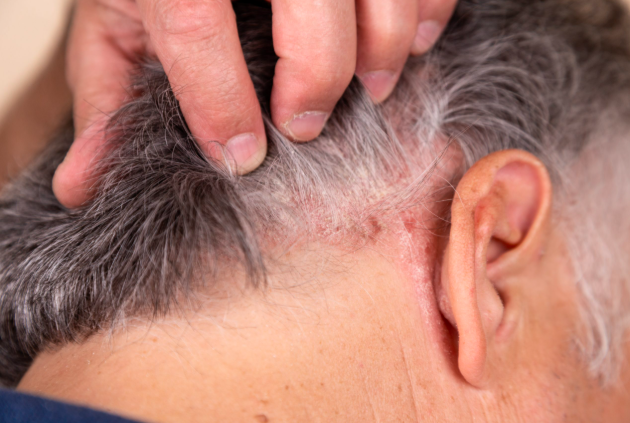
Skin cancer on the scalp is an abnormal growth of cells caused by ultraviolet (UV) radiation from the sun, which damages the DNA within scalp skin cells and triggers their uncontrolled division.
Over time, repeated and unprotected exposure to UV rays breaks down the skin’s natural repair mechanisms, allowing mutated cells to multiply and form malignant tumors on the scalp.
It is one of the most vulnerable areas of the body to such damage, as it bears the most direct and prolonged exposure to sunlight throughout a person’s lifetime.
Why is the scalp a high-risk zone for skin cancer?
The scalp is considered a high-risk zone for skin cancer because it receives intense, often unprotected, ultraviolet (UV) radiation exposure throughout a person’s daily life, making it one of the most sun-bombarded areas of the entire body.
Unlike the face or arms, the scalp is rarely covered with sunscreen, and for individuals with thinning hair or baldness, there is little to no natural barrier against the harsh UV rays.
This consistent and cumulative exposure to direct sunlight over the years causes progressive DNA damage to the scalp’s skin cells, significantly raising the likelihood of malignant growths developing in this region.
Types of skin cancer that develop on the scalp
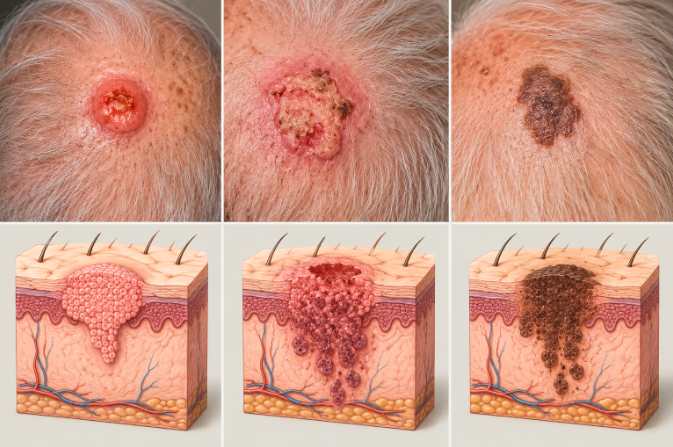
Several distinct types of skin cancer can develop on the scalp, each differing in origin, behavior, and level of danger. The three most recognized forms are Basal Cell Carcinoma, Squamous Cell Carcinoma, and Melanoma.
Basal Cell Carcinoma (BCC)
The most common and slowest-growing type of scalp skin cancer, originating in the deepest basal cell layer of the skin. It rarely spreads but can invade deeper tissues, including bones, if left untreated.
Squamous Cell Carcinoma (SCC)
A more aggressive type that develops in the outer layers of the scalp skin, appearing as firm red nodules or scaly sores. It carries a higher risk of spreading to nearby lymph nodes and organs if not treated promptly.
Melanoma
The least common but most dangerous type, originating in the pigment-producing melanocytes of the skin. It spreads rapidly to other organs and is especially threatening on the scalp as it often remains hidden beneath the hair, delaying early diagnosis.
What does skin cancer on the scalp look like?
Skin cancer on the scalp appears as a new, changing, or persistent spot hidden beneath the hair. It can look like a shiny bump, a scaly red patch, or a dark irregular mole that evolves over time.
- Shiny or Pearly Bump: A small, waxy, dome-shaped bump on the scalp is an early sign of Basal Cell Carcinoma that may bleed easily. It gradually enlarges and can develop a central ulcer if left untreated.
- Crusty or Scaly Red Patch: A rough, persistent red patch that does not heal is a common indicator of Squamous Cell Carcinoma on the scalp. It continues to crust, bleed, and worsen despite standard skin treatments.
- Dark or Irregular Mole: A dark, asymmetrical mole with uneven borders and changing colors is a primary warning sign of Melanoma. Any mole that evolves in size or shape on the scalp requires immediate dermatological evaluation.
Symptoms of skin cancer on the scalp
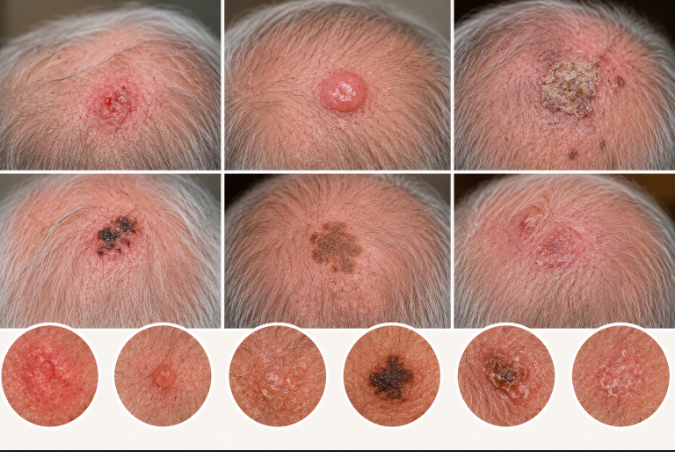
Skin cancer on the scalp often goes undetected as its symptoms remain hidden beneath the hair. Key warning signs include a bleeding sore, a scaly red patch, or a crusty wart-like bump that persists over time.
Bleeding Sore
A persistent open sore on the scalp that repeatedly bleeds, crusts over, and fails to heal is a major warning sign of skin cancer. It signals abnormal cell activity beneath the skin that requires immediate medical attention.
Scaly Red Patch
A rough, inflamed red patch that does not respond to ordinary scalp treatments is a common symptom of skin cancer. It gradually thickens and flakes, making it easy to mistake for psoriasis or eczema.
Crusty Wart-Like Bump
A raised, hardened bump with a rough crusty surface resembling a wart is a recognizable symptom of Squamous Cell Carcinoma. Hidden beneath the hair, it often goes unnoticed until felt by touch or discovered during a haircut.
Who is most at risk for scalp skin cancer?
Individuals with high, chronic UV exposure are most at risk for scalp skin cancer, particularly older men with thinning hair or baldness.
- Older Men with Thinning Hair or Baldness: Thinning or absent hair removes the scalp’s natural UV barrier, leaving skin vulnerable to years of direct sun damage. This cumulative exposure significantly accelerates DNA damage and raises the risk of malignant cell growth.
- Individuals with Chronic UV Exposure: People who spend prolonged hours outdoors without sun protection repeatedly damage the scalp’s DNA repair mechanisms over time. This chronic UV absorption creates favorable conditions for cancerous cell development on the scalp.
- Fair-Skinned Individuals: Fair-skinned individuals have less melanin, making their scalp far more susceptible to UV radiation damage than darker skin tones. Even limited sun exposure can trigger sufficient DNA damage to initiate scalp skin cancer in these individuals.
Causes of skin cancer on the scalp
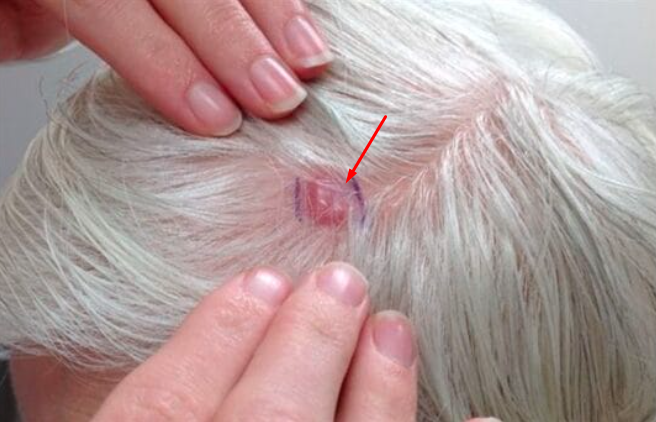
Skin cancer on the scalp develops primarily due to unprotected, long-term exposure to UV rays from the sun or tanning beds.
Prolonged Sun Exposure
Repeated, unprotected sun exposure over many years progressively damages scalp skin cell DNA, causing mutations that lead to uncontrolled cancerous growth.
Tanning Bed Use
Tanning beds emit concentrated UV radiation more intense than sunlight, rapidly damaging scalp skin cell DNA and significantly raising the risk of skin cancer.
Lack of Sun Protection
Consistently skipping sunscreen or protective headgear leaves the scalp exposed to daily UV radiation, accumulating irreversible skin cell damage that triggers cancer development.
How to check your scalp for skin cancer
Regularly checking your scalp using a hairdryer and mirror helps detect new, changing, or bleeding growths early, particularly by applying the ABCDE rule for moles.
- Using a Hairdryer and Mirror: Part the hair in sections with a hairdryer while using a handheld and wall mirror together to systematically expose and examine every area of the scalp.
- Looking for New or Changing Growths: Look for any spot that has recently appeared, changed in size or color, or bleeds without cause, as these are key early warning signs of scalp skin cancer.
- Applying the ABCDE Rule for Moles: The ABCDE rule — Asymmetry, Border, Color, Diameter, and Evolution — helps identify suspicious moles on the scalp that require immediate dermatological assessment.
How to prevent skin cancer on the scalp?
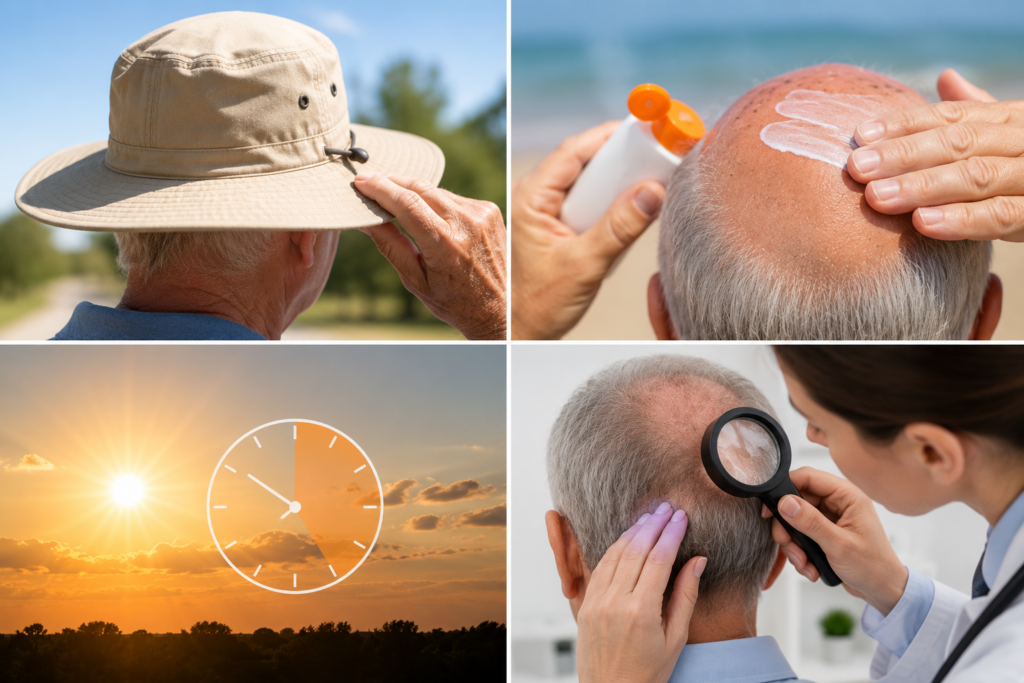
Preventing skin cancer on the scalp relies on protecting it from UV radiation through consistent daily habits and proactive dermatological care.
Wearing Broad-Brimmed Hats
A broad-brimmed hat physically shields the entire scalp from direct UV radiation, making it one of the simplest and most effective daily protective measures. It is especially important for individuals with thinning hair or baldness who lack natural scalp coverage.
Applying SPF 30+ Sunscreen
Applying SPF 30+ sunscreen or specialized scalp sprays and powders to hair parts and thinning areas provides essential UV protection for vulnerable scalp skin. Reapplying every two hours during outdoor exposure ensures consistent and reliable protection throughout the day.
Avoiding Peak Sun Hours
Limiting outdoor activity between 10 a.m. and 4 p.m. reduces the scalp’s exposure to the day’s most intense and damaging UV radiation. This simple habit significantly lowers cumulative sun damage that contributes to scalp skin cancer development over time.
Annual Dermatological Checks
Yearly dermatology examinations allow professionals to detect early signs of scalp skin cancer that self-examination alone may miss. Early detection through regular checks greatly improves treatment success and prevents cancer from advancing to a dangerous stage.
Treatment options for skin cancer on the scalp
Treatment options for scalp skin cancer vary depending on the type and stage, ranging from surgical procedures to non-invasive therapies.
Mohs Micrographic Surgery
Mohs surgery removes cancerous tissue layer by layer while examining each layer microscopically, ensuring complete removal with maximum preservation of healthy scalp tissue. It is considered the gold standard treatment for scalp skin cancer due to its exceptional precision and high cure rates.
Traditional Excision
Traditional excision involves surgically cutting out the cancerous growth along with a surrounding margin of healthy tissue to ensure complete removal. It is a widely used and straightforward treatment for clearly defined scalp skin cancers that have not spread deeply.
Radiation Therapy
Radiation therapy delivers targeted high-energy rays to destroy scalp cancer cells, making it ideal for patients unable to undergo surgery. It is also used after surgical procedures to eliminate any remaining cancer cells in the treated area.
Topical Creams
Topical creams such as imiquimod or fluorouracil are applied directly to the scalp to destroy early-stage or pre-cancerous abnormal cells. They provide a non-invasive treatment alternative best suited for superficial and less aggressive scalp lesions.
When to see a doctor
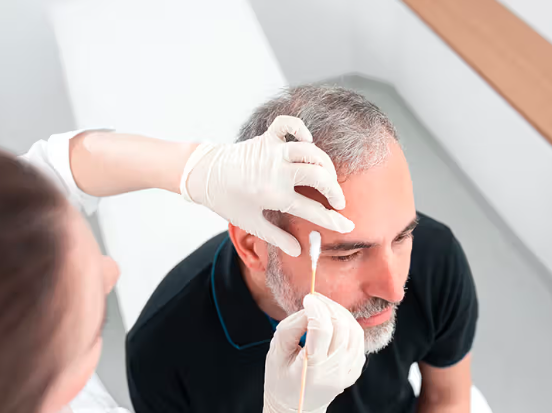
See a doctor promptly if you notice any unusual or persistent changes on your scalp that do not heal or continue to evolve over time.
Persistent Non-Healing Sores
Any open sore or wound on the scalp that fails to heal within several weeks, repeatedly bleeds, or crusts over and reopens should be evaluated by a doctor immediately. These are classic early warning signs of scalp skin cancer that require prompt professional assessment.
Changing or Unusual Moles
A mole on the scalp that changes in size, shape, color, or develops irregular borders should never be ignored or left unexamined. Applying the ABCDE rule and consulting a dermatologist at the first sign of change significantly improves early detection and treatment outcomes.
Unexplained Scalp Symptoms
Persistent itching, tenderness, bleeding, or the appearance of a new unusual growth on the scalp without any obvious cause warrants an immediate medical consultation. Early professional evaluation of unexplained scalp symptoms is the most reliable way to rule out or confirm the presence of skin cancer.
FAQs
Can scalp skin cancer spread to the brain?
Yes, advanced Melanoma on the scalp can metastasize to the brain through the bloodstream or lymphatic system, making early detection and treatment critically important.
Is scalp skin cancer more common in men or women?
Scalp skin cancer is significantly more common in men, largely due to greater sun exposure, higher rates of baldness, and less frequent use of sun protection compared to women.
Can scalp skin cancer develop under thick hair?
Yes, scalp skin cancer can develop beneath thick, dense hair as UV radiation penetrates through hair follicles, and the hidden location makes self-detection considerably more difficult.
How long does it take for scalp skin cancer to develop?
Scalp skin cancer typically develops over many years of cumulative UV exposure, though aggressive forms like Melanoma can progress to a dangerous stage within months if left undetected.
Can scalp skin cancer come back after treatment?
Yes, scalp skin cancer can recur after treatment, particularly if cancerous cells were not completely removed, making regular follow-up dermatological checks essential after any treatment procedure.
Does hair dye or chemical treatment increase scalp skin cancer risk?
There is currently no strong scientific evidence directly linking hair dye or chemical scalp treatments to an increased risk of scalp skin cancer development.
Can children develop skin cancer on the scalp?
Although rare, children can develop scalp skin cancer, particularly those with genetic conditions, a history of severe sunburns, or prolonged unprotected sun exposure during early childhood years.
Does hair grow back after scalp skin cancer surgery?
Hair regrowth after scalp skin cancer surgery depends on the extent of the procedure and the condition of hair follicles in the treated area. Minor surgeries may allow partial regrowth over time, while extensive procedures or radiation therapy can permanently damage follicles, resulting in lasting hair loss.
Conclusion
Skin cancer on the scalp is a serious yet largely preventable condition that demands consistent awareness, proactive sun protection, and regular self-examination.
Early detection through routine dermatological checks and timely recognition of warning signs such as non-healing sores, scaly patches, or changing moles significantly improves treatment outcomes.
By adopting daily protective habits and seeking prompt medical attention at the first sign of concern, the risks associated with scalp skin cancer can be effectively managed and minimized.
Related Articles
Fungal Acne vs Bacterial Acne: Understanding the Key Differences, Symptoms, and Treatments
Heart Pain While Exercising: Causes, Warning Signs, and When to Call 911
How Long Does Cataract Surgery Take? Complete Timeline & Recovery Guide
Can Vaping Cause Acne? Understanding the Connection Between Vaping and Breakouts
Dental Bone Graft Specialist: Procedure, Recovery, & Risks Guide