


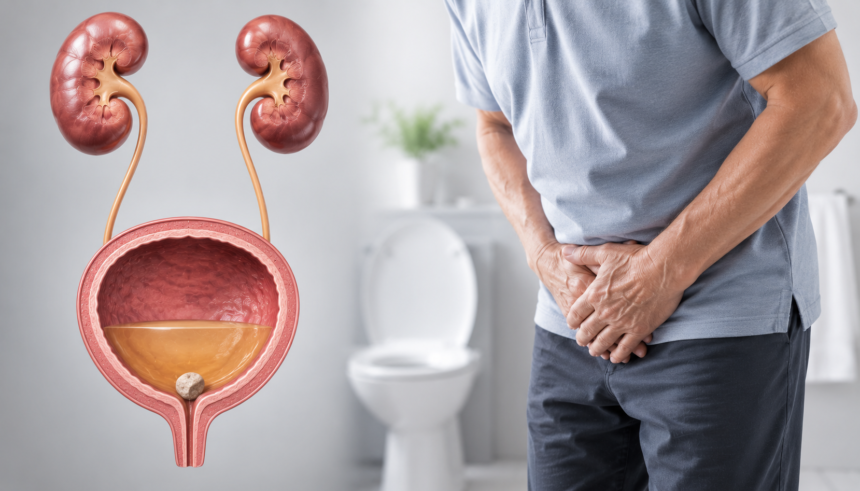
Once a kidney stone travels down into the bladder, it does not always pass right away. Depending on its size, shape, and your body’s natural urine flow, a stone can sit in the bladder for a few days, several weeks, or in some cases even months.
Smaller stones under 4-5mm usually pass within one to two weeks without much trouble. Larger stones may stay much longer and sometimes need medical help to clear out completely. Below, we break down every factor that decides how long a bladder stone lingers and what you should do about it.
Understanding Kidney Stones in the Bladder
Before looking at timelines, it helps to understand what actually happens once a stone leaves the kidney and how bladder anatomy affects its movement.
What Happens When a Stone Moves from Kidney to Bladder
When a stone exits the ureter and enters the bladder, it usually settles near the bottom due to gravity. The bladder is more spacious than the narrow ureter, so the stone often has room to move around rather than being stuck in one place. From here, the only way out is through the urethra, which is naturally narrower in men due to the length of the urethral canal and its passage through the prostate gland.
Why Some Stones Linger While Others Pass Quickly
A stone’s shape plays a big role here. Smooth, rounded stones tend to move easily and pass without much resistance. Jagged or irregularly shaped stones can catch on the bladder wall or get lodged near the bladder outlet, delaying their exit. Urine flow strength, how often a person urinates, and even sitting versus standing posture during urination can all influence how quickly a stone finds its way out.
Factors That Affect How Long a Stone Stays
Several physical and lifestyle factors determine whether a stone passes in days or lingers for weeks. The most significant ones are stone size, its position, anatomical differences, hydration, and any existing urinary tract conditions.
Stone Size and Its Role in Passage Time
Size is the single biggest factor in how long a kidney stone stays in the bladder. Stones smaller than 4mm pass in most people within one to two weeks with minimal discomfort. Stones between 5mm and 7mm take longer, often several weeks, and may cause more noticeable symptoms during passage. Anything larger than 8mm rarely passes on its own and usually requires a procedure to remove or break it down.
Stone Location Within the Bladder
A stone sitting freely in the middle of the bladder tends to move toward the urethral opening more easily during urination. However, if a stone settles near the bladder neck or gets partially trapped in a fold of the bladder wall, it may stay in place for a much longer period, even if it’s small enough to pass under normal circumstances.
Gender and Anatomical Differences
Men generally have a longer and narrower urethra compared to women, which can make stone passage slower and more uncomfortable. Women, with a shorter urethra, often pass bladder stones faster, though pelvic floor conditions or prior surgeries can sometimes complicate this.
Hydration Levels and Urine Flow
Drinking enough water increases urine volume and flow speed, which helps push a stone toward the urethra. Dehydration reduces urine output, giving the stone more time to settle and reducing the natural flushing action needed to move it along.
Prostate Enlargement or Urethral Narrowing (Men)
In older men, an enlarged prostate can press against the urethra, making it harder for a bladder stone to pass even if it’s small. This is one of the most common reasons bladder stones linger for months in men over 50.
Typical Timelines by Stone Size
The table below gives a general idea of how stone size relates to expected passage time. These are averages, and individual results vary based on the factors discussed above.
| Stone Size | Average Time to Pass | Likelihood of Natural Passage |
| Under 4mm | 1-2 weeks | High (over 80%) |
| 5mm-7mm | 2-4 weeks | Moderate (40-60%) |
| 8mm-10mm | 4-8 weeks, often needs treatment | Low (20-30%) |
| Above 10mm | Rarely passes without intervention | Very low |
When a Stone May Take Weeks or Months
Some bladder stones remain in place for months, particularly in cases of prostate enlargement, urethral strictures, or when the stone has an irregular, spiky surface. In these situations, the stone doesn’t necessarily grow larger, but it also doesn’t move toward the exit, which is why medical evaluation becomes necessary rather than continuing to wait.
Symptoms of a Stone Trapped in the Bladder
Knowing the signs of a lingering bladder stone helps you decide whether to wait it out at home or seek care sooner.
Pain and Pressure Signs
A stone sitting in the bladder often causes a dull, aching pressure in the lower abdomen or pelvic region. This discomfort may worsen with movement, sitting for long periods, or right before urination, as the stone shifts position.
Blood in Urine
Bladder stones can irritate the bladder lining, leading to visible or microscopic blood in the urine. This is one of the most common signs that a stone is still present and moving around inside the bladder.
Urinary Urgency or Blockage
A trapped stone near the bladder neck can cause a frequent urge to urinate, a weak urine stream, or in more serious cases, a complete inability to urinate. This last symptom is considered a medical emergency.
Signs of Infection to Watch For
When a stone stays too long, it can trap bacteria against the bladder wall, leading to infection. Watch for cloudy or foul-smelling urine, fever, chills, or a burning sensation during urination, as these suggest infection rather than simple stone irritation.
When to Seek Medical Attention
While many bladder stones pass on their own, certain warning signs mean you shouldn’t wait any longer to get checked.
Red Flags That Require Immediate Care
Seek urgent medical attention if you experience an inability to urinate at all, severe pain that doesn’t improve with over-the-counter pain relief, high fever with chills, or heavy blood in the urine. These symptoms suggest the stone is causing a blockage or has led to infection, both of which need prompt treatment.
Risks of Leaving a Bladder Stone Untreated
A stone left untreated for too long can lead to chronic bladder infections, bladder wall damage, or in rare cases, kidney function issues if urine backs up due to blockage. Long-term retention also increases the risk of the stone growing larger over time as minerals continue to deposit on its surface.
Treatment Options If the Stone Won’t Pass
When a bladder stone doesn’t pass naturally within a reasonable timeframe, doctors typically recommend one of the following approaches based on stone size and symptoms.
Watchful Waiting and Home Management
For small stones without severe symptoms, doctors often recommend increased water intake, pain management, and monitoring over a few weeks to see if the stone passes naturally before considering intervention.
Medications to Aid Passage
Certain medications can relax the muscles of the urethra and bladder neck, making it easier for a stone to pass. These are typically prescribed for stones in the moderate size range that haven’t moved after a couple of weeks.
Cystoscopy and Stone Removal
For stones that remain stuck, a cystoscopy allows a doctor to view inside the bladder using a thin scope and physically remove or break up the stone. This is a common outpatient procedure with a relatively quick recovery time.
Lithotripsy for Larger Stones
Lithotripsy uses shock waves to break a larger stone into smaller fragments that can then pass more easily through urine. This method is often used when a stone is too large for natural passage but doesn’t require full surgical removal.
Prevention Tips to Avoid Recurrence
Once a bladder stone has passed or been removed, taking preventive steps can lower the chance of forming new stones in the future.
Hydration and Dietary Adjustments
Drinking enough water daily to keep urine light in color is one of the most effective ways to prevent new stones. Reducing excess salt intake and moderating oxalate-rich foods, based on your stone type, also helps lower recurrence risk.
Follow-Up Testing After a Stone Passes
After a stone passes or is removed, doctors often recommend a urine test and imaging to check for remaining fragments and to identify the mineral composition of the stone, which helps guide personalized prevention advice going forward.
FAQs
Can a bladder stone stay for years without symptoms?
Yes, small bladder stones can occasionally remain silent for extended periods, especially if they don’t block urine flow or irritate the bladder lining.
Does a bladder stone dissolve on its own?
Most bladder stones do not dissolve on their own and need to either pass naturally or be removed through a medical procedure.
How do you know if a kidney stone reached the bladder?
A shift from sharp flank pain to lower abdominal pressure, along with increased urinary urgency, often signals that a stone has moved from the kidney into the bladder.
Is it normal to feel nothing after a stone enters the bladder?
Yes, some people feel little to no discomfort once a stone settles in the bladder, particularly if it’s small and not touching sensitive areas of the bladder wall.
Can drinking water flush out a bladder stone faster?
Increased water intake supports faster passage by boosting urine flow, though it won’t help move very large stones that require medical intervention.
Conclusion
So, how long can a kidney stone stay in the bladder? The honest answer is that it depends heavily on size, shape, and individual anatomy, ranging from a few days for small stones to several months for larger or trapped ones. Staying hydrated, watching for warning symptoms, and knowing when to see a doctor are the best ways to manage a bladder stone safely and avoid complications.
Related Articles
Can You Get Lip Injections While Pregnant? What You Need to Know
How Long Do Dentist Appointments Take? A Complete Time Guide
Can Hyaluronic Acid Cause Acne? What Dermatologists Actually Say


