Introduction
If you are thinking about straightening your teeth with clear aligners, one question probably comes to mind before anything else: does Invisalign hurt? It is a fair question. Nobody wants to sign up for months of discomfort without knowing what to expect. The good news is that Invisalign is generally known for being one of the more comfortable ways to fix crooked teeth, especially when compared to traditional metal braces. That said, comfortable does not mean completely pain-free.
In this guide, we will walk through everything you need to know about Invisalign discomfort, from why it happens to how long it usually lasts, and what you can do to make the experience easier. By the end, you should have a clear, honest picture of what your mouth will actually feel like during treatment.
Understanding How Invisalign Works
Invisalign uses a series of custom-made clear plastic trays, called aligners, to slowly shift your teeth into their correct position. Each tray is slightly different from the last. You wear one set for about one to two weeks, then move on to the next tray in the series. Over time, these small, incremental changes add up to a fully straightened smile.
The reason this process can cause some discomfort is simple mechanics. Each new aligner is designed to be just a little bit tighter than your current tooth position, which means it applies gentle pressure to nudge your teeth in the right direction. This pressure is a normal, expected part of orthodontic treatment, whether you choose Invisalign or braces. Without some level of pressure, your teeth would not move at all.
Does Invisalign Hurt? The Honest Answer
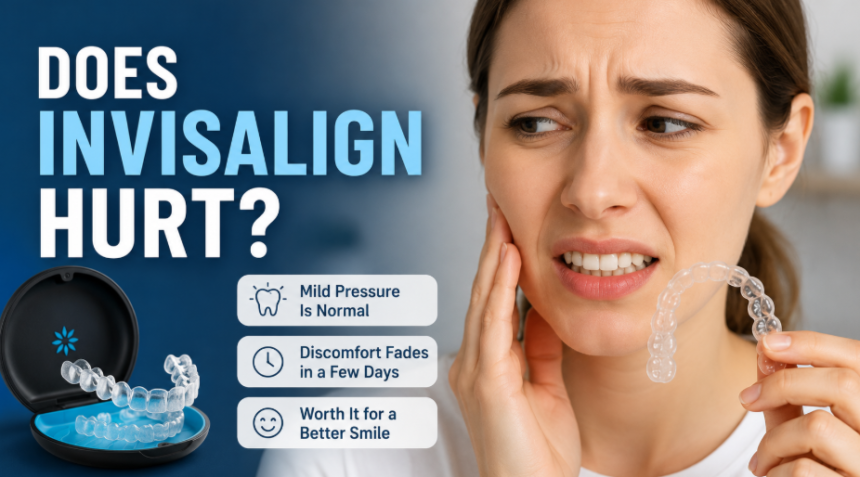
So, does Invisalign hurt? The short answer is: not really, but you will feel something. Most patients describe the sensation as pressure, tightness, or mild soreness rather than sharp or intense pain. It is more of an ache, similar to how your muscles might feel after a workout you are not used to.
This is an important distinction to understand. Pain usually implies something is wrong, while the pressure from Invisalign is actually a sign that the treatment is working as intended. Many orthodontists will tell you that a small amount of discomfort after inserting a new tray is a good sign, because it means your teeth are responding to the treatment plan.
When people compare their experience to traditional braces, the general consensus is that Invisalign tends to be gentler on the mouth. There are no metal brackets or wires to cause cuts on the inside of your cheeks, and the plastic material is smooth and custom-fitted to your teeth.
When You Will Feel the Most Discomfort
Discomfort with Invisalign is not constant throughout treatment. It tends to spike at specific points and then fade. Here are the main times when you are likely to notice it:
Getting your first set of aligners: The very first time you put on a tray, your mouth is not used to having anything covering your teeth. This can feel strange and even slightly uncomfortable for the first day or two, simply because it is unfamiliar.
Switching to a new tray: This is the most common time for soreness. Since each tray is a little tighter or shaped slightly differently than the last, your teeth need time to adjust to the new pressure.
The first few days after each change: Discomfort typically peaks within the first 24 to 48 hours after switching aligners, then gradually decreases as your teeth settle into the new position.
Attachment placement: Some patients need small, tooth-colored dots called attachments bonded to their teeth to help the aligners grip better. The days right after these are placed can feel a bit more sensitive.
What Causes the Discomfort
Understanding the root causes of Invisalign discomfort can help you feel more at ease with the process. The table below breaks down the most common causes and what is actually happening in each case.
| Cause | What’s Happening | Typical Feeling |
| Tooth movement pressure | Aligners push teeth toward their new position | Dull ache or tightness |
| Aligner edges | Plastic edge rubs against gum or cheek tissue | Mild irritation or rubbing |
| Attachments and buttons | Small bumps on teeth help aligners grip | Localized tenderness |
| Speech adjustment | Tongue and lips adjusting to new shape in mouth | Temporary lisp or awkwardness, not pain |
| New tray insertion | Aligner is tighter than your current tooth position | Pressure for first day or two |
As you can see, most of these causes are mechanical and temporary rather than signs of a real problem. Your mouth is simply adapting to a new tool that is doing its job.
How Long Does the Discomfort Last?
For most people, the soreness from a new aligner lasts around two to three days before it fades to a manageable level or disappears entirely. By the time you are ready to switch to your next tray, your teeth have usually settled comfortably into their new position, and the cycle repeats.
Several factors can affect how long discomfort lasts for you personally. If you have a naturally higher pain tolerance, you may barely notice the transition days. On the other hand, people with more complex tooth movements, or those wearing attachments, sometimes report slightly longer adjustment periods. The complexity of your specific case, as determined by your orthodontist’s treatment plan, plays a big role here too.
Tips to Reduce Invisalign Discomfort
While some discomfort is a normal part of the process, there are several practical ways to make it more manageable. Many patients find that combining a few of these strategies makes a noticeable difference.
- Switch aligners at night: Putting in a new tray right before bed means you sleep through the most uncomfortable initial hours.
- Use orthodontic wax: If an aligner edge is rubbing against your gum or cheek, a small dab of wax can create a smooth barrier.
- Try cold water or a cold compress: Drinking cold water or holding a cold compress against your jaw can help numb soreness temporarily.
- Take an over-the-counter pain reliever: A standard dose of ibuprofen or similar medication, as recommended by your dentist, can ease discomfort during the first day or two.
- Use chewies: These small cylindrical foam tools help seat your aligners more firmly onto your teeth, which can actually reduce pressure points and improve fit.
- Stay consistent with wear time: Wearing your aligners for the recommended 20 to 22 hours a day keeps the movement steady and predictable, which can actually reduce overall discomfort compared to inconsistent wear.
Invisalign Pain vs. Traditional Braces
One of the most common comparisons people make is between Invisalign and metal braces. The table below highlights some of the key differences.
| Factor | Invisalign | Traditional Braces |
| Material | Smooth plastic | Metal brackets and wires |
| Cuts or sores | Rare | More common, especially early on |
| Adjustment discomfort | Every 1-2 weeks with new tray | Every 4-6 weeks at orthodontist visits |
| Ability to remove | Yes, for eating and cleaning | No, fixed in place |
| Overall comfort level | Generally milder | Generally more intense at adjustments |
Because Invisalign trays can be removed for meals and brushing, and because the material does not scrape against soft tissue the way metal can, many people find the overall experience gentler on a day-to-day basis.
When Discomfort Might Signal a Problem
While mild soreness is normal, there are certain signs that suggest something may not be right with your aligners. It is worth knowing the difference so you can seek help if needed rather than just pushing through unnecessary pain.
Watch out for a tray that feels sharp along one edge and consistently cuts into your gum or cheek, since this may need to be smoothed or adjusted by your provider. Persistent mouth sores that do not heal within a few days are another signal worth mentioning to your orthodontist. Similarly, pain that feels sharp, throbbing, or localized to one specific tooth, rather than a general dull pressure, could indicate an issue that needs professional attention. If you notice any of these signs, it is always better to reach out to your orthodontist rather than assuming it will resolve on its own.
Frequently Asked Questions
Does Invisalign hurt more than braces? Generally, no. Most patients report that Invisalign causes milder discomfort than traditional braces, largely because there is no metal to irritate soft tissue and trays can be removed when needed.
How many days does it hurt after a new tray? Most people experience noticeable soreness for about two to three days after switching to a new aligner, with discomfort gradually fading after that.
Can I take painkillers with Invisalign? Yes, many people use standard over-the-counter pain relief medication during the first day or two of a new tray. It is always a good idea to confirm dosage with your dentist or doctor first.
Does Invisalign hurt differently for kids or teens? The general sensation is similar across age groups, though younger patients sometimes adapt to the pressure more quickly due to more flexible bone structure.
Is discomfort a sign that Invisalign is working? Yes, in most cases. The pressure you feel is a sign that your teeth are responding to the aligner and moving toward their intended position.
Conclusion
So, does Invisalign hurt? Not in the way most people fear. Instead of sharp, ongoing pain, patients typically experience mild pressure and short-term soreness, especially in the first couple of days after switching to a new aligner. This discomfort is a normal, expected part of how the treatment works, and it usually fades quickly on its own.
With a few simple strategies, such as switching aligners at night, using orthodontic wax, and staying consistent with your wear schedule, most people find the entire process quite manageable. If you are considering starting your Invisalign journey, this mild, temporary discomfort should not be a reason to hold back. Speaking with an experienced orthodontist about your specific case can give you a clearer picture of what to expect and help you start your path toward a straighter, more confident smile.
Related Posts
Toradol Shot: Complete Guide to Uses, Dosage, and Benefits
Nail Exodus: What You Should Know Before Trying This Nail Health Supplement
Can Kidney Stones Cause Testis Pain? Symptoms & Relief