


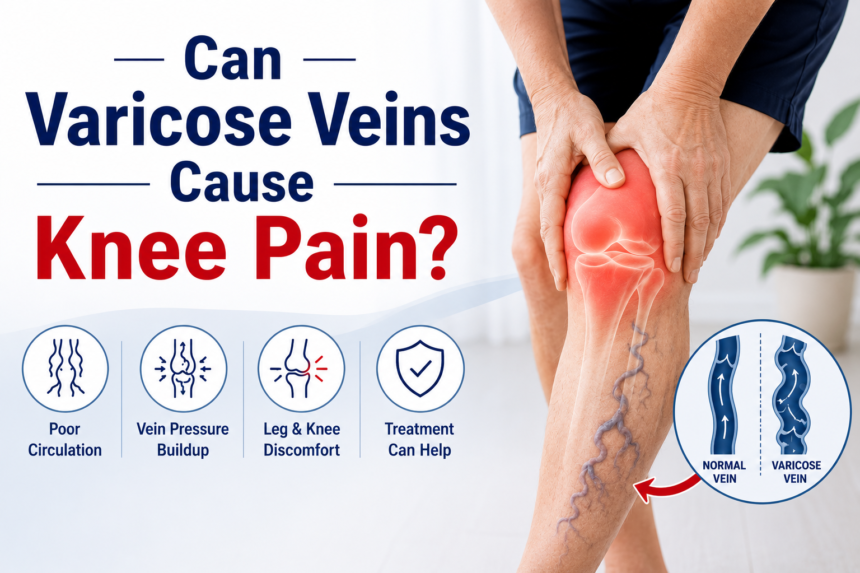
If you’ve been dealing with knee discomfort and also notice bulging, twisted veins on your legs, you might be wondering whether the two are connected. The short answer is yes, varicose veins can cause knee pain, especially when the affected veins sit near or behind the knee joint.
This happens because of pooled blood, increased pressure, and inflammation in the surrounding tissue. In this guide, we’ll break down exactly how this connection works, how to tell vein pain apart from joint pain, and what you can do to find relief.
What Are Varicose Veins?
Varicose veins are swollen, twisted veins that usually appear on the legs and feet. They develop when the small valves inside your veins stop working properly, allowing blood to flow backward and collect in one spot instead of moving steadily toward the heart.
How Varicose Veins Develop?
Veins rely on one-way valves to keep blood moving upward against gravity. When these valves weaken due to age, prolonged standing, pregnancy, obesity, or genetics, blood starts to pool inside the vein instead of flowing forward. Over time, this pooling stretches the vein walls, making them bulge and twist just beneath the skin.
Common Symptoms to Recognize
Most people notice varicose veins before they notice any pain. The visible signs are usually the first clue, followed by physical sensations as the condition progresses. Common symptoms include:
- Bulging, rope-like veins visible under the skin
- A heavy or tired feeling in the legs, especially by evening
- Swelling around the ankles or lower legs
- Aching or throbbing after standing for long periods
- Mild itching or skin irritation near the affected vein
- Muscle cramping, particularly at night
Can Varicose Veins Cause Knee Pain?
Yes, varicose veins can cause knee pain, particularly when the affected veins are located behind the knee or in the lower thigh area. The connection comes down to pressure, pooled blood, and inflammation that spreads beyond the vein itself.
The Link Between Vein Pressure and Knee Discomfort?
When a varicose vein develops near the knee, blood doesn’t just sit quietly inside it. The constant backward flow and pooling create rising pressure within the vein walls, and this pressure doesn’t stay isolated.
It pushes outward into the surrounding soft tissue, leading to swelling, stiffness, and a dull, aching sensation that can feel a lot like joint pain. Many people describe it as a throbbing discomfort that gets worse after standing for long stretches or sitting with bent knees, such as during a long flight or car ride..
Why Is the Area Behind the Knee Especially Vulnerable?
The back of the knee, known as the popliteal area, is a common site for varicose veins to form because it contains a dense network of veins that handle a heavy blood flow load. Unlike other parts of the leg, this region has very little fatty padding or soft tissue to absorb swelling.
This means that even a small amount of pooled blood or inflammation can create a noticeable sensation of tightness, fullness, or pain right at the joint.
Vein Pain vs. Joint Pain: How to Tell the Difference
Since both vein-related discomfort and joint problems can affect the same area, it’s easy to confuse the two. Looking at when the pain occurs and what triggers it usually gives the clearest answer.
Signs It’s Vein-Related
Vein-related knee pain tends to follow a fairly predictable pattern tied to posture and time of day rather than specific movements. You’ll often notice it builds gradually rather than appearing suddenly, and it’s frequently accompanied by visible changes in the skin or vein structure.
| Sign | Description |
| Timing | Worsens after long periods of standing or sitting |
| Appearance | Often paired with visible bulging veins or skin discoloration |
| Sensation | Described as heaviness, throbbing, or a dull ache |
| Relief pattern | Improves when legs are elevated or with movement |
| Swelling | Tends to involve the whole lower leg, not just the joint |
Signs It’s Joint or Orthopedic-Related
Joint pain, on the other hand, is usually tied to specific movements rather than how long you’ve been standing or sitting. It often feels sharper and more localized to the joint structure itself rather than spreading across the leg.
| Sign | Description |
| Timing | Triggered by bending, twisting, or weight-bearing activity |
| Appearance | No visible vein changes; may include joint swelling only |
| Sensation | Sharp, stabbing, or stiff rather than throbbing |
| Relief pattern | Often responds to rest, ice, or anti-inflammatory medication |
| Swelling | Localized directly around the joint capsule |
Risk Factors That Make Knee-Related Vein Pain Worse
Certain habits and personal factors make it more likely that varicose veins will cause noticeable knee pain rather than staying a purely cosmetic issue. Understanding these risk factors can help you catch the problem before it worsens.
Age, Genetics, and Lifestyle Factors
As people get older, vein walls naturally lose some of their elasticity, and valves weaken further, which increases the likelihood of varicose veins forming closer to the knee. Genetics also play a significant role, since people with a family history of vein problems are far more likely to develop them at a similar age.
On top of this, carrying extra body weight adds pressure to the lower body’s circulatory system, making it harder for blood to travel efficiently back to the heart. Hormonal changes during pregnancy can also weaken vein walls temporarily, which is why many people first notice varicose veins during or after pregnancy.
Prolonged Standing or Sitting
Jobs or daily routines that involve standing for hours, like retail work or nursing, force the leg veins to work much harder against gravity, increasing pressure near the knee over time. Sitting for long periods, especially with the knees bent, has a similar effect because it restricts healthy blood flow and allows blood to collect in the lower leg and behind the knee.
When Knee Pain From Veins Could Signal Something Serious?
While most varicose vein-related knee pain is uncomfortable rather than dangerous, there are situations where it can point to a more urgent problem. Knowing the warning signs helps you respond quickly if something more serious develops.
Deep Vein Thrombosis (DVT) Warning Signs
Deep vein thrombosis happens when a blood clot forms in one of the deeper veins, often in the leg, and it can sometimes be mistaken for ordinary varicose vein pain at first. Warning signs include sudden swelling in one leg, warmth in the affected area, redness, and a deep aching or throbbing pain that doesn’t ease up with rest or elevation.
When to See a Doctor Immediately
If you notice sudden, severe swelling, skin that feels warm or looks red, or pain that intensifies rapidly rather than fluctuating with activity, it’s important to seek medical attention right away rather than waiting it out. Persistent knee pain alongside visible varicose veins that doesn’t improve with home care, rest, or elevation also deserves a proper medical evaluation.
How to Relieve Varicose Vein-Related Knee Pain?
The good news is that most vein-related knee discomfort responds well to a combination of simple home adjustments and, when needed, targeted medical treatment. Addressing the underlying vein issue often resolves the knee pain at the same time.
At-Home Management Tips
Small daily changes can significantly reduce pressure on the veins around your knee and ease discomfort over time:
- Elevate your legs above heart level for 15 to 20 minutes a few times a day
- Wear properly fitted compression stockings to support healthy blood flow
- Avoid sitting or standing in one position for more than an hour at a stretch
- Stay active with low-impact movement like walking or swimming
- Maintain a healthy body weight to reduce pressure on leg veins
- Avoid crossing your legs for extended periods while sitting
Conclusion
So, can varicose veins cause knee pain? In many cases, yes, especially when the affected veins sit behind or near the knee joint, where pressure and swelling have little room to spread out. Learning to recognize the difference between vein-related discomfort and joint pain makes it easier to address the right problem early.
With a combination of lifestyle adjustments, compression support, and medical treatment when necessary, most people find lasting relief from both the visible veins and the knee discomfort that comes with them.
FAQs
Can varicose veins behind the knee cause pain when bending the leg?
Yes, since the popliteal area has limited soft tissue, a swollen vein in this region can create tightness or discomfort when the knee bends or straightens fully.
Is knee pain from varicose veins permanent?
No, in most cases the pain improves significantly once the underlying vein issue is treated through compression therapy, lifestyle changes, or minimally invasive procedures.
How do I know if my knee pain is from arthritis or varicose veins?
Vein-related pain usually worsens with prolonged standing or sitting and comes with visible vein changes, while arthritis pain tends to be triggered by specific joint movements.
Can compression stockings help with vein-related knee pain?
Yes, properly fitted compression stockings improve blood flow and reduce pooling, which often eases the pressure-related discomfort felt around the knee.
When should I worry about knee pain related to varicose veins?
You should seek medical attention if swelling appears suddenly, the area feels warm or looks red, or the pain doesn’t improve with rest, as these can indicate a blood clot.
Related Articles
Bone Spurs on Spine: Causes, Symptoms, Treatment Options, and Prevention Tips
Can Being Sick Cause Acne? Causes, Symptoms, and Complete Skin Guide
Dental Bone Graft Specialist: Procedure, Recovery, & Risks Guide
Dermatologist on Acne Scars: Causes, Types, and Proven Treatment Options
Can Vaping Cause Acne? Understanding the Connection Between Vaping and Breakouts


