


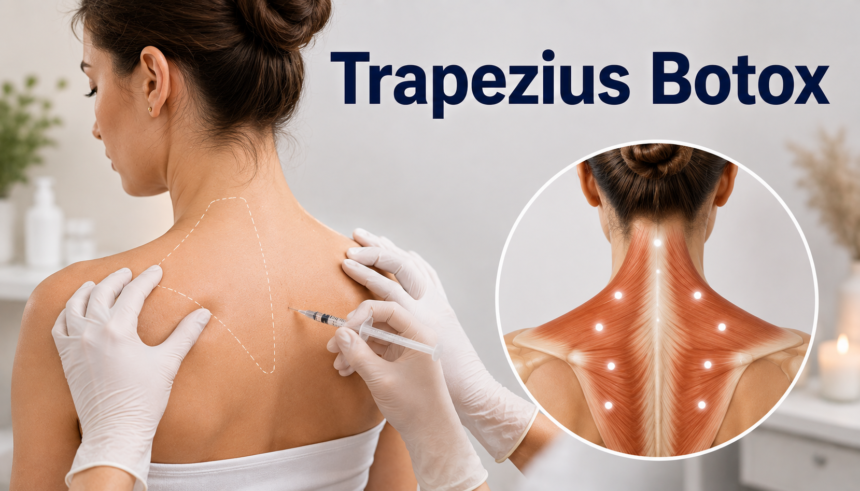
Trapezius Botox is a non-surgical injectable treatment in which purified botulinum toxin type A is placed into the trapezius, the broad muscle running across the upper back, shoulders, and sides of the neck. It works by blocking nerve signals that tell the muscle to contract, letting tight fibers relax.
This serves two goals: relieving chronic tension and pain, and slimming a bulky trapezius for a smoother shoulder line. A licensed injector adjusts dose and placement to the goal, and since results fade over time, the treatment is repeated every few months.
Interest in trapezius Botox has grown quickly, given its dual role as a pain-relief tool and a body-contouring option. Some try it when massage and physical therapy fall short; others want a slimmer neck-to-shoulder look. This article covers how it works, the procedure, results, risks, and how it compares to other options.
Key Takeaways
- Relaxes the trapezius by blocking nerve signals, reducing both tension and muscle bulk.
- Used medically for chronic neck and shoulder tension, tension headaches, myofascial pain, and cervical dystonia.
- Used cosmetically to slim the shoulder line and soften the neck-to-shoulder slope.
- Results begin within one to two weeks and last roughly three to six months.
- Quick procedure, no downtime, mostly mild and temporary side effects.
- Cost varies by whether the goal is medical or cosmetic, plus clinic and region.
What Is Trapezius Botox?
Trapezius Botox refers to injecting botulinum toxin into the trapezius rather than more familiar areas like the forehead. It is the same ingredient as standard Botox, simply used on a larger muscle for therapeutic or cosmetic purposes.
How Botulinum Toxin Works on Muscle?
Botulinum toxin blocks the release of acetylcholine, a chemical messenger, at the junction between nerves and muscle fibers. Without this signal, fibers cannot contract as forcefully, so the muscle relaxes. Over repeated sessions this can also shrink muscle size, since a muscle that contracts less tends to shrink slightly, similar to underuse.
Why the Trapezius Muscle Specifically?
The trapezius is one of the largest, most overworked muscles in the upper body, supporting the neck and shoulders during nearly every movement. Because it stays constantly engaged, it is a common place to store stress and tension, and its size makes it a visible contributor to shoulder width and neck shape.
Medical Uses of Trapezius Botox
Trapezius Botox is most often recommended for ongoing muscle-related pain that has not responded well to more conservative treatments. A doctor usually confirms the trapezius is the actual source of tightness first, since neck pain can come from several structures.
Chronic Muscle Tension and Knots
Persistent knots, or trigger points, form when muscle fibers stay contracted in a small area, often from poor posture, stress, or repetitive strain. Injecting Botox into these bands interrupts the nerve signaling, letting the fibers loosen and tenderness ease over following days.
Tension Headaches and Migraines
A tight trapezius can pull on muscles at the base of the skull and contribute to headaches starting at the neck. Relaxing it often means fewer, milder tension-type headaches, and the treatment is sometimes paired with nearby neck injections for broader relief.
Myofascial Pain Syndrome
Myofascial pain syndrome involves widespread muscular pain linked to trigger points in the muscle and surrounding tissue. Since the trapezius is a frequent site, targeted Botox injections are often paired with physical therapy to break the pain cycle.
Cervical Dystonia
Cervical dystonia is a neurological condition causing involuntary neck contractions that often pull the head into an uncomfortable position. When the trapezius is involved, botulinum toxin injections are a standard part of treatment, directly reducing the abnormal muscle activity behind the twisting or tilting.
Cosmetic Uses: Trapezius Slimming
Away from pain management, trapezius Botox has become popular purely for shaping the upper body silhouette, chosen by people who want a visual change rather than symptom relief.
Trapezius Hypertrophy and Neckline Contouring
Some people naturally develop a thicker trapezius from genetics, weightlifting, or years of physical labor, which can make the shoulders look boxy and shorten the neck’s appearance. Injecting Botox into the muscle reduces its bulk over several weeks, softening the outline and making the neck look longer with a more gradual shoulder slope.
Popularity in South Korea and Global Trends
This cosmetic use became widely known through South Korea’s aesthetic medicine scene, where a slender, sloped shoulder line is a beauty standard, especially for how clothing and necklines fall. The trend has since spread internationally, with clinics now offering it as a standalone treatment or alongside other neck and shoulder contouring procedures.
The Procedure: What to Expect
The trapezius Botox procedure is done in a clinical setting and needs no anesthesia beyond an optional numbing cream. Most appointments follow a similar pattern regardless of whether the goal is medical or cosmetic.
Consultation and Candidacy Assessment
The injector examines the shoulder and neck area, asks about pain patterns or aesthetic goals, and checks for conditions that might make Botox unsuitable, such as neuromuscular disorders or pregnancy. This step also sets realistic expectations for how much slimming or pain relief is likely.
Injection Process (Dosage, Injection Sites)
The injector maps out multiple points across the trapezius, usually more for cosmetic slimming since the toxin needs even spread across the muscle, and fewer, targeted points for pain relief at a specific trigger area. Dosage is measured in units and varies by muscle size and goal, with cosmetic treatments generally needing a higher total dose than a single trigger-point injection.
Duration of the Appointment
The injections usually take between fifteen and thirty minutes, making this one of the quicker procedures in aesthetic and pain medicine. There is no required recovery time in the clinic, and most people return to their normal schedule the same day, though strenuous shoulder exercise is often discouraged for a day or two.
Results Timeline
Results from trapezius Botox do not appear instantly, since the toxin needs time to act on the nerve-muscle connection, and they do not last indefinitely.
Onset (1–2 Weeks)
Most people notice reduced tightness or the first signs of muscle softening within three to five days, building further over the following week. Pain relief is often noticed slightly earlier than visible cosmetic slimming.
Peak Effect
The full effect, whether maximum pain relief or the most noticeable narrowing of the shoulder line, typically appears around the four-week mark, which is often when a follow-up session is scheduled if needed.
How Long Results Last (3–6 Months)
The muscle gradually regains its normal activity and size over three to six months as nerve signals return. Repeat treatments are needed to maintain results, though consistent rounds may slow how quickly the muscle bulks back up.
Benefits of Trapezius Botox
Trapezius Botox offers both practical and aesthetic benefits. For chronic tension, it can reduce daily discomfort without surgery, medication dependence, or downtime, fitting easily into a normal routine.
For cosmetic slimming, it offers a non-surgical alternative to more invasive contouring, with a quick appointment and no scarring.
Dosage can also be adjusted each session based on how the previous round responded, offering personalization harder to achieve with permanent interventions.
Risks, Side Effects, and Downtime
Trapezius Botox is generally safe when performed by a qualified provider, but it is still a medical procedure with its own possible reactions and precautions.
Common Side Effects
The most common effects are mild swelling, redness, or bruising at the injection sites, along with temporary soreness. Some people also notice mild fatigue during activities that rely heavily on the trapezius, such as lifting overhead, since the muscle is temporarily weaker.
Rare but Serious Risks
Less commonly, the toxin can spread slightly beyond the intended area, causing temporary weakness in nearby muscles until it wears off. An allergic reaction is also possible, though rare, and anyone with known sensitivity to botulinum toxin should discuss this beforehand.
Recovery and Aftercare Tips
Most providers recommend avoiding vigorous shoulder exercise, massage of the area, and lying flat for a few hours right after treatment. Normal daily activity is usually fine immediately, and mild soreness resolves within a few days on its own.
Cost Comparison Table
Pricing for trapezius Botox depends on the purpose of treatment, the total dosage required, and the clinic’s location and reputation. The table below outlines the general differences between the two main treatment goals.
| Factor | Therapeutic (Pain Relief) | Cosmetic (Shoulder Slimming) |
| Typical dose per session | Lower, focused on trigger points | Higher, spread across the muscle |
| Average price range | Often partly covered by insurance for medical conditions like cervical dystonia | Fully out-of-pocket, generally higher total cost |
| Number of sessions needed | May be periodic, based on symptom flare-ups | Often recommended in a series for gradual, lasting slimming |
| Main cost driver | Number of trigger points treated | Total units needed to cover the full muscle |
| Clinic type | Pain clinics, neurology, or physiotherapy-linked practices | Aesthetic and dermatology clinics |
Because pricing varies by region and provider, it is worth requesting a personalized quote after a consultation rather than relying on general online estimates.
Who Should Avoid Trapezius Botox?
Certain groups are generally advised against this treatment, including people who are pregnant or breastfeeding, those with neuromuscular conditions such as myasthenia gravis, and anyone with an active skin infection at the injection site. People on medications affecting muscle function should also disclose this, since combining them with botulinum toxin can raise the risk of excessive weakness.
Trapezius Botox vs. Alternative Treatments
Trapezius Botox is not the only option for shoulder tension or shape, and it is often used alongside other approaches.
Physical Therapy
Physical therapy targets root causes like posture and muscle imbalance through guided stretching and strengthening. It takes longer to show results than Botox but offers more lasting improvement when combined with it, since Botox loosens the muscle enough to make therapy more effective.
Massage/Dry Needling
Massage and dry needling work directly on tight fibers and trigger points without medication, offering relief felt almost immediately. However, effects fade faster than Botox and usually need more frequent visits to maintain comfort.
Muscle Relaxant Medications
Oral muscle relaxants work throughout the body rather than one muscle, which helps widespread tightness but often brings drowsiness or other side effects. Botox, by contrast, stays localized, making it a more targeted option for shoulder and neck relief alone.
FAQs
Is trapezius Botox painful? Most describe quick pinches rather than real pain; numbing cream can help.
Can it make shoulders permanently smaller? No, the muscle returns to its original size once the toxin wears off, so repeat sessions maintain the look.
How many units are typically used? It varies by goal, but cosmetic slimming generally needs a higher total dose than a trigger-point treatment.
Is it safe for tension headaches? Yes, for most healthy adults, though a doctor should confirm the headaches link to trapezius tension first.
How soon can I exercise after treatment? Light activity is fine right away; intense shoulder workouts are usually avoided for a day or two.
Conclusion
Trapezius Botox bridges pain management and cosmetic enhancement, easing chronic tension while reshaping the shoulder line for those who want it. Its quick procedure, minimal downtime, and adjustable dosing make it accessible, though results are temporary and need repeat sessions. Anyone considering it should consult a licensed, experienced injector to confirm candidacy first.
RELATED POST’S
Versa Lip Filler: Guide to Benefits, Safety, and Results
How Long Does It Take for Botox to Work? Full Timeline
Emsculpt Before and After: Real Results, & What to Expect
Tinnitus VA Rating: Complete Guide to Compensation and Claims
Renuvion Skin Tightening: The Complete 2026 Guide to Safety, Cost & Results


