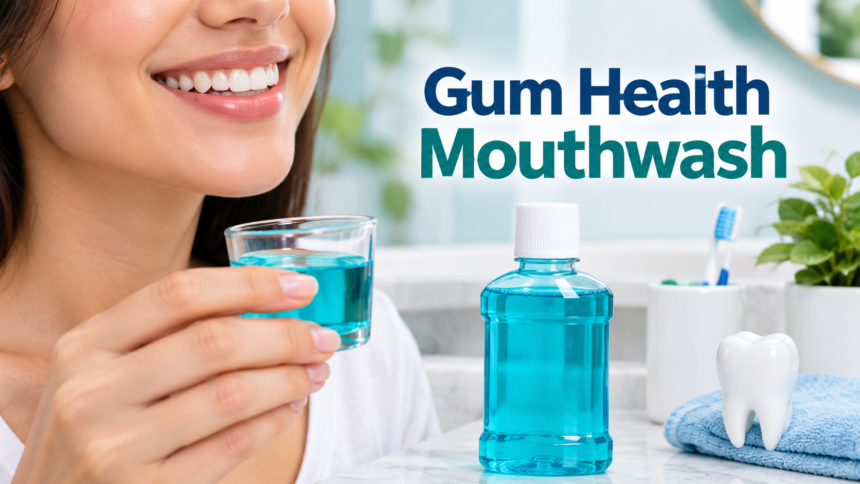
A gum health mouthwash is an antibacterial rinse made to reduce the plaque bacteria that keep your gums inflamed. It works best on early trouble such as redness, puffiness, and bleeding during brushing. Look for proven actives like cetylpyridinium chloride, essential oils, or stannous fluoride, and use chlorhexidine only on a dentist’s advice.
Swish the measured dose for the time printed on the label, spit it out, and never swallow it. It supports brushing and flossing but cannot replace them or reverse advanced gum disease. If symptoms last longer than two weeks, a dentist should examine your gums.
Pink streaks in the sink after brushing are easy to ignore, yet they often signal that plaque is irritating your gums. A gum health mouthwash is one of the simplest tools for calming that irritation, but the shelves are crowded and labels can be confusing. This guide explains how these rinses work, which ingredients deserve attention, and how to use them safely so your gums receive real support.
What a Gum Health Mouthwash Is and Is Not?
Not every bottle in the pharmacy aisle is built for your gums. This section separates the therapeutic kind from the cosmetic kind and sets honest expectations.
Therapeutic Rinses Versus Cosmetic Rinses
A therapeutic rinse contains an active ingredient that lowers the bacteria in dental plaque, which is the root cause of gum inflammation. A cosmetic rinse mainly masks odor and leaves a fresh taste for a short time. Words such as “antiplaque” or “antigingivitis” on the label usually point to the therapeutic type.
Who Benefits Most?
People with red, puffy, or bleeding gums are the main audience, along with anyone whose plaque control is inconsistent or whose crowded teeth are hard to clean. A rinse adds a layer of bacterial control that a brush alone may miss. Anyone with a medical condition or regular medication should check with a dentist first.
What It Cannot Do?
Mouthwash cannot scrape away hardened tartar or fully remove the sticky biofilm packed between teeth. It also cannot reverse periodontitis, which damages the bone that holds teeth in place. Think of it as a helper for your daily cleaning, never a substitute for it.
Why Gums Become Inflamed?
Gum trouble usually starts quietly and grows slowly. Knowing the cause makes it easier to see where a rinse fits.
The Role of Plaque Biofilm
Plaque is a soft, sticky film of bacteria that begins forming on teeth within hours of cleaning. When it sits along the gumline, the bacteria release substances that irritate the tissue. Removing it every day is the single most important step in gum care.
Early Signs of Gingivitis
Healthy gums look firm and pale pink, while inflamed gums appear red, swollen, and shiny. Bleeding during brushing or flossing is the most common early signal, often joined by persistent bad breath. Because gingivitis rarely hurts, many people ignore it for months.
Gingivitis Versus Periodontitis
Gingivitis affects only the gum tissue and can be fully reversed with better cleaning. Periodontitis goes deeper, forming pockets around teeth and damaging the supporting bone, so it needs professional treatment. A rinse can help with the first stage but cannot repair the second.
Key Ingredients in a Gum Health Mouthwash
The active ingredient decides how well a rinse performs, so the label matters more than the brand name. Here are the main options and their trade-offs.
Cetylpyridinium Chloride (CPC)
CPC is a common antibacterial in over-the-counter rinses, where it lowers plaque bacteria on teeth and gums. Most CPC products are alcohol-free and suit daily use. Some users notice mild taste changes or light surface staining over time.
Essential Oil Blends
These rinses combine thymol, eucalyptol, menthol, and methyl salicylate to reduce plaque and gum inflammation. They are among the most widely studied non-prescription options. Many contain alcohol, which can cause a burning feeling in sensitive mouths.
Stannous Fluoride
Stannous fluoride fights plaque bacteria while also helping protect enamel from decay. This double role suits people who want gum and tooth protection in a single step. Light surface stains can appear, though they usually polish off at dental cleanings.
Chlorhexidine Gluconate
Chlorhexidine is a strong antibacterial that dentists usually prescribe for short periods, such as after gum treatment. Extended use can stain teeth and the tongue, alter taste, and increase tartar. Use it only as directed by a dental professional.
Hydrogen Peroxide and Herbal Rinses
Diluted hydrogen peroxide may calm mild irritation but can sting and should not be used for long stretches. Herbal ingredients such as aloe vera or tea tree appear in many products, yet the evidence for them is still limited. Treat them as extras rather than proven replacements.
The table below places the main options side by side so you can compare them quickly.
| Ingredient | Main Action | Best For | Watch Out For | Usual Use |
| CPC | Reduces plaque bacteria | Everyday gum care | Mild staining, taste change | Daily |
| Essential oils | Lowers plaque and gum inflammation | Daily use in healthy mouths | Burning if alcohol-based | Daily |
| Stannous fluoride | Antibacterial plus enamel support | Gum and cavity protection | Light surface stains | Daily |
| Chlorhexidine | Strong bacterial control | Short-term gingivitis care | Staining, taste change, tartar | Short-term, as prescribed |
| Hydrogen peroxide | Mild antiseptic action | Minor irritation | Stinging, overuse | Short-term |
Alcohol-Based and Alcohol-Free Options
Alcohol is not what makes a gum rinse effective, yet it shapes how the product feels. Your comfort level should guide this choice.
Alcohol-Based Formulas
Alcohol helps dissolve certain oils and gives a strong tingling sensation. That sting can bother inflamed gums and may worsen dryness for some users. Saliva naturally protects teeth and gums, so a drying rinse can work against you.
Alcohol-Free Formulas
Alcohol-free rinses are gentler and suit sensitive gums, dry mouth, and anyone who prefers to avoid alcohol. Their results depend on the active ingredient rather than the alcohol content. For most people they are a practical first choice for daily use.
Everyday Benefits You Can Expect
Used consistently alongside brushing and flossing, a gum health mouthwash can bring gradual improvements over several weeks. Results vary, and they depend heavily on how well the rest of your routine is done.
- Lower plaque levels: Antibacterial actives reduce the bacteria that keep gums irritated, which helps tissue stay calmer between cleanings.
- Less bleeding and puffiness: As inflammation settles, gums tend to feel firmer and bleed less during brushing.
- Fresher breath: Fewer bacteria mean fewer odor-causing compounds, so freshness lasts longer than with a cosmetic rinse.
- Reach around appliances: Liquid flows around braces, bridges, and back molars where a brush struggles to reach.
Possible Side Effects and Who Should Be Careful
Most people tolerate these products well, but a few precautions are worth knowing. This section covers what to expect and who needs extra guidance.
Common Side Effects
Staining, altered taste, dry mouth, and a burning sensation are the effects reported most often. They are usually mild and fade after stopping the product. Switching to an alcohol-free option often solves the irritation.
People Who Need Extra Care
Children under six are generally advised to avoid mouthwash because they may swallow it. Pregnant women, people with dry mouth, and those taking regular medication should ask a dentist or doctor before starting. Product labels list age limits, and they should be followed strictly.
The Risk of Masking Problems
A rinse can freshen breath while gum disease quietly continues underneath. Persistent bleeding or odor is a message from your body, not a cosmetic issue. Using mouthwash to hide these signs delays the treatment you may actually need.
How to Choose the Right Product?
A short checklist makes shopping far less confusing. Work through these points before you buy.
- Read the active ingredient: Match it to the comparison table above rather than trusting front-label claims alone.
- Look for a dental association seal: The American Dental Association Seal of Acceptance shows a product was reviewed for safety and for its stated benefits.
- Match your comfort needs: Choose alcohol-free if you have sensitive gums or a dry mouth.
- Check age and pregnancy guidance: Follow the warnings printed on the package.
- Ask about long-term use: A dentist can confirm whether a stronger option like chlorhexidine is appropriate.
How to Use It Correctly?
Good technique matters as much as the product itself. Follow these steps for the best results.
- Measure the dose: Use the cap or cup and pour the amount printed on the label, since more liquid does not mean more benefit.
- Swish thoroughly: Move the liquid around all teeth and along the gumline for the full time on the label, often 30 seconds.
- Spit, never swallow: Swallowing can upset the stomach and is unsafe in large amounts.
- Leave it on: Avoid rinsing with water or eating for about 30 minutes so the active ingredient can keep working.
Many products are meant for twice-daily use, though the label always has the final word. Some, especially chlorhexidine, work best when used at a different time from toothpaste, so follow your dentist’s instructions.
Beyond the Rinse: Daily Habits and Dental Care
A mouthwash works best inside a complete routine. These habits and warning signs show where the rinse ends and professional care begins.
Daily Habits That Support Your Gums
Brush twice a day for two minutes with a soft brush, and clean between teeth daily with floss or small interdental brushes. Quitting smoking and managing conditions such as diabetes also protect gum tissue. Regular professional cleanings remove the tartar that no rinse can touch.
Signs You Should Book a Dental Visit
Book an appointment if bleeding continues after two weeks of better care or if gums pull back from the teeth. Loose teeth, pus, painful chewing, and constant bad breath also need prompt attention. Early examination keeps a simple problem from becoming a serious one.
Frequently Asked Questions
These quick answers cover common concerns not explained above. Each one is kept short for easy reading.
How often should I use a gum health mouthwash?
Most over-the-counter products are designed for twice-daily use, but the label on your bottle is the safest guide. Prescription rinses follow the schedule your dentist gives you.
Can I use it if my gums bleed?
Yes, bleeding gums are one of the main reasons people try these products. Choose a gentle alcohol-free formula if the sting is uncomfortable.
Is it safe to use every day?
Rinses carrying a recognized dental seal are generally intended for daily use as directed. Stronger options such as chlorhexidine are meant for limited periods only.
Can homemade or natural rinses replace it?
Warm salt water may soothe irritated gums for a while. It lacks the tested plaque-fighting actives found in a formulated product, so it works better as a comfort measure than a replacement.
How soon will I notice a difference?
Improvement is usually gradual and depends on how well you clean your teeth each day. Steady use over several weeks gives a fair picture of what the product is doing for you.
Conclusion
A gum health mouthwash is a useful daily partner when it contains a proven active ingredient and fits your comfort needs. Choose it carefully, use it as directed, and pair it with thorough brushing and cleaning between teeth. When your gums stay red or keep bleeding, let a dentist take over from there.
Related Articles
What Causes White Spots on Gums — and Should You Be Worried?
Invisalign vs Braces: Which Is Right for You? 2026 Guide
Cramps But No Period: Causes, Pregnancy Signs & When to Worry