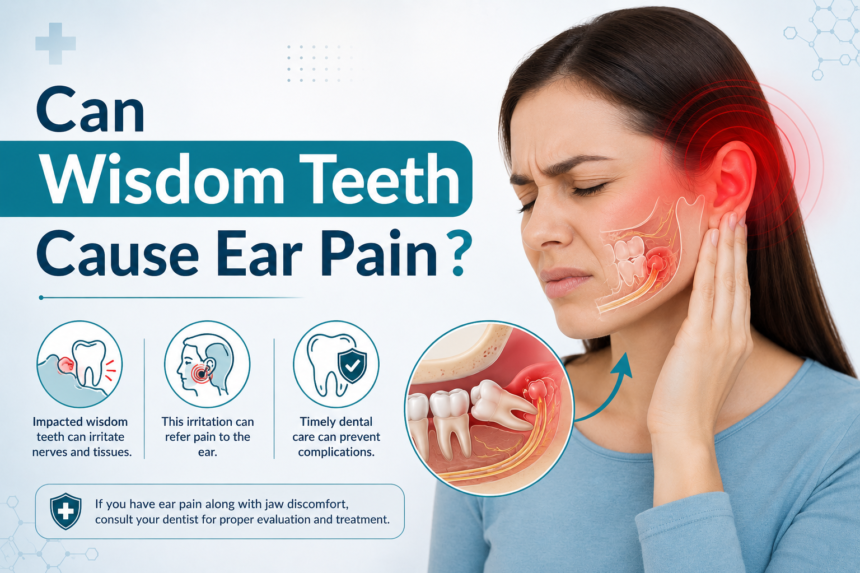
The short answer is yes, and understanding why this happens can help you address the root cause rather than just treating the symptoms.
So, can wisdom teeth cause ear pain? Absolutely, and it happens more often than most people realize. The connection lies in how nerves in your jaw and face are wired, allowing pain signals from your wisdom teeth to be felt in nearby areas like your ear, jaw, and even your head.
In this article, we will break down exactly how this happens, what symptoms typically come along with it, and how you can find relief while also learning when it’s time to see a professional.
What Are Wisdom Teeth?
Wisdom teeth are the last set of molars that develop at the very back of your mouth, and they usually make their appearance much later than the rest of your teeth.
Definition and Location of Wisdom Teeth
Wisdom teeth, also known as third molars, are the final teeth to emerge in the mouth, typically appearing between the ages of seventeen and twenty-five.
They sit at the very back of the upper and lower jaws, behind your second molars. Because they arrive after all your other teeth have already settled into place, there is often not enough room left in the jaw for them to grow properly.
Can Wisdom Teeth Cause Ear Pain?
Yes, wisdom teeth can absolutely cause ear pain, and this connection is backed by both dental research and the shared nerve pathways in your head and neck. Let’s look at exactly how often this symptom shows up for people dealing with wisdom tooth issues.
When wisdom teeth become impacted, infected, or inflamed, the discomfort doesn’t always stay confined to the mouth. Because the nerves serving your teeth, jaw, and ears overlap significantly, irritation in one area can easily be felt in another.
This is why so many people with wisdom tooth trouble describe a dull ache or sharp pain in their ear, even though there is nothing physically wrong with the ear itself.
How Wisdom Teeth Lead to Referred Ear Pain?
Understanding the mechanism behind this pain transfer makes it much easier to see why your ear hurts when the actual problem is in your mouth. This section explains the nerve connections responsible for this confusing symptom.
Role of the Trigeminal Nerve
The trigeminal nerve is the largest cranial nerve in your face, and it is responsible for sensation in your teeth, jaw, and a significant portion of your ear region. Since this single nerve branches out to cover such a wide area, irritation or pressure at your wisdom teeth can send signals along the same pathway that serves your ear. This shared wiring is the primary reason dental pain so often masquerades as ear pain.
Connection Between Jaw, Teeth, and Ear
Your jaw joint, known as the temporomandibular joint, sits remarkably close to your ear canal. When wisdom teeth push against neighboring structures or cause swelling in the jaw, this pressure can directly affect the joint and surrounding tissue near the ear. The proximity of these structures means that inflammation rarely stays in one place, often radiating outward and creating a ripple effect of discomfort.
Common Causes of Ear Pain From Wisdom Teeth
Several specific dental issues related to wisdom teeth can trigger ear discomfort. Here are the most frequent culprits behind this connection.
| Cause | How It Triggers Ear Pain |
| Impacted Wisdom Teeth | Pressure builds against the jawbone and nearby nerves |
| Infection or Abscess | Swelling and bacterial buildup irritate surrounding tissue |
| Inflammation and Swelling | Swollen tissue presses on nerve pathways near the ear |
| Nerve Compression | Direct pressure on nerves shared with the ear region |
| TMJ Involvement | Jaw joint dysfunction radiates pain toward the ear canal |
Symptoms That Often Come With Ear Pain
Ear pain from wisdom teeth rarely shows up completely alone. Here are the symptoms that commonly accompany it.
- Jaw pain and stiffness, especially when opening your mouth wide
- Headaches that center around the temples or the back of the head
- Swollen or tender gums near the back of the mouth
- Difficulty fully opening or closing the jaw comfortably
- Sore throat or neck discomfort on the affected side
- A general feeling of pressure or fullness in the face
Wisdom Teeth Pain vs. Ear Infection: Key Differences
Telling the difference between dental-related ear pain and an actual ear infection can be tricky, but there are some clear patterns that can help guide you. Below is a closer look at the distinguishing signs of each.
Key Differences in Symptoms
Ear infections typically come with symptoms like fluid drainage, hearing changes, or a feeling of fullness deep inside the ear canal itself. Wisdom tooth-related pain, on the other hand, usually presents alongside jaw stiffness, gum swelling, or visible issues at the back of the mouth. Paying attention to where the discomfort seems to start can offer valuable clues about its true source.
When the Pain Worsens (Chewing, Talking, etc.)
One of the most reliable indicators is whether certain activities make the pain worse. If chewing, talking, or opening your mouth wide intensifies the ear pain, this strongly suggests a dental or jaw-related cause rather than a true ear infection. Ear infections generally do not fluctuate based on jaw movement in this same way.
Signs Pointing to Dental Origin
Swollen gums near the back molars, visible redness around an emerging tooth, or pain that worsens with biting pressure all point toward a dental source. If you can press gently along your jawline and reproduce or worsen the ear pain, this is another strong indicator that your wisdom teeth are the actual culprit.
Signs Pointing to Ear Origin
If you’re dealing with hearing loss, ringing in the ears, dizziness, or visible drainage from the ear canal, these symptoms point toward a genuine ear infection or other ear-specific condition rather than a dental issue. In these cases, the pain typically doesn’t change much regardless of jaw movement or chewing.
When to See a Dentist or Doctor
Knowing when to seek professional help can prevent a minor issue from turning into a more serious complication. Here’s what to watch for and what kind of evaluation to expect.
Warning Signs You Shouldn’t Ignore
You should schedule an appointment promptly if you notice persistent swelling, fever, difficulty swallowing, or pain that continues worsening despite home care. Pus or an unpleasant taste near the back of your mouth is also a sign that infection may be present and requires prompt attention.
Diagnostic Tests
A dentist will typically begin with a physical examination of your gums, jaw, and teeth before recommending dental X-rays to get a clear picture of how your wisdom teeth are positioned beneath the surface.
Treatment Options for Relief
Once the cause of your ear pain has been identified, several treatment paths can bring relief. Here’s a breakdown of the most common approaches.
Home Remedies for Temporary Relief
Rinsing with warm salt water, applying a cold compress to the outside of the jaw, and avoiding hard or chewy foods can all help reduce discomfort while you wait for professional treatment. These methods won’t resolve the underlying issue but can make daily life more bearable in the meantime.
Pain Relievers and Anti-inflammatories
Over-the-counter medications such as ibuprofen can help manage both the pain and the swelling associated with wisdom tooth irritation. These medications work by reducing inflammation at the source, which often eases the referred pain felt in the ear as well.
Antibiotics
When a dentist identifies a bacterial infection or abscess, antibiotics are typically prescribed to clear the infection before any further dental work is performed. This step is crucial, as treating the infection directly often resolves the ear pain within a few days.
Wisdom Tooth Extraction
For impacted or repeatedly problematic wisdom teeth, extraction is often the most effective long-term solution. Removing the source of pressure and inflammation typically eliminates the referred ear pain entirely, since the nerve irritation causing the symptom is resolved at its root.
Tips to Prevent Wisdom Teeth-Related Ear Pain
Prevention is always easier than treatment, and a few consistent habits can help you avoid this uncomfortable situation altogether. Here’s how to stay ahead of potential problems.
- Schedule regular dental checkups so emerging wisdom teeth can be monitored early
- Get dental X-rays periodically during your teenage and young adult years
- Maintain consistent brushing and flossing, especially around the back molars
- Address any early signs of gum swelling or discomfort promptly rather than waiting
- Discuss extraction timing with your dentist before impaction becomes severe
FAQs
Which side will the ear pain be on if it’s from wisdom teeth?
The ear pain typically occurs on the same side as the affected wisdom tooth, since the nerve irritation and swelling stay localized to that particular area of the jaw.
Can all four wisdom teeth cause ear pain at once?
Yes, if multiple wisdom teeth are impacted or inflamed simultaneously, it’s possible to experience ear pain on both sides, though this is less common than single-sided discomfort.
Does wisdom tooth ear pain get worse at night?
Many people notice increased discomfort at night, partly because lying down can increase blood flow and pressure to the jaw area, and there are fewer distractions from daily activities.
Can a wisdom tooth infection spread to the ear itself?
While the pain is usually referred to rather than a direct infection, severe untreated dental infections can occasionally spread to nearby tissues, so prompt treatment is always recommended.
Will ear drops help with wisdom teeth-related ear pain?
No, ear drops won’t address the underlying dental cause and are unlikely to provide meaningful relief since the problem originates from the tooth and jaw, not the ear canal.
Can stress make wisdom teeth ear pain worse?
Yes, stress often leads to jaw clenching or teeth grinding, which can increase pressure on an already irritated wisdom tooth and intensify the referred pain felt in the ear.
Should I see a dentist or an ENT for this type of ear pain?
Starting with a dentist is generally recommended, since they can quickly determine if a wisdom tooth is the cause before referring you to an ENT if needed.
Conclusion
So, can wisdom teeth cause ear pain? As we’ve explored throughout this article, the answer is a clear yes, thanks to the shared nerve pathways connecting your jaw, teeth, and ears.
Whether the cause is impaction, infection, inflammation, or jaw joint strain, this referred pain is a real and common experience for many people navigating wisdom tooth issues.
If you’re dealing with persistent ear discomfort alongside jaw or gum symptoms, don’t hesitate to consult a dentist who can properly diagnose and treat the root cause, bringing you lasting relief.
Related Posts
How to Restore Gum Health Naturally and Professionally?
Does Cataract Cause Headaches? Causes, Symptoms, Treatment, and Prevention Guide
When Do Pregnancy Cravings Start? Complete Timeline & Causes Guide
Cramps But No Period: Causes, Pregnancy Signs & When to Worry
Migraine vs Tension Headache: What’s the Difference and Which One Do You Have?