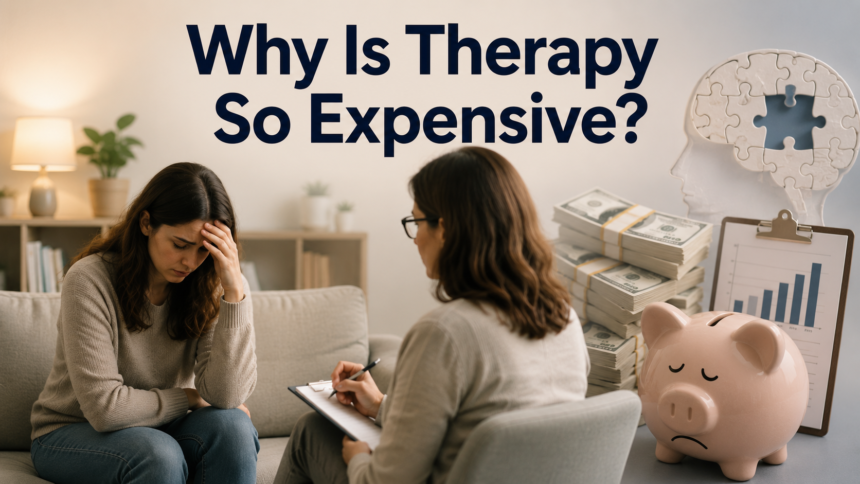
Many people who consider starting therapy are surprised by how much a single session can cost, and this often stops them from getting the help they need. The reasons behind these high prices are not random; they are tied to years of education, licensing requirements, business costs, and the nature of one-on-one mental health care.
Understanding why therapy is priced the way it is can help make sense of the market and find options that fit a budget. This article breaks down every factor behind the cost of therapy in simple, easy to understand language, along with how insurance and demand play a role. By the end, the actual value behind every therapy session will be clear.
How Much Does Therapy Actually Cost?
Therapy prices vary widely depending on the provider, location, and format of the session, since there is no fixed national rate for mental health care. The sections below break these differences down.
Average Session Rates by Therapist Type
Licensed counselors and social workers typically charge less than psychologists, since psychologists have higher levels of education and specialized doctoral training behind their fees. Psychiatrists usually charge the most per session because they are medical doctors who can prescribe medication, even though their appointments are often shorter. This difference in credentials directly explains part of the price gap across different providers.
Cost Differences Between In-Person and Online Therapy
Online therapy platforms tend to be more affordable because they reduce overhead costs like renting a physical office and hiring front desk staff. In-person sessions include the added expense of maintaining a private office that meets confidentiality standards. Many people now choose online therapy because it offers similar quality care at a lower price point.
Regional and City Based Price Variation
Therapy in large cities with a high cost of living is generally more expensive than in smaller towns, since therapists must charge enough to cover their own rent and daily expenses. Areas with a shortage of licensed therapists also tend to have higher prices due to limited competition. This is one of the clearest examples of how location alone can change what a client pays.
The Real Reasons Therapy Is So Expensive
The high cost of therapy is not simply about profit; it reflects the real financial and professional demands placed on mental health providers. The points below explain what goes into setting these prices.
Years of Education and Unpaid Clinical Training
Becoming a licensed therapist usually requires a master’s or doctoral degree, taking anywhere from two to seven years of full time study. On top of that, most programs require thousands of hours of supervised clinical work, much of it unpaid or very low paid during training. This lengthy, costly educational path is one of the biggest reasons therapists charge higher rates once fully licensed.
Licensing Fees and Continuing Education
Every licensed therapist must pass state exams, pay renewal fees, and complete continuing education courses to keep their license active. These requirements protect clients, but they also add a steady stream of costs therapists must factor into session prices. Without passing these expenses along, therapists could not sustain their practice long term.
Malpractice Insurance and Liability Costs
Like other healthcare providers, therapists carry malpractice insurance to protect themselves and their clients in case something goes wrong during treatment. This is not optional and often comes with a significant annual premium. These liability costs are quietly built into the price of every session, even though clients rarely see this cost directly.
Business Overhead Including Rent and Software
Therapists who run private practices are also small business owners, paying for office rent, utilities, scheduling software, and billing systems out of pocket. Many also hire administrative help to manage appointments and insurance claims, adding another layer of ongoing expense. These behind-the-scenes costs are ultimately reflected in what a client pays per session.
Limited Daily Session Capacity
Unlike many other professions, therapists cannot safely see an unlimited number of clients each day without risking burnout and a decline in quality of care. Most full time therapists cap their schedule at around twenty to twenty five sessions per week to stay effective. Because income is capped by these limits, individual sessions must be priced higher to stay sustainable.
The One-on-One Model Cannot Be Scaled
A teacher can lecture to a hundred students at once, but a therapist can only work with one client at a time. This lack of scalability means therapists cannot multiply their income the way group based professions can, so each hour of their time carries more financial weight. This is a structural reason therapy will likely always cost more than group based education.
The Emotional and Cognitive Labor Involved
Every therapy session requires the therapist to stay fully focused, emotionally present, and mentally engaged with often difficult topics. This sustained emotional labor is mentally exhausting in a way that limits how many sessions a therapist can realistically handle each day. The intensity of this work is a real, if less visible, factor that justifies part of the cost.
Why Don’t More Therapists Accept Insurance?
A large number of therapists choose not to work with insurance companies, and this decision is closely tied to how those companies operate. The next sections explain why.
Low Reimbursement Rates from Insurers
Insurance companies often pay therapists significantly less per session than what a private paying client would be charged directly. Accepting these lower rates can make it difficult for a therapist to cover business expenses while still earning a sustainable income. Many therapists therefore remain out of network so they can set fees that reflect the true value of their time.
The Administrative Burden of Insurance Paperwork
Working with insurance companies requires extensive paperwork, including detailed session notes, diagnosis codes, and regular claim submissions that can take hours each week. This workload often requires hiring extra staff or spending personal time on tasks unrelated to client care. Many therapists find that avoiding insurance altogether simplifies their practice and lets them focus on clients.
Network Restrictions and Delayed Payments
Even when therapists do accept insurance, they often face network restrictions that limit which clients they can see and how they can bill. Payments can also be delayed for weeks or months, creating cash flow problems for a small practice. These delays and restrictions add financial uncertainty that many therapists prefer to avoid entirely.
Supply, Demand, and Therapist Shortages
The balance between how many people need therapy and how many licensed therapists are available also plays a major role in pricing. The points below show how supply and demand affects what clients pay.
Rising Demand for Mental Health Services
Awareness around mental health has grown significantly in recent years, leading more people to seek therapy than ever before. This increased demand puts upward pressure on prices, especially where the number of available therapists has not grown at the same pace. When more people want the same limited service, costs tend to rise.
Uneven Distribution Between Urban and Rural Areas
Licensed therapists are often concentrated in larger cities, leaving rural and smaller communities with very few local options for mental health care. This shortage forces people in underserved areas to travel long distances or pay premium rates for the limited providers nearby. The uneven spread of therapists across regions is a significant contributor to price differences nationwide.
Waitlists Driving Up Private-Pay Rates
In many areas, popular therapists have long waitlists, allowing them to charge higher rates simply because demand for their time exceeds availability. Clients who need care quickly are often willing to pay more to skip these waitlists and start treatment sooner. This mirrors basic market pricing, where scarcity of an in-demand service leads to higher costs.
Average Cost Comparison by Provider Type
The table below summarizes typical session lengths, out-of-pocket costs, and insurance acceptance across common therapy formats.
| Type | Session Length | Avg. Cost (Out-of-Pocket) | Insurance Accepted? |
| Licensed Counselor (LPC/LCSW) | 45-50 min | $$ | Sometimes |
| Clinical Psychologist | 45-50 min | $$$ | Sometimes |
| Psychiatrist (medication management) | 15-30 min | $$$$ | Often |
| Online Therapy Platform | 30-45 min | $ | Rarely |
| Sliding-Scale/Community Clinic | 45-50 min | $ | Varies |
How to Make Therapy More Affordable?
Even though therapy can be costly, there are several practical ways to reduce how much a person pays without giving up quality care. The sections below outline the most common options available.
Sliding-Scale Therapists and Community Clinics
Many therapists offer a sliding-scale fee structure, where the price of each session is adjusted based on income. Community mental health centers also provide lower cost services, often funded partly by government or nonprofit support. These options make consistent therapy accessible even for people with limited financial resources.
University Training Clinics
Universities with graduate psychology or counseling programs often run training clinics where supervised students provide therapy at a reduced cost. While the therapist may be less experienced, they are closely overseen by licensed faculty who ensure quality care. This can be an excellent low cost option for people open to working with a therapist in training.
Employee Assistance Programs
Many employers offer Employee Assistance Programs that provide a set number of free therapy sessions each year as part of a benefits package. These programs are often underused simply because employees are not aware they exist. Checking with a workplace human resources department is a simple first step that could lead to several free sessions.
Online Therapy Platforms and Subscription Models
Online therapy platforms often use subscription-based pricing that can be noticeably cheaper than traditional weekly in-person sessions. These platforms reduce overhead costs and pass some savings on through lower monthly rates. For many people, this format offers a practical middle ground between affordability and consistent professional support.
Support Groups and Low-Cost Alternatives
Peer-led support groups, community workshops, and nonprofit counseling services can provide valuable emotional support at little to no cost. While not a direct replacement for individual therapy, they can be a helpful supplement or starting point for people not yet ready for private sessions. Exploring these alternatives can ease the financial burden while still providing meaningful support.
Is Expensive Therapy Worth It?
Cost alone should not be the only factor when deciding whether therapy is worth the investment. The next sections weigh the value of therapy against its price.
Weighing Cost Against Long-Term Outcomes
Research consistently shows that consistent therapy can lead to meaningful improvements in mental health, relationships, and overall quality of life over time. Viewed as a long-term investment rather than a one-time expense, the value often outweighs the upfront cost. This shifts the conversation from asking if it is expensive to asking if it is worth it.
When to Prioritize Paying for Therapy
For individuals dealing with significant emotional distress, prioritizing therapy despite the cost can lead to meaningful long-term benefits. Budgeting for therapy the way one would budget for essential healthcare can make the expense feel more manageable. Ultimately, the decision comes down to weighing current needs against available resources.
Frequently Asked Questions
Is therapy covered by insurance?
Some sessions are covered, but this depends on the specific plan and whether the therapist is in-network.
Why do psychiatrists charge more than therapists?
Psychiatrists are medical doctors who can prescribe medication, which generally makes their services more expensive than talk therapy alone.
Can therapy fees be negotiated?
Yes, many therapists are open to discussing sliding-scale fees when a client explains their financial situation honestly.
Are online therapy apps cheaper and just as effective?
Online apps are often cheaper due to lower overhead, and research suggests they can be effective for many common concerns.
Conclusion
Therapy is expensive for clear, practical reasons, including extensive education, business costs, and the limited scalability of one-on-one care. Understanding these factors makes the cost feel less confusing and more justified.
With options like sliding-scale fees, community clinics, and online platforms, affordable mental health support is still within reach for most people.
Related Articles
What Causes Fluid on the Knee? Causes, Symptoms & Treatment
Can Cavities Cause Headaches? What Dentists Say
Best Footwear for Achilles Tendonitis: Podiatrist-Backed Picks for 2026
Are Electrolytes Good for Kidneys? What You Need to Know
Migraine vs Tension Headache: What’s the Difference and Which One Do You Have?