

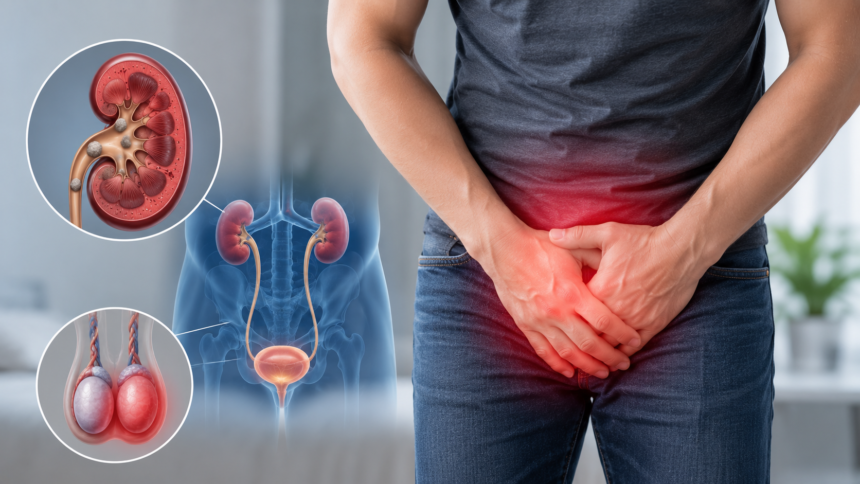
Yes, kidney stones can cause testis pain, and this is more common than most people realize. When a stone moves from the kidney into the ureter, it can trigger pain signals that travel along shared nerve pathways connecting the urinary tract and the reproductive organs.
This is known as referred pain, and it often confuses patients because the testicle itself is completely healthy while the real problem sits higher up in the urinary system. Understanding this connection can save you from unnecessary worry and help you seek the right treatment at the right time.
Understanding Kidney Stones
Kidney stones are hard mineral deposits that form inside the kidneys when urine becomes too concentrated. They can stay small and painless for years, or grow large enough to block the flow of urine and cause intense pain.
What Are Kidney Stones Made Of
Kidney stones are not all the same; they form from different mineral combinations depending on a person’s diet, hydration levels, and body chemistry. Calcium oxalate stones are the most common type found in patients worldwide. Uric acid stones tend to form in people who eat a lot of animal protein or who are dehydrated frequently. Struvite and cystine stones are less common and usually linked to infections or genetic conditions.
How Kidney Stones Form Inside the Body
Stone formation begins when urine holds more crystal-forming substances than the available fluid can dilute. Over time, these tiny crystals stick together and slowly grow into a solid mass. If the kidney does not flush them out early, they continue to enlarge and eventually block part of the urinary tract.
Common Locations Where Stones Get Stuck
Stones can sit quietly in the kidney without causing symptoms, but the real trouble starts when they move into the ureter, the thin tube connecting the kidney to the bladder. A stone stuck in the lower part of the ureter, close to the bladder, is the one most likely to cause pain that spreads down toward the groin and testicle.
Understanding Testicular Anatomy and Nerve Supply
The testicles are connected to the body through a network of nerves that originate from the same spinal segments as the kidneys and ureters. This shared wiring is the biological reason why a kidney stone can be felt in the testicle.
The Genitofemoral and Ilioinguinal Nerves
The genital branch of the genitofemoral nerve carries sensation from the testicle and scrotum, and it originates from spinal nerve roots L1 and L2. The ilioinguinal nerve also contributes to sensation in the groin and upper scrotal region. Both of these nerves share close anatomical pathways with the nerves supplying the kidney and ureter.
Why Shared Spinal Roots Matter
Because the kidney, ureter, and testicle send pain signals through overlapping spinal nerve roots, the brain sometimes struggles to pinpoint the exact source of the pain. It processes the signal as coming from the testicle simply because the nerve pathway is shared, even though the actual irritation is happening in the ureter.
The Kidney Stone and Testicular Pain Connection
Referred pain is the medical explanation behind why a problem in one organ is felt in a completely different part of the body. This is precisely what happens when a kidney stone irritates the ureter and the discomfort travels down to the testicle. So yes, kidney stones absolutely can cause testis pain through this exact nerve-sharing mechanism.
What Referred Pain Actually Means
Referred pain occurs when the brain misinterprets the origin of a pain signal because two different body areas send information through the same neural pathway. In the case of kidney stones, the irritation in the ureter travels along nerves that also supply the testicle, tricking the brain into feeling pain in the wrong location.
Which Stone Locations Trigger This Most
Stones sitting in the upper ureter typically cause pain in the flank and back region. As the stone travels further down into the lower ureter, closer to the bladder, the referred pain frequently shifts toward the groin and testicle on the same side as the stone. This shifting pattern is actually a useful clue for doctors trying to track the stone’s movement.
Referred Pain Versus Direct Testicular Problems
Referred pain from a kidney stone usually comes with other urinary symptoms and tends to fluctuate in intensity, unlike direct testicular conditions such as infections or torsion, which usually stay constant and worsen over hours. Recognizing this difference early helps in choosing the right specialist and avoiding delays in treatment.
Symptoms That Accompany This Type of Pain
Kidney stone related testis pain rarely shows up alone. It is almost always accompanied by other classic urinary symptoms that point toward the real source of the problem.
| Symptom | Description |
| Flank or back pain | Sharp or dull pain on one side of the lower back |
| Groin pain | Pain radiating from the side toward the groin area |
| Blood in urine | Pink, red, or brown-tinted urine |
| Renal colic | Pain that comes in waves and intensifies periodically |
| Nausea and vomiting | Common during severe stone movement |
| Burning urination | Discomfort or stinging while passing urine |
| Frequent urge to urinate | Feeling the need to urinate more often than usual |
These symptoms together create a fuller picture that separates kidney stone pain from a purely testicular issue.
How to Tell If It Is a Kidney Stone or a Testicular Problem?
Distinguishing between the two conditions is important because their treatments are completely different. Paying attention to how the pain behaves, where it started, and what other symptoms accompany it can guide you toward the correct diagnosis before you even reach the doctor.
Pain Pattern Differences
Kidney stone pain typically starts in the back or side and gradually moves downward toward the groin and testicle, often changing intensity in waves. A direct testicular problem, on the other hand, usually begins suddenly in the scrotum itself without any preceding back or flank discomfort.
Warning Signs of Testicular Torsion
Testicular torsion is a medical emergency where the testicle twists on its own blood supply, cutting off circulation. It causes sudden, severe, and constant pain along with swelling, and it requires surgery within hours to save the testicle, so any sudden isolated testicular pain needs immediate medical attention.
Warning Signs of Epididymitis or Orchitis
Epididymitis and orchitis are infections or inflammations of the testicle and its surrounding structures. These conditions usually develop gradually over a day or two, often come with fever, and cause the scrotum to feel warm, swollen, and tender to touch, which is different from the fluctuating referred pain caused by a kidney stone.
When to See a Doctor Immediately?
Certain symptoms should never be ignored or treated at home, because they may indicate a condition that needs urgent medical intervention rather than home remedies or wait-and-watch approaches.
- Sudden and severe testicular pain that comes on quickly
- Visible swelling, redness, or unusual firmness of the scrotum
- Fever combined with testicular or groin pain
- Pain that keeps worsening despite rest and basic pain relief
- Blood in urine along with severe back or side pain
Seeking prompt evaluation in these situations helps rule out emergencies like torsion and ensures kidney stones are managed before complications develop.
Diagnosis
Doctors use a combination of physical examination and imaging tools to confirm whether testicular pain is coming from a kidney stone or a separate condition. A physical exam helps assess tenderness, swelling, and the exact location of discomfort.
Urinalysis checks for blood, crystals, or signs of infection in the urine. Scrotal ultrasound examines blood flow and structure of the testicle to rule out torsion or infection, while a kidney ultrasound or CT scan confirms the presence, size, and location of the stone. Blood tests may also be used to check kidney function and rule out infection markers.
Treatment Options
Treatment depends on the size of the stone, its location, and how severe the symptoms are. Small stones often pass on their own with proper hydration and pain management, while larger stones may need medical or surgical intervention.
| Treatment Approach | Purpose |
| Pain management | Reduces discomfort during stone passage |
| Increased fluid intake | Helps flush the stone through the urinary tract |
| Alpha-blocker medication | Relaxes ureter muscles to ease stone passage |
| Lithotripsy | Breaks larger stones into smaller fragments using sound waves |
| Ureteroscopy | Removes or breaks stones using a thin scope |
| Surgical removal | Used for very large or complicated stones |
Once the stone passes or is treated, the referred testicular pain typically resolves on its own without needing separate treatment directed at the testicle.
Prevention Tips for Kidney Stones
Preventing kidney stones from forming in the first place is far easier than treating the pain they cause later. Drinking enough water throughout the day keeps urine diluted and reduces crystal formation. Reducing sodium intake and limiting oxalate-rich foods such as spinach and nuts can lower stone risk for many people.
Cutting back on excessive animal protein also helps balance urine chemistry. People who have formed stones before should schedule regular check-ups with a urologist, and anyone prescribed preventive medication should continue it as directed rather than stopping once symptoms disappear.
Frequently Asked Questions
Can a kidney stone cause pain in only one testicle? Yes, since kidney stones typically affect one kidney and one ureter at a time, the referred pain usually shows up only on the same side as the stone.
Does testicular pain from kidney stones need separate treatment? No, this pain generally fades once the underlying stone is treated or passes naturally, so no separate testicular treatment is usually required.
Can kidney stones cause long-term testicular damage? No, referred pain from kidney stones does not damage the testicle itself since the issue originates in the urinary tract, not the reproductive organ.
How long does the referred pain last? It typically lasts as long as the stone is moving through the ureter and usually eases once the stone passes into the bladder or is removed.
Can women experience similar referred pain patterns? Yes, women can experience referred pain in the labia or groin area due to the same shared nerve pathways, though the exact location differs from male anatomy.
Conclusion
Kidney stones can genuinely cause testis pain through referred pain traveling along shared nerve pathways, and recognizing this connection helps avoid unnecessary panic while still taking the right symptoms seriously.
Watching for accompanying signs like flank pain, blood in urine, or waves of colic can help identify the true cause quickly. However, sudden isolated testicular pain should always be checked urgently to rule out emergencies like torsion. Consulting a urologist for proper diagnosis remains the safest path toward accurate treatment and lasting relief.
Related Posts
How to Use a Pregnancy Pillow: A Complete Guide
How Long After Fluoride Treatment Can I Eat?
Should I Keep Walking With Hip Pain? Warning Signs to Know
Do Urgent Cares Do Ultrasounds? What They Can and Cannot Scan