

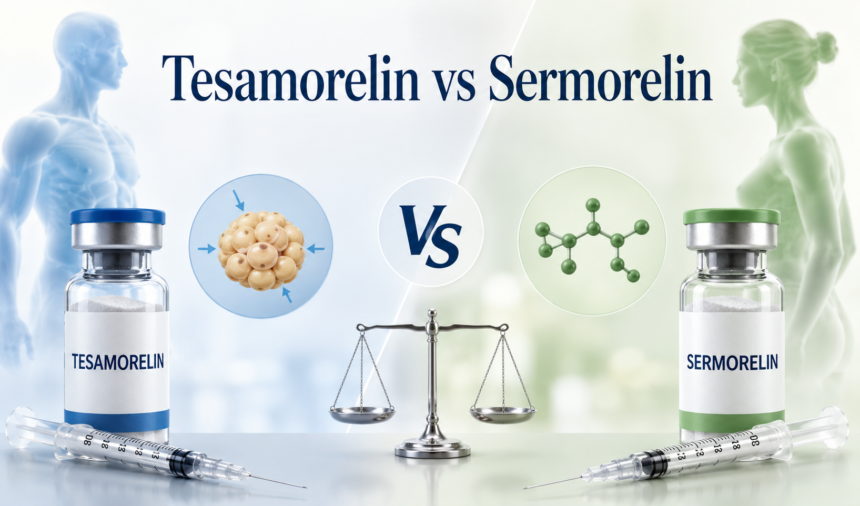
When people start researching growth hormone-releasing peptides, the comparison of tesamorelin vs sermorelin comes up almost immediately, since both belong to the same peptide family but behave very differently in the body.
Sermorelin is a shorter, milder GHRH fragment often used for general wellness and gentle hormone support, while tesamorelin is a stabilized, more potent analog with an actual FDA-approved medical indication.
Understanding how these two peptides differ in structure, strength, and purpose helps you avoid confusion and choose the option that actually matches what you are trying to achieve, whether that is fat loss, anti-aging support, or medically supervised treatment.
What Are Growth Hormone Peptides?
Growth hormone peptides are lab-made compounds that signal the pituitary gland to release more natural growth hormone instead of introducing synthetic HGH directly. This is the foundation you need before comparing tesamorelin vs sermorelin, since both peptides work through this same signaling pathway rather than replacing hormone production outright.
How the Body Naturally Produces Growth Hormone?
The hypothalamus releases GHRH, which travels to the pituitary gland and triggers the release of growth hormone into the bloodstream. This process happens in natural pulses, mostly during deep sleep and after intense exercise, and it slows down noticeably as people age. Peptide therapy aims to support or extend this natural pulsing pattern rather than override it.
Role of IGF-1 in the Process
Once growth hormone reaches the liver, it stimulates the production of IGF-1, which is the hormone actually responsible for many of the visible effects people associate with growth hormone, such as muscle repair and fat metabolism. IGF-1 levels are commonly used in blood work to measure how well a peptide protocol is performing. Both tesamorelin and sermorelin ultimately aim to raise IGF-1, just with different levels of intensity.
What Is Sermorelin?
Sermorelin is a shortened version of natural GHRH, built from the first 29 amino acids that are considered biologically active. It was one of the earliest GHRH-based peptides developed and remains popular today mainly because of its mild, gradual action.
Structure and Mechanism
Sermorelin mimics the natural GHRH molecule closely, which allows it to bind to pituitary receptors and stimulate a modest, short-lived pulse of growth hormone release. Because the fragment is short, the body clears it from the bloodstream quickly, meaning its effects don’t last very long per dose. This shorter action also means users typically need consistent daily dosing over weeks or months to notice a difference.
Approved and Off-Label Use
Sermorelin originally had FDA approval for diagnosing and treating growth hormone deficiency in children, though the original branded product is no longer marketed. Today it is used almost entirely off-label for adult wellness purposes, including sleep support, mild anti-aging effects, and general vitality. This off-label status means dosing protocols vary widely between clinics and providers.
What Is Tesamorelin?
Tesamorelin is a modified, stabilized GHRH analog built from a full 44-amino-acid sequence with an added chemical group that protects it from rapid enzymatic breakdown. This structural difference is the main reason tesamorelin outperforms sermorelin in potency when people compare tesamorelin vs sermorelin directly.
Structure and Mechanism
The stabilizing modification on tesamorelin slows down its natural degradation in the bloodstream, allowing it to bind more effectively and produce a stronger, more sustained growth hormone pulse than sermorelin. This translates into more measurable increases in IGF-1 levels during clinical testing. The stronger action is also why tesamorelin tends to produce more noticeable body composition changes over a comparable time period.
FDA-Approved Medical Use
Unlike sermorelin, tesamorelin holds a specific FDA approval for reducing excess visceral fat in people with HIV-associated lipodystrophy, a condition that causes abnormal fat redistribution. This approval is backed by multiple clinical trials showing measurable reductions in visceral adipose tissue. Outside of this indication, tesamorelin is frequently used off-label for general fat loss and body recomposition goals.
Side-by-Side Comparison Table
The table below summarizes the core differences discussed throughout this guide so you can compare tesamorelin vs sermorelin at a glance.
| Factor | Sermorelin | Tesamorelin |
| Amino acid length | 29 (fragment) | 44 (full, stabilized) |
| Potency | Mild to moderate | Higher and more consistent |
| Half-life | Shorter | Longer |
| FDA-approved use | Historical, discontinued brand | Yes, HIV-lipodystrophy |
| Primary current use | General wellness, anti-aging | Fat loss, body composition |
| Typical cost | Lower | Higher |
| Onset of visible results | Slower, gradual | Comparatively faster |
Benefits of Sermorelin
Sermorelin’s benefits center around gentle, gradual support rather than dramatic transformation, which makes it appealing to people who are new to peptide therapy. It works with the body’s natural rhythm instead of pushing hormone levels aggressively.
Sleep and Recovery Support
Many users report improved sleep depth and quality after consistent sermorelin use, likely because growth hormone release naturally aligns with deep sleep cycles. Better sleep in turn supports recovery from exercise and daily stress. This effect tends to build gradually rather than appearing after just a few doses.
Gentle Anti-Aging Effects
Because sermorelin stimulates a modest and natural growth hormone pulse, it is often chosen by people focused on general anti-aging support rather than aggressive fat loss. Reported benefits include better skin elasticity, steadier energy levels, and improved muscle tone over time. These changes are usually subtle rather than dramatic.
Benefits of Tesamorelin
Tesamorelin’s benefits are more clinically documented, largely because of the research conducted for its FDA approval. Its strength lies in producing measurable, consistent changes rather than gradual wellness effects.
Visceral Fat Reduction
Clinical trials specifically measured tesamorelin’s ability to reduce visceral fat, the deeper abdominal fat linked to metabolic risk, and found statistically significant reductions compared to placebo. This is the strongest and most well-documented benefit associated with the peptide. It’s also the main reason tesamorelin is preferred for fat-loss-focused protocols.
Stronger IGF-1 Elevation
Because tesamorelin is more resistant to breakdown, it produces a more sustained IGF-1 increase than sermorelin during comparable dosing periods. This stronger hormonal response is linked to more noticeable improvements in lean body mass and body composition. It also means tesamorelin users are typically monitored more closely through periodic blood work.
Dosage and Administration
Dosing protocols differ significantly between the two peptides, largely due to their different half-lives and potency levels, which is an important factor when weighing tesamorelin vs sermorelin for your own routine.
Sermorelin Dosing Approach
Sermorelin is typically injected subcutaneously once daily, usually before bedtime to align with natural growth hormone pulses during sleep. Doses are generally smaller, and protocols often run for several months with periodic breaks. Consistency matters more than dose size with sermorelin.
Tesamorelin Dosing Approach
Tesamorelin is also injected subcutaneously, commonly once daily, but its dosing is more standardized due to clinical trial data supporting specific amounts. Because of its stronger action, providers often recommend more frequent monitoring of IGF-1 levels during treatment. Cycle lengths are typically guided by the specific goal, such as visceral fat reduction.
Side Effects and Safety Considerations
Both peptides carry a similar general risk profile since they work through the same GHRH pathway, though intensity of side effects can differ based on potency.
Common Side Effects of Sermorelin
Sermorelin’s side effects are generally mild and may include injection site redness, headache, or flushing shortly after dosing. Because the hormone pulse is smaller, systemic side effects like fluid retention are less commonly reported. Most users tolerate it well when doses are kept within recommended ranges.
Common Side Effects of Tesamorelin
Tesamorelin has a more established side effect profile from clinical trials, including injection site reactions, joint pain, swelling, and in some cases mild insulin resistance. These effects are more likely to appear at higher potency due to the stronger hormonal response. Regular blood glucose monitoring is often recommended during treatment.
Which One Should You Choose?
Choosing between tesamorelin and sermorelin ultimately depends on your specific goal, tolerance for stronger effects, and budget, rather than one peptide being universally better than the other.
Best For Beginners and General Wellness
If your main goal is gentle, gradual wellness support with a lower side effect intensity, sermorelin is generally the more approachable starting point. Its milder action suits people who are cautious about strong hormonal shifts. It is also usually more budget-friendly for longer-term use.
Best For Fat Loss and Clinical Goals
If your priority is measurable visceral fat reduction or you’re working under medical supervision for a specific condition, tesamorelin’s stronger, clinically backed action makes it the more targeted choice. It suits people who want faster, more documented results and are comfortable with closer monitoring. This makes it the preferred option in more structured, goal-driven protocols.
Legal Status and Where to Get Them
Both peptides generally require a prescription and medical oversight in most regions, since they directly influence hormone levels.
Buying research-grade or unregulated versions online carries real risks, including inconsistent purity and unknown dosing accuracy. Working with a licensed provider who can order proper testing remains the safest way to access either peptide.
Frequently Asked Questions
Can sermorelin and tesamorelin be combined? Some providers combine them or alternate between cycles, but this should only be done under medical guidance since combining GHRH analogs increases the strength of the hormonal response.
How long until results appear? Sermorelin users typically report gradual changes over 8 to 12 weeks, while tesamorelin’s stronger action can show measurable body composition changes somewhat sooner due to its higher potency.
Are these peptides safe for long-term use? Long-term safety data is more established for tesamorelin due to its clinical trial history, while sermorelin’s long-term off-label use relies more on accumulated clinical experience than formal trials.
How do these compare to other GH peptides like ipamorelin or CJC-1295? Ipamorelin and CJC-1295 work through slightly different receptor pathways and are often stacked with GHRH analogs, but on their own they don’t carry the same FDA-backed clinical data that tesamorelin has for visceral fat reduction.
Conclusion
The tesamorelin vs sermorelin decision comes down to intensity and purpose: sermorelin offers a gentler, more gradual path suited to general wellness, while tesamorelin delivers stronger, clinically documented results focused on visceral fat reduction.
Compared to other peptides in the same category, both remain more targeted and better studied than many newer, unregulated alternatives on the market. Either option should be used under proper medical supervision, with regular monitoring, to ensure safety and to match the protocol to your specific health goals.
RELATED POSTS
Could Dehydration Cause Stomach Pain? Causes, Symptoms
Why Do My Legs Hurt on My Period? Causes, & When to Worry
What to Eat When You Have a Stomach Flu? Recovery Food
Wolverine Stack Peptide: Benefits, Risks & What to Know
SBI Protect: Complete Guide to Gut and Immune Health Support