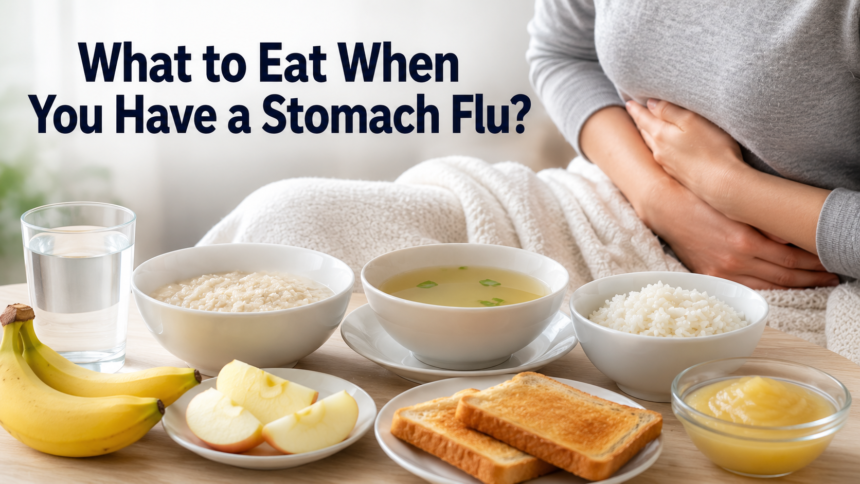
When you are dealing with stomach flu, the safest approach is to start with clear fluids, move to bland foods like bananas, rice, toast, and boiled potatoes, and slowly add lean proteins once your stomach settles. Foods that are fried, spicy, dairy-heavy, or sugary should be avoided until your digestion returns to normal.
Eating small portions frequently, instead of large meals, helps your gut recover without added strain. Staying hydrated is just as important as eating the right foods, since fluid loss is one of the biggest risks during this illness.
Knowing exactly what to eat when you have stomach flu can make the difference between a quick recovery and days of ongoing discomfort. This guide walks you through every stage of recovery in a simple, practical way.
Understanding Stomach Flu
Before figuring out what to eat when you have stomach flu, it helps to understand what actually causes it and how your body reacts. This section covers the basics so the food advice that follows makes more sense.
Common Causes of Stomach Flu
Stomach flu is usually caused by viruses such as norovirus or rotavirus, though bacteria and contaminated food or water can also trigger it. It spreads easily through close contact, shared surfaces, or eating something that was not properly cooked or stored. Understanding the cause does not change the treatment much, but it explains why the illness often affects entire households or groups at once.
Typical Symptoms to Expect
Nausea, vomiting, watery diarrhea, stomach cramps, and mild fever are the most common symptoms people notice. Some people also feel tired, lose their appetite completely, or experience body aches during the first day or two. These symptoms are your body’s way of clearing out the infection, which is why gentle, non-irritating foods matter so much during this period.
How Long Stomach Flu Usually Lasts
Most cases resolve within one to three days, though some viral infections can linger for up to a week. Recovery speed often depends on how well a person manages hydration and food intake during the illness. Rushing back to a normal diet too early can extend symptoms, while starving yourself for too long can weaken your body further.
Why the Stomach Becomes So Sensitive
During stomach flu, the lining of your digestive tract becomes inflamed and irritated, making it harder to digest heavy or complex foods. This is why bland, low-fiber, easy-to-digest foods are recommended instead of your usual diet. Giving your gut lighter tasks to handle allows it to heal faster without triggering more vomiting or diarrhea.
The Golden Rule: Hydration First
Before thinking about solid food, fluids should always come first when you are figuring out what to eat when you have stomach flu. Dehydration, not hunger, is the biggest immediate risk during this illness.
Vomiting and diarrhea cause your body to lose water, sodium, and other essential minerals very quickly. If these are not replaced, dehydration can set in within hours, especially in children, older adults, and pregnant women. The safest fluids include plain water, clear vegetable or chicken broth, oral rehydration solutions, weak herbal tea, and diluted fruit juice without added sugar. Sipping small amounts every fifteen to twenty minutes is far more effective than drinking a large glass at once, since a full stomach can trigger more vomiting.
Certain drinks should be avoided completely while recovering. Caffeinated beverages, alcohol, full-strength fruit juices, and carbonated sodas can irritate an already sensitive stomach and worsen diarrhea. The table below summarizes which fluids help and which ones to skip.
| Fluids to Drink | Fluids to Avoid |
| Plain water | Coffee and caffeinated tea |
| Clear broth or soup | Alcohol of any kind |
| Oral rehydration solutions | Carbonated soft drinks |
| Weak herbal tea | Full-strength fruit juice |
| Diluted fruit juice (no added sugar) | Energy drinks |
Watch for warning signs such as a dry mouth, dizziness, dark yellow urine, or reduced urination, as these usually mean you need to increase fluid intake immediately or seek medical advice.
Stage-by-Stage Eating Guide
Recovering from stomach flu works best when food is reintroduced gradually rather than all at once. Following a clear stage-by-stage approach makes it much easier to know what to eat when you have stomach flu without overwhelming your digestive system.
Stage 1: The First 24 Hours
During the first day, it is usually best to avoid solid food entirely and focus only on sipping clear fluids. Your stomach is still actively fighting the infection, and adding food too soon can trigger more vomiting. Small, frequent sips of water or broth are enough to keep you hydrated while your body rests.
Stage 2: Introducing Bland Foods
Once vomiting has stopped and you feel slightly hungry, the well-known BRAT diet becomes useful: bananas, rice, applesauce, and toast. These foods are low in fiber, easy to digest, and unlikely to irritate your stomach lining. Eating a small portion first, then waiting to see how your body reacts, is the safest way to move forward.
Stage 3: Adding More Solid Foods
After a day of tolerating bland foods well, you can slowly add boiled potatoes, plain crackers, oatmeal, and clear soups with small amounts of vegetables. This stage gradually increases variety while still avoiding anything greasy, spicy, or heavily seasoned. Portion sizes should remain small, even if your appetite is returning.
Stage 4: Returning to a Normal Diet
Once your stomach has fully settled and symptoms are gone for at least a day, you can reintroduce regular foods like lean meats, eggs, and dairy in small amounts. It is still wise to avoid heavy, fried, or very rich meals for a few more days. Listening to your body and slowing down if any discomfort returns is the safest strategy.
Best Foods to Eat During Stomach Flu
Choosing the right foods speeds up recovery and reduces the chances of symptoms returning. The foods below are widely recommended because they are gentle on digestion while still offering some nutrition and energy.
| Food | Why It Helps |
| Bananas | Easy to digest and rich in potassium lost through vomiting or diarrhea |
| Rice | Low in fiber and gentle on an irritated stomach lining |
| Applesauce | Provides natural sugars and is soft enough to digest easily |
| Toast or plain crackers | Absorbs stomach acid and settles mild nausea |
| Boiled potatoes | Bland, filling, and easy on digestion |
| Plain oatmeal | Gentle source of energy without heavy fat or spice |
| Clear soups and broths | Combines hydration with light nutrition |
| Plain yogurt | Contains probiotics that support gut recovery, if dairy is tolerated |
| Boiled or steamed vegetables | Soft texture and mild fiber content once tolerated |
| Lean chicken or eggs | Introduced later for protein once solid food is tolerated well |
Introducing these foods gradually, rather than all together, gives your digestive system time to adjust without becoming overwhelmed.
Foods and Drinks to Avoid
Just as important as knowing what to eat when you have stomach flu is knowing what to leave out of your meals until you are fully recovered. Certain foods can irritate the stomach lining or make diarrhea worse.
Dairy products, apart from plain yogurt, tend to be harder to digest during this period and can worsen bloating or diarrhea. Fried and fatty foods slow digestion and put extra strain on a stomach that is already inflamed. Spicy foods can irritate the digestive tract further, while raw fruits and vegetables contain fiber that may be too harsh for a sensitive gut at this stage.
Sugary foods and drinks can pull water into the intestines and worsen diarrhea, and caffeine or alcohol can dehydrate the body even more. Highly processed and packaged foods often contain preservatives, salt, or fat levels that are unsuitable for recovery.
- Dairy products, except plain yogurt
- Fried and fatty foods
- Spicy dishes and heavy seasoning
- Raw fruits and vegetables
- Sugary snacks and sweetened drinks
- Caffeine and alcohol
- Processed and packaged foods
Avoiding these items for a few days, even after symptoms improve, gives your digestive system enough time to fully heal.
Sample Meal Plan for Recovery
A simple meal plan can make it easier to know what to eat when you have stomach flu without having to think too hard during a day when you already feel unwell.
| Day | Suggested Meals |
| Day 1 | Water, clear broth, oral rehydration solution, weak tea |
| Day 2 | Banana, plain toast, rice, diluted juice, more broth |
| Day 3 | Boiled potatoes, oatmeal, crackers, clear vegetable soup |
| Day 4 onward | Plain yogurt, boiled vegetables, eggs, lean chicken, regular water intake |
This plan is a general guide, and portions should always stay small, with meals spaced a few hours apart rather than eaten all at once.
Tips for Easier Digestion
Eating smaller, more frequent meals instead of three large ones reduces pressure on your stomach and lowers the chance of triggering nausea again. Chewing food slowly and thoroughly also makes digestion easier, since your stomach has to do less mechanical work afterward.
It is best to avoid lying down immediately after eating, as this can worsen reflux or nausea, so staying upright for at least thirty minutes is helpful. Natural remedies like ginger tea or peppermint can also ease nausea and support digestion without adding strain to your stomach.
Special Considerations for Different Groups
Not everyone recovers from stomach flu the same way, and food choices may need slight adjustments depending on age or health status.
What Children Should Eat
Children are more prone to dehydration, so oral rehydration solutions are especially important for them. Bland foods like rice, bananas, and toast work well, introduced in small bites rather than full meals. Parents should watch closely for signs of reduced urination or extreme tiredness, which can signal worsening dehydration.
What Elderly Individuals Should Eat
Older adults often have weaker immune systems, making hydration and gentle nutrition even more critical. Small, frequent portions of soft foods like mashed potatoes, plain rice, and broths are usually well tolerated. Medical attention should be sought sooner if symptoms do not improve within a day or two.
What to Eat During Pregnancy
Pregnant women should focus heavily on hydration, since dehydration can affect both mother and baby. Bland foods such as toast, bananas, and rice are safe choices, but any prolonged vomiting or inability to keep fluids down should be discussed with a doctor promptly. Self-treating for too long without medical guidance is not recommended during pregnancy.
Considerations for Existing Health Conditions
People with diabetes need to monitor blood sugar closely, since reduced food intake and dehydration can cause fluctuations.
Those with IBS or other digestive conditions may need to stick to their usual safe foods for longer once their stomach flu symptoms improve. Consulting a doctor for personalized advice is always the safest option in these cases.
When to See a Doctor
While most cases of stomach flu resolve on their own with proper hydration and food choices, certain warning signs mean it is time to seek medical help.
Severe dehydration, high fever, blood in vomit or stool, inability to keep any fluids down for more than a day, or symptoms lasting beyond a week all require professional attention.
Infants, elderly individuals, and pregnant women should generally seek medical advice sooner rather than later if symptoms feel severe.
Frequently Asked Questions
Can I drink milk during stomach flu? Milk and other dairy products are usually harder to digest during this illness and can worsen bloating or diarrhea, so it is best to avoid them until symptoms fully settle.
How soon can I eat normal food again? Most people can gradually return to a normal diet within three to five days, depending on how quickly symptoms improve and how well bland foods are tolerated.
Is it okay to skip meals if I am not hungry? It is fine to skip solid food during the first day, but fluids should never be skipped, since hydration matters more than eating in the early stages.
Are probiotics helpful during recovery? Plain yogurt or probiotic supplements can support gut healing for many people, though they should be introduced only once basic bland foods are being tolerated well.
Conclusion
Knowing what to eat when you have stomach flu comes down to prioritizing hydration first, easing into bland foods gradually, and avoiding anything greasy, spicy, or heavy until your stomach fully recovers.
Following a simple stage-by-stage approach, along with the meal plan and food tables shared above, can make the recovery process far smoother. If symptoms worsen or persist beyond a few days, seeking medical advice remains the safest step forward.
RELATED ARTICLES
Elon Health Urgent Care Davenport: Hours, Services, and What to Expect
Bone Spurs on Spine: Causes, Symptoms, Treatment Options, and Prevention Tips
Wolverine Stack Peptide: Benefits, Risks & What to Know
Can Dry Eyes Cause Blindness? Causes, Symptoms, Treatment, and Prevention
Natural Ways to Get Rid of Headache While Pregnant (Safe, Drug-Free Remedies)