Introduction
Choosing between Invisalign and braces can feel overwhelming, especially with so much conflicting advice floating around online. This guide breaks down everything you need to know in simple, everyday language, so you can walk into your orthodontist’s office feeling informed rather than confused. Whether you’re a teenager dreading a mouth full of metal, an adult worried about looking unprofessional at work, or a parent trying to make the best decision for your child, this guide has something useful for you.
We’ll cover how each treatment works, how they compare across cost, comfort, and effectiveness, and how to figure out which one actually fits your lifestyle. By the end, you should have a clear picture of the Invisalign vs braces debate and feel confident about your next step.
Understanding Traditional Braces
Braces are orthodontic devices made up of small brackets glued directly onto the surface of each tooth, connected by a thin metal wire. The wire is threaded through the brackets and secured with tiny elastic bands or clips. Over time, an orthodontist tightens or adjusts this wire during regular checkups, and that gentle, continuous pressure gradually moves teeth into proper alignment.
Because braces are bonded to the teeth, they work around the clock without requiring any extra effort from the patient beyond good oral hygiene and attending scheduled adjustment appointments.
Types of Braces
Not all braces look or feel the same. Here’s a breakdown of the main types available today.
Metal Braces
These are the traditional, most recognizable type — stainless steel brackets and wires. They’re the most affordable option and are extremely durable, which makes them a reliable choice for complex or severe misalignments.
Ceramic Braces
Ceramic braces function just like metal braces but use tooth-colored or clear brackets that blend in more naturally with your teeth. They’re less noticeable, but they tend to be more expensive and slightly more fragile than metal.
Lingual Braces
Lingual braces are attached to the back of the teeth, facing the tongue, making them essentially invisible from the front. They offer excellent discretion, but they can be harder to clean and often take some getting used to when it comes to speech.
Understanding Invisalign
Invisalign is a modern orthodontic system that uses a series of custom-made, clear plastic aligners instead of metal brackets and wires. Each aligner is designed using 3D imaging technology to apply targeted pressure to specific teeth, gradually shifting them toward the desired position.
Because the aligners are made from smooth, transparent plastic, they’re far less noticeable than traditional braces, which is a huge part of Invisalign’s popularity, especially among adults and image-conscious teens.
Detailed Comparison
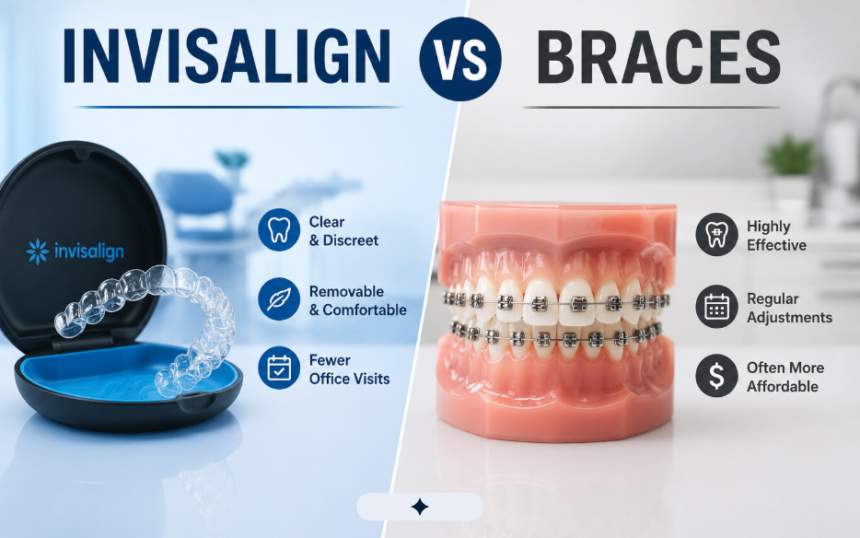
This is where the Invisalign vs braces comparison really comes into focus. Below is a side-by-side breakdown across the factors that matter most to patients.
| Factor | Invisalign | Traditional Braces |
| Appearance | Clear, nearly invisible | Visible metal or ceramic brackets |
| Removability | Removable by the patient | Fixed, cannot be removed |
| Comfort | Smooth plastic, minimal irritation | Wire/bracket friction possible |
| Best For | Mild to moderate cases | Mild to severe/complex cases |
| Compliance Needed | High (20–22 hrs/day) | None (always active) |
| Average Cost | $3,000–$8,000 | $3,000–$7,000 |
| Treatment Time | 12–18 months (varies) | 18–24 months (varies) |
| Oral Hygiene | Easier (removable) | More challenging around brackets |
| Food Restrictions | None (remove to eat) | Avoid hard, sticky, chewy foods |
| Speech Impact | Minimal, temporary lisp possible | Rare, minor adjustment period |
Pros and Cons
Advantages of Braces
- Highly effective for severe and complex cases
- No daily compliance required — always working
- Extremely durable with decades of proven results
- Often more budget-friendly with metal options
Disadvantages of Braces
- Very visible, especially with traditional metal brackets
- Harder to clean around brackets and wires
- Certain foods must be avoided throughout treatment
- Adjustment visits can bring temporary soreness
Advantages of Invisalign
- Nearly invisible and far more discreet
- Removable for eating, brushing, and special occasions
- Generally more comfortable with less irritation
- No food restrictions at all
Disadvantages of Invisalign
- Requires strict daily discipline to stay effective
- Not ideal for severe or highly complex cases
- Can be lost or forgotten since it’s removable
- May need replacement if damaged or misplaced
Cost Breakdown
Average Cost of Braces (by Type)
| Type of Braces | Estimated Cost Range |
| Metal Braces | $3,000 – $5,500 |
| Ceramic Braces | $4,000 – $6,500 |
| Lingual Braces | $6,000 – $10,000 |
| Self-Ligating Braces | $4,000 – $7,000 |
Average Cost of Invisalign
Invisalign typically ranges from $3,000 to $8,000, depending on how many aligner trays are needed and how complex your case is. Milder cases requiring shorter treatment plans often fall toward the lower end of that range.
Treatment Timeline
How Long Braces Take (by Case Severity)
Mild cases with braces often wrap up in around 12 to 18 months, moderate cases typically take 18 to 24 months, and severe or complex cases involving jaw correction can extend beyond 24 months, sometimes up to 36 months.
How Long Invisalign Takes (by Case Severity)
Mild cases with Invisalign can sometimes be completed in as little as 6 to 12 months, moderate cases usually take 12 to 18 months, and more involved cases may take 18 to 24 months, assuming consistent daily wear.
Factors That Affect Treatment Time
Treatment length depends on several variables: the severity of misalignment, how consistently aligners are worn (for Invisalign), age and bone density, and how well a patient follows the orthodontist’s instructions and attends scheduled appointments.
Suitability by Case Type
Best Option for Crowded Teeth
Mild to moderate crowding responds well to Invisalign, while severe crowding often needs the added control that traditional braces provide.
Best Option for Gaps/Spacing
Both options handle spacing issues effectively, though Invisalign is frequently sufficient for small to moderate gaps between teeth.
Best Option for Overbite/Underbite/Crossbite
More significant bite issues, especially those involving jaw alignment rather than just tooth position, typically respond better to traditional braces, sometimes combined with additional orthodontic appliances.
Best Option for Complex Jaw Issues
For cases requiring jaw repositioning or more advanced orthopedic correction, braces (sometimes alongside other devices like headgear or expanders) remain the standard recommendation.
Best Option for Adults vs Teens vs Children
Adults often gravitate toward Invisalign for its discretion and flexibility, teens may choose either depending on case severity and personal preference, and younger children with developing jaws are frequently guided toward traditional braces due to the higher level of control needed during growth.
Daily Life With Each Option
Eating & Drinking
With Invisalign, you simply remove your aligners before eating or drinking anything other than water, then brush before putting them back in. With braces, you can eat most foods but need to steer clear of anything overly hard, sticky, or crunchy that could damage the brackets or wires.
Brushing & Flossing Routine
Invisalign wearers can brush and floss exactly as they did before treatment, just with an extra step of cleaning the aligners themselves. Braces wearers need a slightly more involved routine, often using specialized brushes, floss threaders, or water flossers to reach around brackets and wires.
Sports & Physical Activities
Both options are generally compatible with sports, though it’s wise to use a protective mouthguard either way. Invisalign can simply be removed during high-contact activities if preferred, while braces typically require a custom mouthguard designed to fit over the brackets.
Traveling Considerations
Invisalign is often considered more travel-friendly since there are no wires to worry about breaking and no need for emergency orthodontist visits due to a poking wire. Braces wearers traveling for extended periods should keep orthodontic wax on hand in case a bracket or wire causes irritation.
Special Occasions (Photos, Events)
Invisalign’s removability is a big advantage for special events, weddings, or photoshoots, since aligners can be taken out briefly. Braces remain in place for these moments, though many people find that ceramic or ligual options offer a more subtle. look for such occasions.
Maintenance & Care Tips
Caring for Braces
Brush thoroughly after every meal, use fluoride mouthwash, and attend all scheduled adjustment appointments. Orthodontic wax can help ease any temporary irritation from wires or brackets.
Caring for Invisalign Aligners
Clean aligners daily using a soft brush and lukewarm water rather than hot water, which can warp the plastic. Store aligners in their protective case whenever they’re removed, and avoid eating or drinking anything but water while they’re in.
Common Mistakes to Avoid
Common mistakes include forgetting to wear Invisalign aligners for the full recommended hours, eating restricted foods with braces, skipping regular checkups, and losing aligners by wrapping them in napkins instead of using a proper case.
Potential Risks & Side Effects
Risks Associated with Braces
Possible risks include minor gum irritation, enamel demineralization if oral hygiene slips, and temporary discomfort following adjustments.
Risks Associated with Invisalign
Risks are generally minimal but can include mild discomfort with each new aligner, potential for aligners to be misplaced, and slower progress if wear time isn’t consistent.
How to Minimize Complications
Sticking closely to your orthodontist’s instructions, maintaining excellent oral hygiene, and attending every scheduled appointment are the best ways to avoid complications with either treatment.
Expert Opinions & Dentist Recommendations
What Orthodontists Say
Most orthodontists agree that the “best” option really depends on individual case complexity rather than personal preference alone. Many recommend a thorough evaluation, including X-rays and digital scans, before deciding between Invisalign and braces so that treatment is based on actual bite mechanics rather than aesthetics alone.
Questions to Ask Your Dentist/Orthodontist
- Is my case mild, moderate, or severe?
- Which option would give me the most predictable results?
- How long will treatment realistically take with each option?
- What happens if I’m not consistent with aligner wear?
- What’s included in the total cost, and what might cost extra later
Real-Life Considerations
Lifestyle Factors to Consider
Think honestly about your daily habits. If you know you’ll forget to put aligners back in after lunch, that’s worth factoring in. If you travel often or have a physically active lifestyle, that matters too.
Budget Factors to Consider
Compare not just the sticker price but also insurance coverage, payment plan flexibility, and any long-term retention costs after treatment ends.
Psychological/Confidence Factors
For many people, especially adults, feeling self-conscious about visible braces can affect confidence in social or professional settings, making Invisalign’s discretion a meaningful factor beyond just the technical treatment outcome.
Frequently Asked Questions (FAQs)
Is Invisalign as Effective as Braces?
For mild to moderate cases, Invisalign can be just as effective as braces. For severe or highly complex cases, braces often provide more predictable and precise results.
Can I Switch from Braces to Invisalign (or Vice Versa)?
In some cases, yes, switching is possible, especially if braces have already corrected more severe issues and Invisalign is used to fine-tune final positioning. This should always be discussed directly with your orthodontist.
Does Insurance Cover Either Option?
Many insurance plans cover a portion of both treatments, particularly when treatment is deemed medically necessary. Coverage amounts vary widely by provider and plan.
Which One Is More Painful?
Both involve some discomfort, especially in the first few days of each new stage or after adjustments. Braces may cause a bit more soreness from wires and brackets, while Invisalign discomfort tends to be milder pressure with each new tray.
Which Is Better for Kids?
Braces are often preferred for younger children since treatment doesn’t rely on the child remembering to wear and reinsert removable aligners consistently throughout the day.
Final Verdict: How to Choose
Decision Checklist
- How severe is my misalignment?
- Do I want a removable or fixed option?
- How disciplined am I with daily routines?
- What’s my budget, including long-term costs?
- How important is appearance during treatment?
Key Questions to Ask Yourself
Consider your lifestyle honestly, your tolerance for visible dental work, and how much control you want (or don’t want) over your daily treatment routine.
When to Consult a Professional
Ultimately, the Invisalign vs braces decision should be made alongside a qualified orthodontist who can evaluate your bite, X-rays, and overall dental health to recommend the option most likely to deliver reliable, lasting results.
Conclusion
Summary of Key Differences
The Invisalign vs braces debate really comes down to a trade-off between discretion and convenience versus predictable control for complex cases. Invisalign offers a nearly invisible, removable, and comfortable experience ideal for mild to moderate misalignment, while traditional braces remain the more reliable choice for severe crowding, significant gaps, and complex bite corrections.
Final Recommendation Based on Common Scenarios
If you’re an adult or teen with mild to moderate alignment issues who values discretion and flexibility, Invisalign is likely your best fit. If you’re dealing with more severe misalignment, a complex bite issue, or you’re a younger child who needs fixed, low-maintenance treatment, traditional braces are probably the smarter path. Either way, a personalized consultation with an orthodontist remains the single most important step in making the right decision for your smile.
Related posts
Why Do My Feet Hurt So Bad? 7 Causes and How to Get Relief
Can Cavities Cause Headaches? What Dentists Say
Bone Spur Inside Nose: Causes, Symptoms & Treatment
Headache After Chiropractor: Causes, Symptoms, Relief, and Recovery Guide