
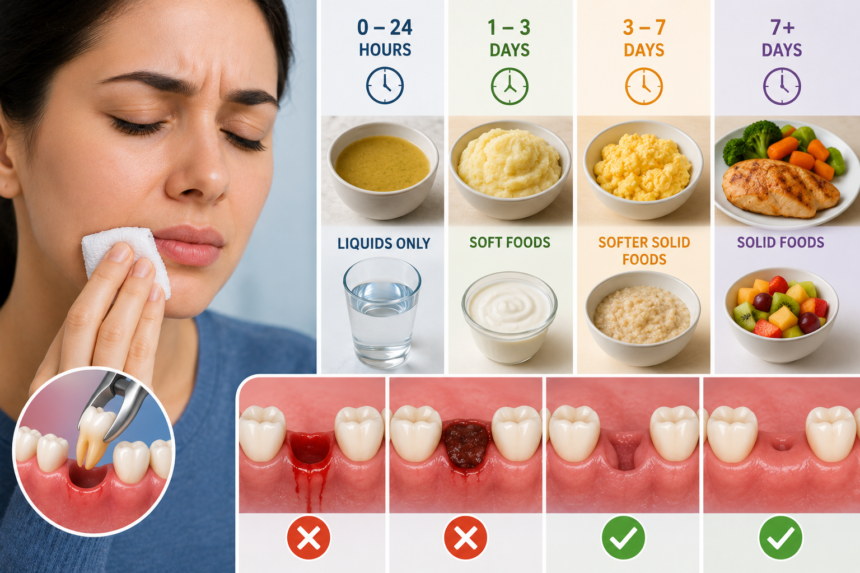
Most people can eat solid food after tooth extraction within 5 to 7 days, once the blood clot has stabilized and swelling has gone down. Chewing too soon can dislodge the clot, delay healing, or trigger a painful condition called dry socket. This guide breaks down exactly what to eat each day after your extraction, which foods to avoid, and the warning signs that mean you should call your dentist.
Key Takeaways
- Stick to liquids and soft foods for the first 24 hours to protect the blood clot.
- Most people can add semi-solid foods (mashed potatoes, scrambled eggs) by day 3.
- Full solid foods are typically safe by day 5 to 7, depending on healing.
- Avoid straws, hot liquids, and hard/crunchy foods for at least a week.
- Chew on the opposite side of your mouth until the extraction site fully closes.
- Persistent pain after day 3–4 may signal dry socket — contact your dentist.
Why Timing Matters After a Tooth Extraction
Your body forms a blood clot in the socket within minutes of extraction. That clot acts as a protective seal while new tissue and bone grow underneath it. According to the American Association of Oral and Maxillofacial Surgeons, disturbing this clot — through sucking motions, hard chewing, or vigorous rinsing — is the leading cause of dry socket, a painful condition where the bone underneath is exposed to air and food debris.
Warning: Dry socket usually develops 2–4 days after extraction and causes a dull, throbbing pain that can radiate to your ear. If this happens, call your dentist rather than waiting it out.
Eating too early doesn’t just risk the clot — it can also irritate stitches, push food particles into the socket, and slow overall healing. That’s why timing your diet matters just as much as what you eat.
Day-by-Day Eating Timeline After Tooth Extraction
Day 1: Liquids and Cold Soft Foods Only
The first 24 hours are the most critical for blood clot healing. Stick to foods that require no chewing at all.
- Smoothies (no straw — sip from the cup)
- Yogurt or applesauce
- Cold, blended soups
- Ice cream or pudding (in moderation, avoid nuts or chunks)
Pro Tip: Keep food and drinks lukewarm or cold on day one. Hot temperatures can increase blood flow to the area and disrupt clotting.
Day 2–3: Soft, Mashable Foods
By day two, most people can move to foods that need minimal chewing, still avoiding the extraction side.
- Mashed potatoes
- Scrambled eggs
- Oatmeal (cooled, not hot)
- Well-cooked, soft pasta
Day 4–5: Semi-Solid Foods
Swelling usually peaks around day 2–3 and starts improving by day 4, according to general post-surgical healing patterns described in oral surgery aftercare literature. This is when many people can introduce slightly firmer foods.
- Soft-cooked vegetables
- Ground or shredded meat
- Soft bread without a hard crust
- Baked fish
Day 6–7 and Beyond: Return to Solid Foods
Most extraction sites have closed enough by day 5 to 7 to tolerate normal chewing, though wisdom tooth extractions and surgical extractions often take longer. Reintroduce solid foods gradually and chew on the unaffected side first.
Hypothetical Example (for illustration purposes): Imagine someone who had a lower molar extracted on a Monday. By Wednesday, they’re eating scrambled eggs and oatmeal comfortably. By the following Monday, they cautiously try a soft sandwich, chewing only on the opposite side, and experience no pain or bleeding. Note: This scenario is illustrative. Actual healing time varies by extraction complexity, age, and individual health.
Foods to Avoid After Tooth Extraction
Certain foods consistently interfere with socket healing and should be avoided for at least a week, longer for surgical or wisdom tooth extractions.
- Crunchy foods — chips, nuts, popcorn (can lodge in the socket)
- Sticky foods — caramel, gum, taffy (can pull at the clot)
- Spicy or acidic foods — chili, citrus, tomato-based sauces (can irritate tissue)
- Very hot foods and drinks — coffee, soup, tea
- Alcohol and carbonated drinks — both can disrupt clotting and interact with pain medication
Soft Foods After Tooth Extraction vs. Solid Foods: Quick Comparison
| Recovery Stage | Food Examples | Chewing Required | Typical Timing |
| Liquid/Cold Soft | Smoothies, yogurt, ice cream | None | Day 1 |
| Mashable Soft | Mashed potatoes, eggs, oatmeal | Minimal | Day 2–3 |
| Semi-Solid | Ground meat, soft vegetables | Light | Day 4–5 |
| Full Solid | Sandwiches, cooked chicken, rice | Normal | Day 5–7+ |
How to Tell If You’re Healing on Schedule
Not everyone heals at the same pace. A few signs suggest you’re on track to reintroduce solid food:
- Swelling and bruising are visibly reduced compared to day 1–2.
- Pain is mild and controlled with over-the-counter medication.
- There’s no fresh bleeding when you gently touch the area with your tongue.
- You can open your mouth normally without sharp pain.
Warning: If you notice worsening pain after day 3, a bad taste or odor, or visible bone in the socket, contact your dentist promptly — these are signs of possible dry socket or infection, not normal healing.
Special Considerations for Wisdom Tooth Extraction
Wisdom teeth, especially impacted ones, involve deeper surgical sites and longer healing windows. The American Dental Association notes that surgical extractions generally require a more cautious, gradual return to normal eating compared to simple extractions. If you had wisdom teeth removed, expect to add 2–3 extra days to each stage of this timeline before moving to fully solid foods.
How to Chew Safely as You Reintroduce Solid Foods
- Chew on the opposite side of the extraction until the site has fully closed.
- Cut food into small pieces rather than biting directly with front teeth.
- Go slowly — test each new food texture for a day before adding another.
- Rinse gently with warm salt water after meals, starting 24 hours post-extraction.
Frequently Asked Questions
Q: How long after tooth extraction can I eat normal food?
Most people can eat normal, solid food within 5 to 7 days, once swelling subsides and the socket has started closing. Surgical or wisdom tooth extractions may take longer.
Q: What happens if I eat solid food too soon after extraction?
Eating solid food too early can dislodge the healing blood clot, leading to dry socket, delayed healing, or infection. It’s best to follow a gradual, soft-to-solid food progression.
Q: Can I eat rice 3 days after tooth extraction?
Soft, well-cooked rice is often tolerated by day 3 if chewed carefully on the opposite side. If you’re still swollen or in pain, stick to softer foods a bit longer.
Q: How long should I wait to eat after wisdom teeth removal?
Wisdom tooth extractions typically need 7 to 10 days before returning to fully solid foods, since these sites are deeper and heal more slowly than simple extractions.
Q: What foods can I eat 5 days after tooth extraction?
By day 5, many people can eat semi-solid foods like ground meat, soft vegetables, and soft bread, gradually working toward normal solids by day 7.
Q: When can I chew on the extraction side?
Wait until the socket has visibly closed and pain-free chewing is possible, usually around 1 to 2 weeks, and always start with the opposite side first.
Q: Can I eat pizza a week after tooth extraction?
Soft-crust pizza with mild toppings may be fine around day 7 for simple extractions, but avoid crunchy crusts, spicy toppings, and chewy cheese until you’re confident the site has healed.
Conclusion
Reintroducing solid food after a tooth extraction is a gradual process, not a single milestone. Start with liquids, progress through soft and semi-solid foods, and return to solids only once swelling, pain, and clot stability confirm you’re ready — usually around day 5 to 7. Watching for warning signs like worsening pain or a foul taste helps you catch complications early and heal without setbacks
RELATED ARTICLES
Can Cavities Cause Headaches? What Dentists Say
Dermatologist on Acne Scars: Causes, Types, and Proven Treatment Options
Can Varicose Veins Cause Knee Pain? Causes, Symptoms & Relief
Tooth and Ear Pain on the Same Side: Causes, Symptoms, and Treatment