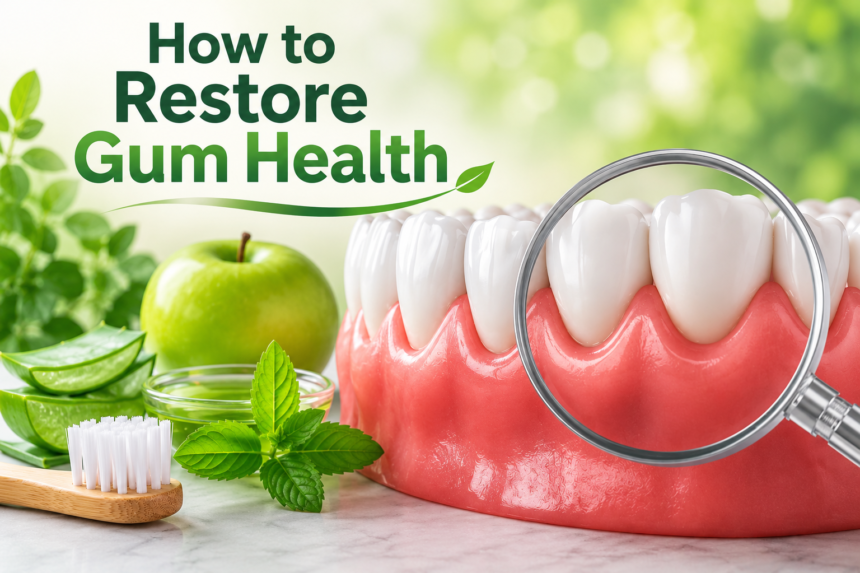
If you’re wondering how to restore gum health, the honest answer is this: gum tissue itself can’t regenerate, but the health of your gums absolutely can be restored and protected from further damage. Whether you’re dealing with bleeding, swelling, sensitivity, or early recession, the right combination of professional treatment and daily care can stop the problem in its tracks and rebuild a healthier mouth.
This guide walks through exactly what works, in the order that actually matters — starting with diagnosis, moving through treatment, and ending with the daily habits that keep your gums strong for good.
Can You Actually Restore Gum Health?
Yes — but with one important distinction. Gum tissue that has already receded or pulled away from the tooth won’t grow back on its own. However, the overall health of your gums can absolutely be restored, meaning inflammation can go down, bleeding can stop, and the disease process can be halted before it causes further damage.
Here’s what “restoring gum health” really means in practice:
- Reversible: Gingivitis (early-stage gum disease) — caused by plaque buildup — can be fully reversed with proper cleaning and care.
- Manageable but not reversible: Periodontitis and gum recession can’t be undone, but progression can be stopped and symptoms significantly improved.
- Restorable through treatment: Procedures like scaling and root planing, gum grafting, or bonding can repair damage and reattach gum tissue to the tooth surface.
Signs Your Gum Health Needs Restoring
Gum disease rarely shows up overnight — it builds gradually, and your body usually gives early warning signs before things get worse. Catching these signs early is what makes the difference between a quick fix and a more serious treatment down the road.
- Bleeding gums: especially when brushing or flossing, even if it’s just a small amount
- Swollen or red gums: a sign of active inflammation from bacteria buildup
- Gum sensitivity: discomfort during brushing, eating, or dental cleanings
- Visible recession: teeth appearing longer or roots becoming exposed near the gumline
- Persistent bad breath: caused by bacteria buildup that brushing alone doesn’t resolve
- Loose or shifting teeth: a later-stage sign that supporting bone and tissue have weakened
What Causes Gum Damage in the First Place
Understanding what triggers gum damage helps you tackle the root cause instead of just treating symptoms — here’s what’s really going on beneath the surface.
Plaque buildup
Plaque buildup is the most common starting point. A sticky film of bacteria forms on your teeth after eating, and if it isn’t removed through brushing, it hardens into tartar within just a few days, making it much harder to clean away on your own.
Aggressive brushing
Aggressive brushing can do more harm than good. Many people assume scrubbing harder cleans better, but excessive pressure wears down gum tissue over time and can actually push gums away from the tooth instead of protecting them.
Smoking or tobacco use
Smoking or tobacco use significantly slows your body’s healing process. It restricts blood flow to the gums, which not only makes existing damage harder to repair but also increases your overall risk of developing gum disease in the first place.
Genetics
Genetics play a bigger role than most people realize. Some individuals are simply predisposed to thinner gum tissue or a stronger inflammatory response, meaning they can develop gum problems even with consistent oral hygiene.
Misaligned teeth
Misaligned teeth create hidden trouble spots. Crooked or crowded teeth form tight gaps and overlaps where plaque and food particles collect, making it difficult for a toothbrush or floss to fully clean those areas.
Hormonal changes
Hormonal changes can shift how your gums react to plaque. Life stages like pregnancy, puberty, or menopause often increase blood flow and sensitivity in the gums, making them more reactive to bacteria that are normally manageable.
Step 1: Get a Professional Diagnosis
Before trying any remedy or treatment, the first and most important step is getting an accurate diagnosis from a dentist or periodontist — here’s why skipping this step can set you back.
Self-diagnosis often misses the real problem.
Bleeding or sensitivity can look like a minor issue, but it might actually signal early periodontitis or bone loss that isn’t visible to the naked eye. Only a professional exam can confirm how advanced the damage really is.
Pocket depth measurements reveal what you can’t see.
Dentists use a small probe to measure the space between your gums and teeth. Healthy gums measure 1–3mm, while deeper pockets indicate gum disease has already progressed — this single measurement determines your entire treatment path.
Step 2: Professional Treatments That Restore Gum Health
Once you have a diagnosis, your dentist or periodontist will recommend a treatment matched to how advanced your gum damage is — here’s what those options actually involve.
- Scaling and root planing is typically the first line of treatment. This deep cleaning procedure removes plaque and tartar from below the gumline and smooths the tooth root, helping gum tissue reattach and reducing the bacteria that cause ongoing inflammation.
- Antibiotic gel or oral antibiotics are often used alongside cleaning. A periodontist may place antibacterial gel directly under the gums to target bacteria that scaling alone can’t fully remove, especially in deeper pockets.
- Dental bonding can help in cases of mild recession. A tooth-colored resin is applied over the exposed root, covering sensitive areas and reducing discomfort while improving the appearance of the gumline.
Step 3: Daily Habits That Support Gum Recovery
Professional treatment gets your gums back on track, but what you do every day at home determines whether that progress sticks — here are the habits that matter most.
- Brush twice a day with proper technique. Use a soft-bristled or electric toothbrush and gentle, circular motions rather than aggressive back-and-forth scrubbing, which can wear down gum tissue you’re trying to protect.
- Floss once daily, without skipping. Flossing removes plaque from between teeth and along the gumline that a toothbrush can’t reach, and consistency matters more than perfection here.
- Use an antimicrobial mouthwash. Rinsing twice a day helps reduce bacteria levels in areas that brushing and flossing miss, especially right after a professional cleaning when gums are healing.
- Scrape your tongue regularly. Bacteria accumulate on the tongue’s surface and can spread back to your gums, so tongue scraping during your brushing routine helps lower overall bacterial load in the mouth.
- Gently massage your gums. Light circular massage with a clean finger or soft brush can improve blood circulation to the gum tissue, supporting the healing process after treatment.
Step 3: Daily Habits That Support Gum Recovery
Professional treatment gets your gums back on track, but what you do every day at home determines whether that progress sticks — here are the habits that matter most.
Brush twice a day with proper technique
Use a soft-bristled or electric toothbrush and gentle, circular motions rather than aggressive back-and-forth scrubbing, which can wear down gum tissue you’re trying to protect.
Floss once daily, without skipping
Flossing removes plaque from between teeth and along the gumline that a toothbrush can’t reach, and consistency matters more than perfection here.
Using an antimicrobial mouthwash
Rinsing twice a day helps reduce bacteria levels in areas that brushing and flossing miss, especially right after a professional cleaning when gums are healing.
Scrape your tongue regularly
Bacteria accumulate on the tongue’s surface and can spread back to your gums, so tongue scraping during your brushing routine helps lower overall bacterial load in the mouth.
Gently massage your gums
Light circular massage with a clean finger or soft brush can improve blood circulation to the gum tissue, supporting the healing process after treatment.
Best Natural Remedies for Gum Health
While professional treatment addresses the root cause, certain natural remedies can support healing and ease discomfort alongside your regular care routine.
- Green tea is rich in antioxidants that help reduce inflammation and slow bacterial growth in the mouth. Drinking a cup or two daily can support gum health over time, though it’s best paired with consistent brushing rather than used as a standalone fix.
- Aloe vera has natural anti-plaque and anti-inflammatory properties that can ease gum irritation. Applying a pure aloe vera gel directly to the gums or using it as a rinse may help reduce bleeding and speed up healing after dental procedures.
- Saltwater rinse is one of the simplest and most effective home remedies. Swishing warm salt water for 30 seconds helps reduce bacteria, soothe inflamed tissue, and is especially useful for calming swelling or discomfort.
- Turmeric paste contains curcumin, a compound known for its anti-inflammatory and antimicrobial effects. Applying a small amount directly to the gums or using it as a paste a few times a week may help reduce swelling and bacterial buildup.
Diet and Nutrition’s Role in Gum Restoration
What you eat directly affects how fast your gums heal and how well they resist future damage. Vitamin C (citrus, peppers, leafy greens) supports collagen production needed to repair gum tissue. Omega-3 fatty acids (fish, walnuts, flaxseed) have natural anti-inflammatory effects that calm swollen gums.
Crunchy fruits and vegetables like apples and carrots help mechanically clean teeth between meals. Meanwhile, limiting sugar and processed carbs starves the bacteria that cause plaque buildup in the first place.
How Long It Takes to See Results?
Recovery timelines depend on how advanced your gum damage is. Gingivitis often improves within 1–2 weeks of consistent brushing, flossing, and rinsing. After scaling and root planning, full gum reattachment typically takes 4–6 weeks.
Gum grafting surgery requires the longest recovery, with complete healing taking 2–3 months, though most people feel normal within two weeks.
When Gum Damage Is Too Advanced for Home Care?
Some warning signs mean it’s time to stop relying on home remedies and see a periodontist immediately. These include visible pus around the gumline, loose or shifting teeth, persistent pain that doesn’t improve, and pocket depths beyond 5mm measured by a dentist.
At this stage, bone loss may already be occurring, and only professional intervention can prevent further damage.
How Gum Health Affects Your Overall Health
Gum disease isn’t just a mouth problem — the bacteria and inflammation it causes can affect your entire body. Heart disease risk increases as oral bacteria contribute to arterial damage. Diabetes management becomes harder, since gum disease and blood sugar control influence each other.
Stroke risk rises due to bacteria entering the bloodstream. Respiratory issues can worsen if mouth bacteria are inhaled into the lungs. Restoring gum health isn’t just cosmetic — it’s connected to long-term whole-body wellness.
FAQs
Can gums grow back?
No. Gum tissue doesn’t regenerate once lost, but treatment can stop further recession and restore overall gum health.
What’s the best toothpaste for gum health?
Look for desensitizing toothpaste with potassium nitrate or stannous fluoride, which calms sensitive nerves and reduces inflammation over time.
How often should I see a dentist?
Every six months for most people, though those with active gum disease may need cleanings every 3–4 months.
Is bad breath always a sign of gum disease?
Not always, but persistent bad breath that doesn’t improve with brushing is a common early warning sign worth getting checked.
Can stress cause gum disease?
Yes. Chronic stress weakens your immune response, making it harder for your body to fight off the bacteria that cause gum inflammation and disease.
Does mouthwash alone fix receding gums?
No. Mouthwash helps control bacteria, but it can’t reverse recession or repair gum tissue — that requires professional treatment like scaling or grafting.
Can children get gum disease too?
Yes, though it’s less common. Poor brushing habits, mouth breathing, or genetics can cause gingivitis in children, so regular dental checkups are still important.
Conclusion
Restoring gum health is possible when you act early and combine the right approach. While gum tissue can’t fully grow back, professional treatment paired with consistent daily care can stop disease progression, reduce inflammation, and protect your smile long-term.
The earlier you address bleeding, swelling, or sensitivity, the easier the path to recovery. Don’t wait for symptoms to worsen — schedule a dental checkup today and start building healthier, stronger gums for good.
Related Posts
Could Asthma Kill You? The Warning Signs Most People Ignore
Can Being Sick Cause Acne? Causes, Symptoms, and Complete Skin Guide
Bone Spurs on Spine: Causes, Symptoms, Treatment Options, and Prevention Tips
Contributory Health Service Scheme: Benefits, Eligibility, Registration and Healthcare Coverage
Headache After Chiropractor: Causes, Symptoms, Relief, and Recovery Guide