


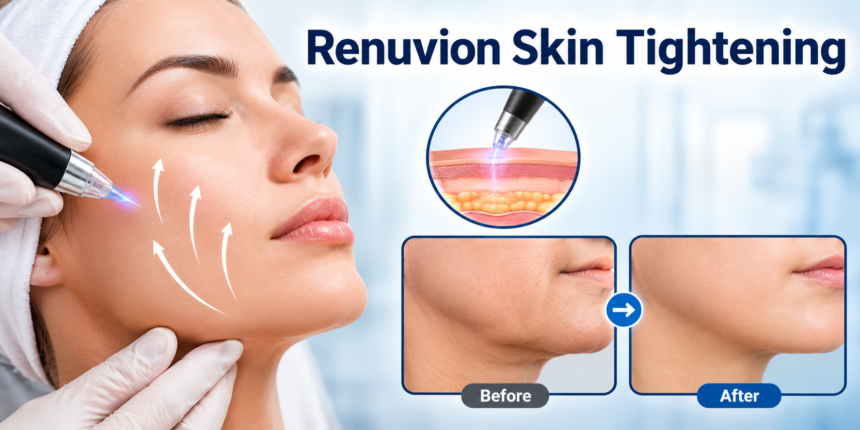
Renuvion skin tightening is a minimally invasive cosmetic treatment that uses helium-based plasma energy combined with radiofrequency to firm loose, sagging skin without a full surgical facelift or tummy tuck.
It works by gently heating the tissue beneath the skin’s surface, which causes the skin to contract instantly while also triggering the body’s natural collagen-building process over the following weeks.
Because it is often paired with liposuction, many patients choose renuvion skin tightening when they want smoother, firmer skin after fat removal rather than undergoing a more invasive surgical lift. This guide walks through how the treatment works, who it suits, what recovery looks like, and the safety information every patient should know before making a decision.
What is Renuvion (J-Plasma)?
Renuvion, previously marketed under the name J-Plasma, is a device-based technology that converts helium gas into a controlled plasma energy stream. It was developed as a way to tighten skin from underneath, giving patients a firming effect that traditional liposuction alone cannot achieve.
Brief History and Development
The technology behind renuvion skin tightening was originally created for use in general surgical settings before being adapted for cosmetic purposes. Over time, plastic surgeons began using it specifically to address loose skin left behind after significant fat reduction. Its refinement into a cosmetic-specific tool happened gradually, as surgeons found that controlled plasma energy could tighten skin with far less trauma than cutting and removing excess tissue surgically.
Why It Is Gaining Popularity?
Many people are drawn to renuvion skin tightening because it offers a middle ground between doing nothing about loose skin and undergoing a lengthy surgical procedure with a scalpel. Patients who have lost significant weight or who have mild to moderate skin laxity often want a solution that avoids long scars and extended downtime. Because the treatment can be performed through small existing incisions, often the same ones used for liposuction, it appeals to people looking for a more contained recovery process.
How Renuvion Works?
At its core, the treatment relies on a mix of ionized helium gas and radiofrequency energy delivered through a thin wand inserted just under the skin. Understanding this science helps explain why results appear both immediately and over the following months.
The Science: Helium Plasma Plus Radiofrequency
During the procedure, helium gas is passed through an electrical field, transforming it into plasma. This plasma carries thermal energy that is applied directly beneath the skin’s surface, heating the underside of the dermis without needing to cut or remove tissue. The radiofrequency component adds a controlled, steady heat source that helps regulate how deeply the energy penetrates, which is meant to protect surrounding tissue while still achieving a tightening effect.
How Does It Differs From Laser and Traditional RF Devices?
Unlike laser-based skin tightening, which typically heats tissue from the outside, renuvion skin tightening works from underneath the skin, closer to the layer that needs to contract. Traditional radiofrequency devices used on the surface of the skin often require multiple sessions spread across weeks or months. Renuvion, by contrast, is generally designed to be a single in-office or surgical-suite procedure, which is one reason patients consider it more time-efficient than repeated external RF sessions.
The Collagen Contraction and Remodeling Process
When the plasma energy heats the underside of the skin, existing collagen fibers immediately contract, causing a visible tightening effect right after treatment. Beneath the surface, the heat also stimulates fibroblast activity, which produces new collagen and elastin over the following weeks. This is why many providers explain that renuvion skin tightening produces two separate results: an immediate tightening and a gradual improvement that continues for several months afterward.
Immediate vs. Long-Term Tightening Effects
The immediate effect comes from the contraction of existing collagen strands, which can be noticeable as soon as swelling begins to subside. The long-term effect, however, depends on how well the body regenerates new collagen, a process that generally continues for three to six months. Patients are usually advised that final results should be judged only after this remodeling period is complete, not right after the procedure.
What Renuvion Treats?
Not everyone is an equally good candidate for this treatment, and knowing the right treatment areas and candidacy requirements helps set realistic expectations.
Ideal Candidates
The best candidates for renuvion skin tightening are typically adults with mild to moderate skin laxity who still have reasonably good skin elasticity. People who have lost a moderate amount of weight, or who are already undergoing liposuction and want additional tightening, tend to see the most predictable outcomes. Younger, healthier skin generally responds better because it retains more capacity to rebuild collagen after treatment.
Common Treatment Areas
Providers apply renuvion skin tightening to a range of body areas depending on where a patient has loose or sagging skin. The table below outlines the most commonly treated regions.
| Treatment Area | Typical Concern Addressed |
| Face and neck | Jowls, loose neck skin, mild sagging |
| Abdomen | Loose skin after liposuction or weight loss |
| Arms | Sagging skin under the upper arm |
| Thighs | Loose skin after fat reduction |
| Other body areas | Knees, flanks, and back in select cases |
Who Is Not a Good Candidate
People with significant, heavily sagging skin — such as after major weight loss of 100 pounds or more — often need surgical skin removal rather than a plasma-based tightening approach, since Renuvion is not designed to remove excess tissue. Individuals with certain bleeding disorders, active skin infections, or unrealistic expectations about scar-free surgical-level results are also generally not considered suitable candidates.
Renuvion vs. Other Procedures
Since there are several tightening options available today, comparing renuvion skin tightening against alternatives helps clarify where it fits.
Renuvion vs. Traditional Facelift or Tummy Tuck
A surgical facelift or tummy tuck physically removes excess skin through incisions and stitching, making it more appropriate for severe laxity. Renuvion skin tightening, on the other hand, works by contracting existing skin rather than cutting it away, making it better suited to moderate rather than extreme sagging.
Renuvion vs. Laser Skin Tightening
Laser tightening treatments generally work on the skin’s surface and often require a series of sessions over time to build cumulative results. Renuvion instead targets tissue from beneath the skin in a single session, which many patients find more time-efficient, though it does typically require incision points rather than being fully non-invasive.
Renuvion vs. Radiofrequency Microneedling
Devices such as Morpheus8 combine microneedling with radiofrequency to stimulate collagen at a shallower depth. Renuvion skin tightening tends to be used for larger areas of loose skin, particularly following liposuction, while RF microneedling is often chosen for texture and mild firmness improvements without an associated fat-removal procedure.
Renuvion vs. Ultrasound Tightening
Ultrasound-based treatments like Ultherapy are entirely non-invasive and use focused sound waves to stimulate deeper collagen layers without any incisions. Renuvion generally produces a more pronounced tightening effect but requires small incision points, positioning it as a middle step between fully non-invasive ultrasound devices and full surgical procedures.
Comparison Table
| Factor | Renuvion | Laser Tightening | RF Microneedling | Ultherapy | Surgical Lift |
| Invasiveness | Minimally invasive | Non-invasive | Minimally invasive | Non-invasive | Surgical |
| Sessions needed | Usually one | Multiple | Multiple | One to a few | One |
| Downtime | Days to weeks | Minimal | Minimal | None to minimal | Weeks |
| Best for | Moderate laxity | Mild laxity | Texture and mild firmness | Mild laxity | Severe laxity |
The Procedure Itself
Knowing what actually happens during treatment helps patients feel prepared and reduces anxiety about the unfamiliar process.
Pre-Procedure Consultation and Preparation
Before undergoing renuvion skin tightening, patients typically meet with a provider to review medical history, discuss goals, and confirm they are suitable candidates. Providers usually give instructions about avoiding certain medications, blood thinners, and supplements in the days leading up to treatment to reduce bruising and bleeding risk.
Anesthesia Options
Depending on the treatment area and whether it is combined with liposuction, providers may use local anesthesia with sedation or general anesthesia. Facial or neck treatments are sometimes done under local anesthesia alone, while larger body areas combined with liposuction more often involve deeper sedation.
Step-by-Step Walkthrough
The provider first makes or uses small existing incisions to insert the thin wand beneath the skin. The plasma energy is then applied in controlled passes across the treatment area, with the provider monitoring skin temperature and response throughout. Once the desired tightening is achieved, the incisions are closed, and compression garments or dressings are applied.
Recovery and Aftercare
Recovery expectations vary depending on the treatment area, but there are some general patterns most patients experience.
Immediate Post-Procedure Expectations
Right after treatment, swelling, tightness, and mild discomfort in the treated area are common. Patients are usually given compression garments to wear, which help reduce swelling and support the skin as it begins to settle.
Recovery Timeline
Initial swelling and bruising often improve within the first one to two weeks, though some residual swelling can linger for a month or more depending on the treatment area. Full collagen remodeling, which determines the final tightened appearance, generally unfolds gradually over three to six months.
Swelling, Bruising, and Downtime
Larger areas such as the abdomen or thighs tend to involve more noticeable swelling and a longer downtime compared to smaller areas like the neck. Most patients can return to light daily activities within a week, while more strenuous exercise is usually postponed for several weeks based on provider guidance.
Risks, Safety, and FDA Warnings
Because renuvion skin tightening involves applying thermal energy beneath the skin, understanding the associated risks is an essential part of making an informed decision.
Known Side Effects
Reported side effects include swelling, bruising, temporary numbness, and in more serious cases, burns, skin discoloration, or scarring if the energy is not applied correctly. Because the treatment involves heat delivered close to nerves and tissue, technique and provider skill play a significant role in outcomes.
2022 FDA Safety Communication
In 2022, the FDA issued a safety communication after receiving reports of serious injuries, including burns and unintended tissue damage, associated with the use of this technology for cosmetic procedures, particularly below the chin. The warning emphasized that patients should be fully informed of these risks before proceeding and that the device had not been specifically approved for aesthetic skin tightening indications.
Importance of a Qualified Provider
Given the reported risks, choosing a board-certified plastic surgeon or a similarly qualified, experienced provider is considered essential. A provider’s familiarity with the device’s settings and safe application technique can significantly influence both the safety and the final cosmetic outcome.
Questions to Ask About Safety
Patients are encouraged to ask their provider directly about their specific experience performing renuvion skin tightening, how many procedures they have completed, and what safety protocols are in place to prevent burns or nerve injury during treatment.
Cost and Financing
Cost is often one of the deciding factors for patients weighing this treatment against alternatives.
Average Price Range by Area
Pricing varies widely depending on geographic location, provider expertise, and treatment area, but smaller areas such as the neck tend to cost less than larger regions like the abdomen or thighs, which often involve combined liposuction pricing as well.
Factors That Affect Cost
The complexity of the treatment area, whether liposuction is combined with the procedure, anesthesia type, and the provider’s experience level all influence the final price. Facilities in larger metropolitan areas may also charge more due to higher operating costs.
Insurance Coverage
Because renuvion skin tightening is considered a cosmetic procedure, it is typically not covered by health insurance, meaning patients are usually responsible for the full cost out of pocket.
Financing Options
Many cosmetic practices offer payment plans or partner with third-party medical financing companies to help patients spread the cost over several months, making the treatment more accessible without requiring full payment upfront.
Results: What to Realistically Expect
Setting realistic expectations is one of the most important parts of preparing for this treatment.
Before-and-After Expectations
Patients should expect a noticeable but not dramatic tightening effect, particularly suited to moderate rather than severe skin laxity. It is not designed to replicate the more dramatic results of a surgical lift involving skin removal.
How Long Results Last
Results can last several years, though ongoing natural aging and lifestyle factors such as significant weight changes or sun exposure can affect how long the tightening effect remains visible.
Factors Affecting Outcome
Age, skin quality, genetics, and how well a patient follows aftercare instructions all play a role in the final outcome. Younger patients with more elastic skin generally see more favorable, longer-lasting results than older patients with significantly compromised skin elasticity.
Touch-Up or Maintenance Treatments
Some patients may choose a touch-up session years later as natural aging continues, though this is not always necessary and depends on individual skin changes over time.
Frequently Asked Questions
Is renuvion skin tightening painful? Most patients report manageable discomfort during recovery rather than significant pain during the procedure itself, since anesthesia or sedation is used throughout treatment.
How is it different from a facelift? A facelift surgically removes excess skin through incisions, while this treatment tightens existing skin using thermal energy without removing tissue.
Can it be done alone or only with liposuction? It can be performed as a standalone treatment on areas like the neck, though it is frequently combined with liposuction for body areas.
Is it safe? When performed by an experienced, qualified provider, it is generally considered safe, though the FDA has flagged reports of serious complications, making provider selection critical.
How many sessions are needed? Most patients only need a single session, unlike some laser or RF treatments that require multiple visits.
Conclusion
Renuvion skin tightening offers a minimally invasive option for people dealing with mild to moderate loose skin, particularly when combined with liposuction. It provides both an immediate tightening effect and gradual improvement through natural collagen remodeling over several months.
While it is not a replacement for surgical skin removal in cases of severe laxity, it fills a useful middle ground for patients seeking firmer skin without a lengthy surgical recovery. Given the FDA’s documented safety concerns, choosing an experienced, board-certified provider and having a thorough consultation remain the most important steps before moving forward with treatment.
RELATED POSTS
Can Jaw Pain Be Caused by an Ear Infection? Causes & Relief
Acnes Gentle Cleanser: Honest Review & Full Guide
Infected Wisdom Tooth Symptoms: Causes, Warning Signs, Treatment & Prevention
How to Get Rid of a Headache Fast: Proven Relief Methods That Work
Why Do My Eyes Hurt When I Look Around? Causes, Symptoms, and When to See a Doctor


