


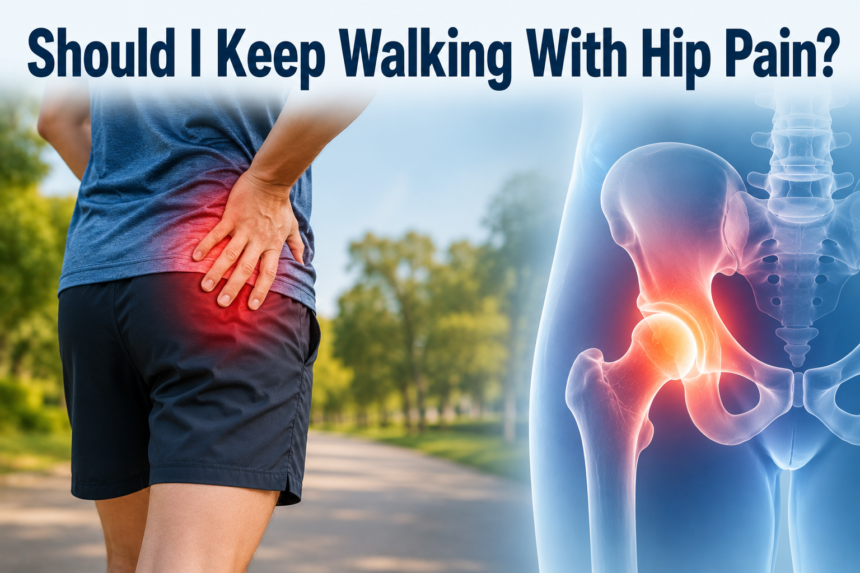
“Should I keep walking with hip pain” is one of the most common questions people ask when a dull ache turns into a daily worry. The honest answer depends on what is causing the pain and how your body responds while you move.
Mild, muscle-related discomfort often eases once you warm up and can even improve with gentle walking. Sharp, sudden, or worsening pain, however, is your body’s way of asking you to slow down and get checked.
Understanding the difference between “safe to push through” and “time to stop” can prevent a minor issue from turning into a lasting injury. This guide walks you through exactly when walking helps, when it hurts, and how to move safely either way.
Quick Answer — Is Walking Safe for Hip Pain?
In most cases, walking through mild hip pain is not dangerous, and light movement can actually support joint health, blood flow, and muscle strength around the hip. If the ache is dull, appears only occasionally, and settles down once your body warms up, gentle walking is usually fine.
But if the pain is sharp, radiates down your leg, or gets worse the longer you walk, that is a signal to stop and rest instead of pushing through it. The safest approach is to listen closely to your body rather than relying on a single blanket rule for everyone.
Common Causes of Hip Pain While Walking
Hip pain while walking can come from several different sources, ranging from simple overuse to more structural joint problems. Knowing which one applies to you makes it much easier to decide whether continuing to walk is safe.
Bursitis
Bursitis happens when the small fluid-filled sacs cushioning your hip joint become inflamed, often from repetitive movement or pressure. It typically causes a burning or aching pain on the outer hip that worsens with activity like walking or climbing stairs. Rest, ice, and reduced repetitive strain usually help it settle within a few weeks.
Osteoarthritis
Osteoarthritis is the gradual wearing down of cartilage in the hip joint, common with age or previous joint stress. It tends to cause stiffness and a deep ache that is worse in the morning or after long periods of rest. Light, consistent walking can actually help manage arthritis pain by keeping the joint mobile.
Muscle Strain or Overuse
Overworked hip muscles from sudden increases in activity or poor form can lead to soreness that mimics joint pain. This type of pain usually improves with gentle movement and stretching rather than complete rest. It is generally one of the safest causes to keep walking through.
Tendinitis
Tendinitis develops when the tendons connecting hip muscles to bone become irritated from repetitive strain. It often causes localized pain that intensifies with movement, especially at the start of an activity. Reducing intensity rather than stopping completely is usually the better approach.
Labral Tear or Sciatica
A labral tear affects the cartilage ring around the hip socket and can cause clicking, locking, or sharp catching pain during movement. Sciatica, on the other hand, is nerve-related pain that travels from the lower back down through the hip and leg. Both conditions usually require medical evaluation rather than continued walking.
When It’s Safe to Keep Walking?
Certain patterns of pain are generally considered low-risk, meaning continued walking is unlikely to cause further harm. These signs suggest your body is coping well with movement rather than struggling against it.
Signs Your Pain Is Mild and Manageable
Mild hip pain usually feels like a dull ache rather than a sharp stab, and it tends to ease once your muscles warm up. There is no swelling, redness, or visible change around the joint, and you can bear full weight without hesitation. If this describes your pain, short, comfortable walks are typically safe to continue.
How Walking Can Actually Help
Gentle, regular walking increases blood flow to the hip joint, which helps deliver nutrients that support cartilage and reduce stiffness. It also strengthens the surrounding muscles, which take pressure off the joint itself over time. For arthritis and mild strain in particular, staying moderately active is usually better than complete rest.
When You Should Stop Walking?
Some symptoms are clear warning signs that continuing to walk could worsen the underlying problem. Recognizing these early can prevent a temporary issue from becoming a long-term injury.
Red-Flag Symptoms to Watch For
Sharp, stabbing, or rapidly worsening pain during walking is a sign to stop immediately rather than push through it. Swelling, warmth, redness, or an inability to put weight on the leg all point toward a more serious issue. These symptoms should never be ignored, even if the pain feels manageable at first.
Pain Following an Injury or Fall
If your hip pain started suddenly after a fall, twist, or direct impact, walking on it could worsen a fracture or ligament damage. Even if you can technically still move, this type of pain needs medical evaluation before you continue any regular walking routine. X-rays or scans are often needed to rule out structural damage.
Safe-to-Walk vs. Stop-and-Rest Symptoms
The table below breaks down the key differences so you can quickly assess whether your hip pain falls into the safe or the stop-and-rest category.
| Symptom | Safe to Keep Walking | Stop and Rest |
| Pain type | Dull, mild ache | Sharp, stabbing pain |
| Pain pattern | Improves with movement | Worsens with movement |
| Swelling | None | Present |
| Weight-bearing | Normal | Difficult or impossible |
| Onset | Gradual, from overuse | Sudden, after injury |
| Other symptoms | None | Numbness, tingling, locking |
How to Walk Safely With Hip Pain?
If your pain falls into the safe-to-walk category, a few simple adjustments can make your walks more comfortable and reduce strain on the joint.
Warm Up Before You Start
Spending five to ten minutes on light stretching or slow-paced movement before your walk helps loosen the hip muscles and joint. This reduces the initial stiffness that often makes early steps feel more painful than they need to be. Skipping a warm-up tends to make mild hip pain feel worse than it actually is.
Choose Proper Footwear and Support
Shoes with good cushioning and arch support help absorb impact and reduce the load placed on your hip with every step. Worn-out or unsupportive footwear can shift your walking pattern and place extra strain on the joint. If needed, orthotic inserts can further improve alignment and comfort.
Adjust Your Pace, Surface, and Use of Support Aids
Walking on flat, even surfaces at a slower pace reduces the jarring impact that can aggravate hip pain. Using a cane or walking poles can also help redistribute weight away from a painful hip during recovery. These small adjustments often make the difference between comfortable movement and worsening pain.
Alternative Low-Impact Exercises If Walking Hurts
When walking itself becomes too uncomfortable, switching to lower-impact activities can keep you active without placing extra stress on the hip joint.
Swimming and Water-Based Exercise
Water supports your body weight, which significantly reduces pressure on the hip while still allowing a full range of motion. This makes swimming or water aerobics one of the gentlest ways to stay active during a painful flare-up. Many people find it easier to move in water than on land.
Cycling and Gentle Stretching
Stationary cycling allows hip movement without the repeated impact that walking involves, making it a good alternative during recovery. Gentle stretching, particularly for the hip flexors and glutes, can also relieve tightness without adding strain. Both options help maintain mobility while you wait for pain to settle.
When to See a Doctor
While many cases of hip pain improve on their own, certain situations call for professional evaluation rather than home management alone.
Signs That Need Medical Attention
Pain that lasts longer than a few days, worsens despite rest, or is accompanied by swelling or fever should be assessed by a doctor. Sudden inability to walk, visible deformity, or pain following a significant fall also warrant urgent care. Early diagnosis often leads to simpler, faster treatment.
What to Expect During Diagnosis
Doctors typically start with a physical examination to check range of motion, strength, and areas of tenderness around the hip. Imaging tests like X-rays or an MRI may follow to check for fractures, arthritis, or soft tissue damage. Based on the findings, treatment can range from physical therapy to, in rare cases, surgical repair.
Frequently Asked Questions
Should I keep walking with hip pain every day?
If the pain is mild and improves with movement, short daily walks are usually fine, but persistent or worsening pain needs rest and evaluation instead.
How long should I rest before walking again?
Minor strain often settles within a few days of reduced activity, while more serious causes may need a week or longer under medical guidance.
Can walking make hip arthritis worse?
Gentle, moderate walking generally does not worsen arthritis and can actually help maintain joint mobility over time.
Is it normal for hip pain to worsen at night?
Increased pain at night can indicate inflammation or a more advanced joint issue, and it is worth mentioning to a doctor if it persists.
Conclusion
Deciding whether to keep walking with hip pain really comes down to how your body responds to movement rather than a fixed rule. Mild, manageable discomfort often improves with gentle activity, proper footwear, and a good warm-up routine.
Sharp, worsening, or injury-related pain, on the other hand, is a clear signal to rest and seek medical advice. Paying attention to these differences helps you stay active safely while protecting your hip joint from further damage. When in doubt, a short conversation with a healthcare provider is always the safest next step.
Related Posts
Lateral Knee Pain: Causes, Symptoms, Best Exercises & Fast Recovery (Expert Guide 2026)
Heart Pain While Exercising: Causes, Warning Signs, and When to Call 911
How to Get Eyelash Out of Eye Safely: Easy Methods, Causes, and When to See a Doctor
Can You Pass Out From a Panic Attack? Causes & Prevention
Can Yeast Infection Delay Period? Causes, Symptoms, Treatment & When to Worry


