


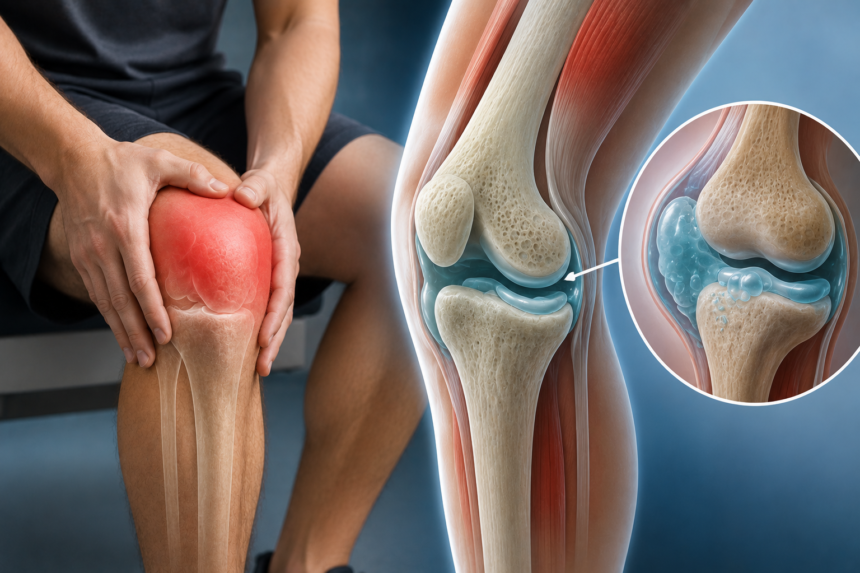
Fluid buildup around the knee, medically known as knee effusion, happens when excess fluid collects inside or around the joint capsule. This can make the knee feel tight, heavy, and hard to bend or straighten. Many people notice it after an injury, a long day of activity, or with no clear trigger at all.
Understanding what causes fluid on the knee matters because the reason often determines how fast the swelling resolves and which treatment works best. Some cases clear up with simple home care, while others point to a joint condition needing medical attention. This guide covers the common causes, warning signs, diagnosis, and treatment options.
What Is Fluid on the Knee?
Before exploring what causes fluid on the knee, it helps to know what the fluid is and where it comes from. The knee naturally holds a small amount of lubricating fluid, but injury or disease can make this amount increase significantly.
Understanding Knee Effusion
Knee effusion refers to the abnormal buildup of fluid within the joint capsule surrounding the knee. This capsule normally holds a small, controlled amount of synovial fluid that reduces friction during movement. When inflammation, injury, or disease disrupts this balance, the body produces or leaks extra fluid, causing visible swelling and pressure around the joint.
Where the Fluid Comes From
The fluid collecting in a swollen knee can be synovial fluid, blood, or pus, depending on the cause. Synovial fluid buildup usually points to inflammation or wear-related conditions, while blood in the joint often follows a traumatic injury like a ligament tear. Pus signals an infection that requires urgent medical evaluation.
Common Causes of Fluid on the Knee
Several distinct reasons can cause the knee joint to fill with fluid, ranging from sudden injuries to long-term degenerative conditions. Identifying the specific cause is the first step toward effective treatment.
Injury and Trauma
Sudden trauma such as ligament tears (ACL or MCL), meniscus damage, or fractures near the joint is one of the most frequent causes of fluid on the knee. These injuries often trigger bleeding within the joint capsule, leading to rapid, painful swelling within hours. Athletes and people in high-impact accidents are especially prone to this type of effusion.
Osteoarthritis
Osteoarthritis develops when the cartilage cushioning the knee gradually wears down, allowing bones to rub against each other. This friction irritates the joint lining, which produces excess synovial fluid as a protective response. Swelling from osteoarthritis tends to build gradually and worsens after extended activity.
Rheumatoid Arthritis
Rheumatoid arthritis is an autoimmune condition in which the immune system mistakenly attacks the joint lining, causing chronic inflammation and fluid retention. Unlike osteoarthritis, it can affect both knees at once and is often accompanied by morning stiffness. Long-term inflammation can also damage surrounding cartilage if left untreated.
Gout and Pseudogout
Gout occurs when uric acid crystals accumulate within the joint, triggering sudden, intense inflammation and fluid buildup. Pseudogout involves a similar process but is caused by calcium crystal deposits. Both typically cause rapid swelling, redness, and severe pain that appears without warning.
Septic Arthritis (Infection)
Septic arthritis happens when bacteria enter the knee joint, through the bloodstream or a nearby wound, causing a serious infection. It leads to rapid swelling with fever, warmth, and intense pain, and needs immediate treatment to prevent permanent joint damage. Left untreated, it can quickly destroy joint cartilage.
Bursitis
Bursitis is inflammation of the small fluid-filled sacs, called bursae, that cushion the knee against friction. Repetitive kneeling, direct trauma, or infection can irritate these sacs, causing localized swelling near the surface rather than deep within the joint. This swelling is often more visible and tender to touch.
Overuse and Repetitive Strain
Repetitive activities such as running, jumping, or extended kneeling can gradually irritate the knee joint and surrounding tissues. Over time, this stress triggers low-grade inflammation, causing the joint to accumulate excess fluid as a protective response. This is especially common among athletes, laborers, and people with physically demanding jobs.
Baker’s Cyst
A Baker’s cyst forms when excess synovial fluid pushes backward into a pocket behind the knee, creating a visible bulge. It is usually a secondary result of an underlying issue like arthritis or a meniscus tear rather than a standalone cause. The cyst can grow uncomfortable or even rupture, spreading fluid into the calf.
Risk Factors That Increase Likelihood
Beyond the direct causes, certain personal and lifestyle factors can make someone more susceptible to fluid on the knee. Recognizing these risk factors supports earlier prevention.
Age and Prior Joint Damage
As people age, cartilage naturally becomes thinner and less resilient, increasing the likelihood of irritation and fluid buildup. Previous knee injuries, even ones healed years ago, can leave the joint more vulnerable to future swelling. This cumulative wear makes older adults and previously injured people a higher-risk group.
Sports and High-Impact Activity
Athletes in sports requiring sudden pivots, jumps, or physical contact face a greater risk of ligament and meniscus injuries that lead to knee effusion. Repeated stress from these activities can also accelerate cartilage breakdown. Proper warm-ups and protective gear help reduce this risk.
Obesity and Joint Stress
Carrying excess body weight places added mechanical stress on the knee with every step, accelerating cartilage wear and inflammation. This added pressure makes the joint more prone to both acute injury and chronic conditions like osteoarthritis. Weight management is often recommended for long-term knee health.
Underlying Health Conditions
Conditions such as diabetes, gout, and autoimmune disorders can influence how the body responds to joint stress and inflammation. These issues may also slow healing and make the knee more prone to recurring fluid buildup. Managing them effectively can reduce flare-ups.
Symptoms Associated With Knee Effusion
Symptoms accompanying fluid on the knee vary depending on the underlying cause and severity. Paying attention to these signs helps decide whether home care is enough or medical evaluation is needed.
Swelling and Stiffness
The most noticeable symptom of knee effusion is visible swelling, often making the knee appear larger or puffier than the other side. This frequently comes with stiffness that limits how far the joint can bend or straighten. Some people also notice tightness or fullness within the knee itself.
Pain and Reduced Range of Motion
Fluid buildup places extra pressure on surrounding tissues, commonly causing discomfort ranging from mild aching to sharp pain during movement. This pressure can also restrict the knee’s range of motion, making everyday activities like climbing stairs more difficult. Pain severity often correlates with how much fluid has accumulated.
Warmth, Redness, or Fever
When a swollen knee feels warm, appears red, or comes with fever, these signs may indicate an infection or significant inflammatory flare. This combination should never be ignored, as it often points toward septic arthritis or another condition needing urgent care. Prompt medical attention can prevent more serious complications.
How Fluid on the Knee Is Diagnosed
Diagnosing the exact cause of knee effusion typically involves both physical evaluation and diagnostic testing. Doctors use these together to rule out serious conditions and confirm the right treatment plan.
Physical Examination
A physical examination usually begins with the doctor visually inspecting the knee for swelling, warmth, and limited range of motion. They may gently press around the joint to check for tenderness and compare it to the unaffected side. This hands-on assessment often provides valuable clues before any imaging is done.
Imaging Tests
X-rays can reveal bone-related issues such as fractures or advanced arthritis, while MRI scans show detailed images of soft tissues like ligaments and cartilage. Ultrasound is particularly useful for confirming the presence and location of fluid, including cysts behind the knee. Together these tests help narrow down the structural cause.
Joint Aspiration
Joint aspiration, also called arthrocentesis, involves inserting a needle into the knee to withdraw fluid for lab analysis. This relieves pressure and discomfort while letting doctors check for infection, crystals, or blood within the fluid. The results often confirm the exact cause behind the effusion.
Treatment Options for Fluid on the Knee
Treatment for knee effusion depends heavily on its underlying cause, ranging from simple home remedies to more involved procedures. The approaches below are commonly used, sometimes in combination, to manage swelling and restore function.
Home Care (RICE Method)
For mild cases caused by overuse or minor injury, the RICE method of rest, ice, compression, and elevation is often the first line of treatment. Resting prevents further irritation, while ice and compression reduce swelling and elevation encourages drainage. This is typically most effective within the first 48 hours.
Medications
Nonsteroidal anti-inflammatory drugs, or NSAIDs, help reduce both pain and inflammation from knee effusion. In more persistent or severe cases, doctors may recommend corticosteroid injections directly into the joint. Medication choice usually depends on the underlying cause and how the individual responds.
Aspiration and Drainage
When swelling is significant, doctors may perform aspiration to physically remove excess fluid from the joint. This offers immediate relief from pressure and pain while providing a fluid sample for testing. Sometimes a corticosteroid injection is given afterward to help prevent quick reaccumulation.
Physical Therapy
Physical therapy focuses on strengthening the muscles surrounding the knee while improving flexibility and joint stability. A guided exercise program can correct movement patterns contributing to ongoing joint stress. Over time, this helps reduce future swelling episodes.
Surgery
In cases of severe injury, recurring effusion, or advanced joint damage, surgery may become necessary to address the root cause. Procedures range from minimally invasive arthroscopy to repair ligaments or cartilage, to joint replacement in advanced arthritis. Surgery is generally considered only after conservative treatments fail.
Comparison Table: Causes at a Glance
The table below summarizes the most common causes of fluid on the knee alongside typical symptoms and general treatment direction, helping to quickly identify which cause most closely matches individual symptoms.
| Cause | Common Age Group | Key Symptom | Typical Treatment Approach |
| Injury / Trauma | Active adults, athletes | Rapid swelling after impact | RICE method, imaging, possible surgery |
| Osteoarthritis | Older adults (50+) | Gradual swelling, stiffness | NSAIDs, physical therapy |
| Rheumatoid Arthritis | Adults 30-60 | Swelling in both knees, morning stiffness | Anti-inflammatory medication, immune therapy |
| Gout / Pseudogout | Middle-aged and older adults | Sudden, intense pain and redness | Medication, dietary adjustments |
| Septic Arthritis | Any age | Fever, warmth, severe pain | Urgent antibiotics, drainage |
| Bursitis | Frequent kneelers, laborers | Surface swelling, tenderness | Rest, anti-inflammatories |
| Overuse / Strain | Athletes, active individuals | Mild, gradual swelling | Rest, activity modification |
| Baker’s Cyst | Adults with joint issues | Bulge behind the knee | Treat underlying cause, drainage if needed |
When to See a Doctor
While mild swelling often improves with home care, certain warning signs call for prompt medical evaluation and can prevent complications.
Warning Signs That Need Immediate Care
| Seek medical attention promptly if any of the following occur:The knee becomes intensely painful, feels hot to the touch, or is accompanied by fever and chills, as these signs may indicate infection.Sudden, severe swelling follows a traumatic injury, or the leg cannot bear weight.Swelling persists for several days despite home care, which may point to an underlying joint condition that needs evaluation. |
How to Prevent Fluid Buildup in the Knee
Preventing future episodes of knee effusion often comes down to reducing unnecessary strain on the joint and supporting its overall health.
Lifestyle and Activity Modifications
Maintaining a healthy body weight reduces the mechanical load on the knee with every movement, lowering the risk of irritation and swelling. Avoiding repetitive high-impact activity without adequate rest also protects the joint from cumulative stress. Supportive footwear and proper exercise technique further reduce strain.
Strengthening and Support Strategies
Building strength in the muscles surrounding the knee, particularly the quadriceps and hamstrings, provides better joint stability and shock absorption. Low-impact exercises like swimming or cycling maintain fitness while minimizing joint stress. Knee braces or supports during high-risk activities can offer additional protection.
Frequently Asked Questions
Can fluid on the knee go away on its own?
Mild cases from minor overuse or slight irritation can sometimes resolve on their own with rest and reduced activity. Effusion from significant injury, infection, or chronic joint disease, however, usually requires medical treatment.
Is walking bad for a swollen knee?
Gentle walking is generally safe for mild swelling, but should be limited if pain increases or the joint feels unstable. For more significant swelling, especially after injury, it is best to rest until a doctor confirms it is safe to resume activity.
How long does it take for knee fluid to drain naturally?
Mild swelling from overuse may reduce within a few days with proper rest, while more substantial effusion from injury or arthritis can take one to two weeks to subside. Chronic conditions may cause fluid to persist until the underlying cause is properly managed.
Can fluid on the knee come back after draining?
Yes, fluid can return after aspiration if the underlying cause, such as arthritis or an unhealed injury, is not addressed. Treating the root cause alongside symptom relief is essential for long-term results.
Conclusion
Fluid on the knee can develop for many reasons, ranging from a sudden sports injury to long-term conditions like osteoarthritis or rheumatoid arthritis. Recognizing the symptoms and risk factors tied to each cause makes it easier to determine the right course of action.
Mild swelling often responds well to rest, ice, and home care, while more persistent or severe effusion typically needs proper diagnosis through examination, imaging, or aspiration.
RELATED ARTICLES
Migraine vs Tension Headache: What’s the Difference and Which One Do You Have?
Can Jaw Pain Be Caused by an Ear Infection? Causes & Relief
Can Cavities Cause Headaches? What Dentists Say
Susquehanna Health and Wellness Center: Complete Guide to Rehabilitation, and Resident Care


