


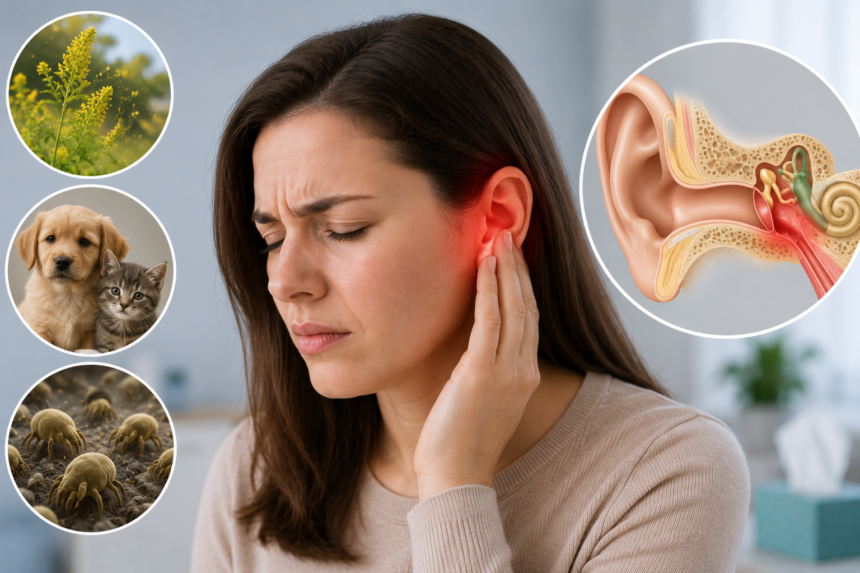
Allergies and clogged ears often show up together, especially during high-pollen seasons. That muffled, underwater feeling can make it hard to hear conversations clearly and adds to the frustration of a stuffy nose and itchy eyes. This guide breaks down exactly why allergies clog your ears, which remedies actually work, and when the symptom signals something that needs a doctor’s attention.
You’ll get a clear explanation of the eustachian tube’s role, a comparison of home versus medical treatment options, and practical steps you can start using today.
Key Takeaways
- Allergies trigger inflammation in the nasal passages that can swell the eustachian tube, trapping pressure inside the middle ear.
- Ear congestion from allergies is usually harmless but can lead to infection if it lingers beyond 1–2 weeks.
- Antihistamines and nasal steroid sprays are the most commonly recommended first-line treatments.
- The Valsalva maneuver and steam inhalation offer quick, low-cost relief for many people.
- Persistent one-sided clogging, pain, or hearing loss warrants a visit to a doctor or ENT specialist.
What Causes Allergies and Clogged Ears?
Allergies and clogged ears are connected through the eustachian tube, a small canal linking your middle ear to the back of your nose. When allergens like pollen, dust, or pet dander trigger an immune response, the lining of your nasal passages swells. That swelling can extend to the opening of the eustachian tube, blocking normal airflow and pressure equalization.
According to the American Academy of Otolaryngology–Head and Neck Surgery, allergic rhinitis is one of the most common causes of eustachian tube dysfunction, since nasal inflammation directly affects how the tube opens and closes.
Pro Tip: Ear congestion from allergies tends to worsen when you also have a cold or sinus infection, since both conditions cause similar nasal swelling.
- Seasonal allergens (tree, grass, and ragweed pollen) are frequent triggers in spring and fall.
- Indoor allergens like dust mites and mold can cause year-round symptoms.
- Rapid altitude or pressure changes (flying, driving through mountains) can worsen existing allergy-related blockage.
How Allergies Lead to Eustachian Tube Dysfunction?
Your eustachian tube normally opens briefly when you swallow or yawn, letting air pass through to keep pressure balanced on both sides of your eardrum. Allergic inflammation narrows this opening, so air can’t move through as freely.
This creates a vacuum-like effect in the middle ear, pulling the eardrum slightly inward. That’s what produces the fullness, muffled hearing, and sometimes mild popping sensation people describe.
Why This Feels Different From Earwax Blockage
Many people search “why do my ears feel clogged but no wax” because the sensation genuinely differs from a wax blockage. Earwax buildup usually affects one ear and feels like a solid, gradual blockage. Allergy-related congestion tends to affect both ears at once and fluctuates with your nasal symptoms.
Common Symptoms of Allergy-Related Ear Congestion
Recognizing the pattern helps confirm allergies are the underlying cause rather than an infection or wax buildup.
- Muffled hearing in both ears, often worse in the morning.
- A popping or crackling sound when swallowing or yawning.
- Mild ear pressure or fullness, without sharp pain.
- Symptoms that track with nasal congestion, sneezing, or itchy eyes.
Warning: Sharp ear pain, fever, or drainage from the ear are not typical allergy symptoms and may indicate an infection requiring prompt medical care.
How to Unclog Ears from Allergies at Home?
Most cases of allergy-related ear congestion respond well to simple, low-risk home techniques before medication is even needed.
Try the Valsalva Maneuver
Pinch your nostrils shut, close your mouth, and gently blow air as if exhaling through your nose. This can push air through the eustachian tube and relieve pressure. Stop immediately if you feel sharp pain.
Use Steam and Warm Compresses
Inhaling steam from a hot shower or bowl of water helps loosen nasal congestion, which indirectly eases pressure on the eustachian tube. A warm washcloth held against the outer ear can also provide comfort.
Hypothetical Example (for illustration purposes): A 34-year-old with seasonal ragweed allergies notices clogged ears every September. Adding daily saline rinses and an antihistamine at the first sign of symptoms reduces her congestion within three to four days. Note: This scenario is illustrative. Actual results vary by individual, allergy severity, and treatment consistency.
Allergy Ear Pressure Relief Through Medication
When home remedies aren’t enough, medication targets the underlying allergic inflammation rather than just the ear symptom.
- Oral antihistamines (like cetirizine or loratadine) reduce histamine response and nasal swelling.
- Intranasal corticosteroid sprays like fluticasone directly reduce inflammation at the eustachian tube opening.
- Decongestants, used short-term, can shrink swollen nasal tissue and improve airflow.
The American College of Allergy, Asthma & Immunology notes that intranasal corticosteroids are considered a first-line treatment for allergic rhinitis symptoms, including associated ear pressure.
Home Remedies vs. Medication vs. Medical Procedures
| Approach | Best For | Speed of Relief | Considerations |
| Valsalva maneuver / steam | Mild, occasional congestion | Minutes to hours | Free, but temporary; avoid forceful blowing |
| Antihistamines / nasal sprays | Recurring seasonal allergy symptoms | 1–3 days | Requires consistent daily use during allergy season |
| Doctor-prescribed ear tubes or procedures | Chronic, unresolved eustachian tube dysfunction | Weeks (post-procedure) | Reserved for persistent or recurring cases |
Sinus and Ear Blockage: When to See a Doctor
Occasional ear congestion from allergies is normal, but certain signs mean it’s time to get evaluated rather than wait it out.
- Congestion lasting longer than two weeks despite antihistamine use.
- One-sided hearing loss or pressure, which is less typical of allergies alone.
- Ear pain, drainage, or fever, which can indicate a middle ear infection.
- Ringing in the ears (tinnitus) that develops alongside the congestion.
The Mayo Clinic advises seeking medical care for ear fullness accompanied by pain, drainage, or hearing changes, since these can signal infection rather than simple allergy congestion.
Preventing Seasonal Allergies Ear Symptoms
Reducing your overall allergy burden is the most effective long-term way to prevent clogged ears from recurring.
- Check local pollen counts and limit outdoor activity on high-pollen days.
- Use a HEPA air filter indoors to reduce dust and pollen exposure.
- Rinse nasal passages daily with a saline spray during allergy season.
- Start antihistamines early, before symptoms peak, rather than waiting until congestion sets in.
Pro Tip: Tracking your symptoms against a pollen calendar can help you start preventive medication a few days ahead of your usual flare-up.
Frequently Asked Questions
Q: Can allergies cause clogged ears?
Yes. Allergic inflammation can swell the eustachian tube, trapping pressure in the middle ear and causing a clogged, muffled feeling.
Q: How do you unclog ears from allergies?
Try the Valsalva maneuver, steam inhalation, or an antihistamine and nasal steroid spray to reduce the underlying nasal swelling causing the blockage.
Q: How long do clogged ears from allergies last?
Symptoms often ease within a few days of treating the allergy itself, but they can persist for weeks if allergen exposure continues untreated.
Q: What allergy medicine helps with ear congestion?
Oral antihistamines and intranasal corticosteroid sprays are commonly recommended first-line options for allergy-related ear pressure.
Q: Why do my ears feel clogged but there’s no wax?
This usually points to eustachian tube swelling from allergies or a cold, rather than a physical wax blockage.
Q: Can allergies cause ear pain and pressure?
Allergies more commonly cause pressure and fullness than sharp pain. Significant pain often suggests an infection instead.
Q: When should I see a doctor for clogged ears from allergies?
See a doctor if congestion lasts beyond two weeks, occurs in only one ear, or comes with pain, drainage, fever, or hearing loss.
Conclusion
Allergies and clogged ears are one of the most overlooked side effects of seasonal and indoor allergy flare-ups, yet they follow a clear, predictable pattern once you understand the cause.
Nasal inflammation swells the eustachian tube, air pressure gets trapped in the middle ear, and that trapped pressure creates the muffled, underwater feeling so many allergy sufferers describe.
The reassuring part is that this type of congestion is rarely dangerous and usually responds well to treatment aimed at the allergy itself, rather than the ear alone.
RELATED ARTICLES
Endometriosis Surgery Recovery Time: What to Expect Week by Week
Eyes in Concussion: Symptoms, Vision Problems, and Recovery
Could Asthma Kill You? The Warning Signs Most People Ignore
Bone Spur Inside Nose: Causes, Symptoms & Treatment
Mercer Health Online Nursery: Features, Benefits, Access, and Newborn Announcements Guide


