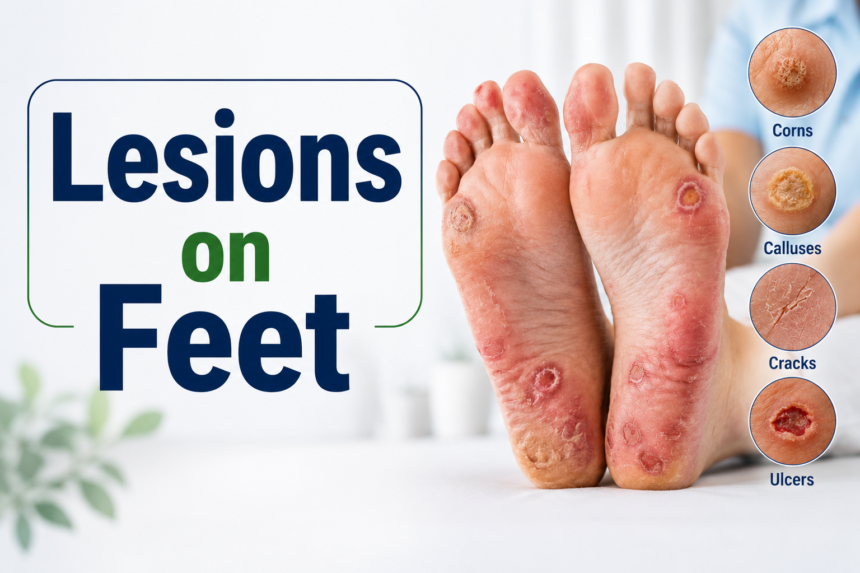
Lesions on feet are abnormal changes in the skin that can appear as sores, ulcers, blisters, warts, or discolored patches anywhere on the foot. They can affect anyone regardless of age, but people with diabetes, poor circulation, or weakened immune systems face a significantly higher risk.
While some foot lesions are minor and heal on their own, others can signal serious underlying health conditions that require immediate medical attention. In this article, we will discuss the most common types and causes of lesions on feet, along with effective treatment options and prevention strategies to help you protect your foot health.
What Are Lesions on Feet?
A lesion on the foot is any abnormal change in the skin tissue — this includes wounds, sores, ulcers, bumps, blisters, or discolored patches that appear anywhere on the foot, including the sole, heel, toes, or between the toes. Lesions on feet are not a single condition but rather a broad term that describes a wide variety of skin and tissue abnormalities caused by infections, pressure, disease, or injury.
Foot lesions are extremely common across all age groups. Diabetic patients, elderly individuals, athletes, and people with circulation problems face the highest risk. Studies suggest that diabetic foot ulcers alone affect approximately 15% of all diabetic patients at some point in their lifetime, making foot lesions a major public health concern.
Types of Lesions on Feet
Lesions on feet come in many different forms, and identifying the correct type is the first step toward effective treatment. Each type has its own appearance, cause, and level of severity.
Ulcers (Diabetic, Venous, Arterial)
Foot ulcers are deep, open wounds that form when skin tissue breaks down and exposes the underlying layers.
Diabetic foot ulcers develop due to nerve damage and poor circulation, often appearing on the ball of the foot or heel without causing pain.
Venous ulcers form near the ankle as a result of poor blood return from the legs, while arterial ulcers develop from blocked arteries that reduce oxygen supply to the foot tissue.
Plantar Warts
Plantar warts are caused by the human papillomavirus (HPV) and appear on the sole of the foot. They look like small, rough, grainy growths with tiny black dots in the center. Unlike other warts, plantar warts grow inward due to walking pressure, making them painful and difficult to remove without treatment.
Blisters and Vesicles
Blisters are fluid-filled bubbles that form on the skin surface due to friction, burns, allergic reactions, or infections. When multiple small blisters cluster together, they are called vesicles. Both are considered types of lesions on feet and are commonly seen in athletes, people who wear tight shoes, or individuals with certain viral infections like herpes zoster.
Corns and Calluses
Corns are small, hardened skin circles that usually form on the tops or sides of toes due to repeated friction. Calluses are broader areas of thickened skin that develop on the heels or balls of feet from constant pressure. While neither is dangerous on its own, in diabetic patients these can easily develop into open ulcers if left untreated.
What Causes Lesions on Feet?
Multiple underlying factors contribute to the development of lesions on feet, ranging from lifestyle habits to serious systemic diseases.
| Cause | Type of Lesion Commonly Linked |
|---|---|
| Diabetes | Diabetic foot ulcers, neuropathic sores |
| Fungal infection | Athlete’s foot, interdigital lesions |
| HPV virus | Plantar warts |
| Friction and pressure | Corns, calluses, blisters |
| Poor circulation (PAD) | Arterial ulcers, non-healing wounds |
| Autoimmune disorders | Psoriatic plaques, lupus-related sores |
| Allergic reactions | Contact dermatitis, rash-like lesions |
| Trauma or injury | Cuts, abrasions, post-injury sores |
Diabetes remains the leading systemic cause of serious foot lesions, as high blood sugar damages both nerves and blood vessels over time. Fungal and bacterial infections thrive in warm, moist environments like the inside of shoes. Autoimmune diseases such as psoriasis trigger the immune system to attack healthy skin, producing thick, scaly lesions on the feet and other areas.
Symptoms of Lesions on Feet
The symptoms of lesions on feet vary greatly depending on the underlying type and cause. Some lesions are painless, while others cause severe discomfort that interferes with daily walking and movement.
Common symptoms include visible skin changes such as redness, swelling, darkening, or unusual texture. Pain and tenderness around the affected area are frequent, especially in infected wounds.
Itching and burning sensations are common with fungal infections and allergic lesions. In more serious cases, lesions may ooze pus, bleed spontaneously, or release a foul odor — all of which are signs of active infection. Numbness or tingling around a lesion is particularly concerning as it may indicate nerve damage from diabetes or vascular disease.
Lesions on the Bottom of the Foot (Plantar Surface)
The plantar surface — the bottom of the foot — is one of the most common sites for foot lesions due to the constant weight and pressure it endures during walking and standing.
Plantar Warts vs. Corns vs. Ulcers
These three conditions are frequently confused because they all appear on the sole of the foot. Plantar warts have a rough, cauliflower-like texture with visible black dots and are caused by a virus. Corns are smooth, rounded, and yellowish with a hard center core, caused purely by friction.
Ulcers, on the other hand, are open wounds with visible depth and may have surrounding redness or dead tissue. A simple way to differentiate them is that warts hurt when squeezed from the sides, while corns hurt when pressed directly downward.
Pressure-Related Lesions from Walking
Abnormal walking patterns, flat feet, or wearing unsupportive footwear redistributes body weight unevenly across the foot, creating pressure hotspots. Over time, these hotspots develop into calluses or even pressure ulcers. This is especially dangerous for diabetic patients who cannot feel the growing damage due to neuropathy.
Lesions on Toes and Between Toes
The spaces between toes are warm, moist, and poorly ventilated — creating the perfect environment for infections to develop. Athlete’s foot (tinea pedis) is the most common interdigital lesion, causing peeling, cracking, redness, and intense itching between the toes.
Without treatment, it can spread to the toenails and cause fungal nail infections. Nail-related lesions are particularly serious when they appear as dark streaks or spots under the toenail, as these can indicate subungual melanoma — a rare but aggressive form of skin cancer.
Diabetic Foot Lesions
Diabetic foot lesions represent one of the most serious complications of diabetes and are a leading cause of lower limb amputations worldwide. People with diabetes develop foot lesions more easily and heal more slowly because high blood sugar damages both the peripheral nerves and the blood vessels that supply the feet.
Neuropathy and Its Role
Diabetic neuropathy causes loss of sensation in the feet, meaning patients cannot feel pain, heat, or pressure from developing wounds. A small cut or blister may go completely unnoticed and progress into a deep, infected ulcer within days.
Stages of Diabetic Foot Ulcers
Diabetic foot ulcers are classified using the Wagner Grading System, ranging from Grade 0 (no open lesion but high-risk foot) to Grade 5 (gangrene involving the entire foot). Early-stage ulcers are manageable with proper wound care, but advanced stages may require surgical intervention or amputation.
How Are Foot Lesions Diagnosed?
Accurate diagnosis of lesions on feet requires a combination of physical examination and medical testing. A doctor will first visually inspect the lesion, assessing its size, depth, color, and surrounding tissue condition. A biopsy may be taken for suspicious lesions to rule out cancer.
Blood tests including HbA1c and fasting glucose help identify diabetes-related causes, while a complete blood count (CBC) can detect signs of systemic infection. Imaging tools such as X-rays detect bone involvement, MRI scans assess deep tissue damage, and Doppler ultrasound evaluates blood flow to identify vascular causes.
Treatment Options for Lesions on Feet
Treatment for lesions on feet depends entirely on the type, cause, and severity of the lesion. There is no one-size-fits-all approach, and most cases require a combination of therapies.
| Treatment Method | Best For |
|---|---|
| Topical antifungals/antibiotics | Fungal and bacterial infections |
| Cryotherapy | Plantar warts |
| Wound dressings and debridement | Ulcers and open sores |
| Oral antibiotics | Infected lesions, cellulitis |
| Surgical excision | Cancerous lesions, deep ulcers |
| Offloading devices/orthotics | Pressure relief for diabetic ulcers |
| Laser therapy | Warts, certain skin lesions |
Prevention of Foot Lesions
Preventing lesions on feet is far easier than treating them, especially for high-risk individuals. Daily foot inspection is the single most important habit — checking for cuts, blisters, color changes, or swelling every evening. Wearing properly fitted shoes with moisture-wicking socks reduces friction and keeps feet dry.
Managing blood sugar levels, blood pressure, and cholesterol protects both nerves and blood vessels. Keeping feet clean, moisturized, and free of fungal exposure significantly lowers the risk of developing lesions.
FAQs About Lesions on Feet
Can lesions on feet spread to other parts of the body?
Yes, certain foot lesions like plantar warts and fungal infections can spread to other body parts through direct contact or contaminated surfaces if left untreated.
Are lesions on feet always painful?
Not always. Diabetic foot lesions are often completely painless due to nerve damage, which makes them particularly dangerous as they can worsen without any warning signs.
Can tight shoes cause lesions on feet?
Yes, wearing tight or ill-fitting shoes creates constant friction and pressure, leading to blisters, corns, calluses, and even open sores over time.
Do foot lesions affect children?
Yes, plantar warts and contact dermatitis are among the most common lesions on feet seen in children, especially those who walk barefoot in public areas.
Can stress trigger lesions on feet?
Yes, stress weakens the immune system, which can trigger or worsen autoimmune-related foot lesions such as psoriasis flare-ups on the feet.
Is it safe to pop a blister on the foot at home?
No, popping a blister at home increases the risk of bacterial infection. It is always safer to keep it clean, covered, and allow it to heal naturally.
Related Posts
The American Worker Health Insurance Explained: Plans, Benefits, Costs, and Complete Guide
Are Styes Contagious? Causes, Symptoms & Treatment (Hordeolum Guide)
Does Wearing a Hat Cause Hair Loss? Here’s What Dermatologists Actually Say
Lateral Knee Pain: Causes, Symptoms, Best Exercises & Fast Recovery (Expert Guide 2026)
Does Mold Cause Headaches? Symptoms, Causes, Treatment and Prevention Explained