


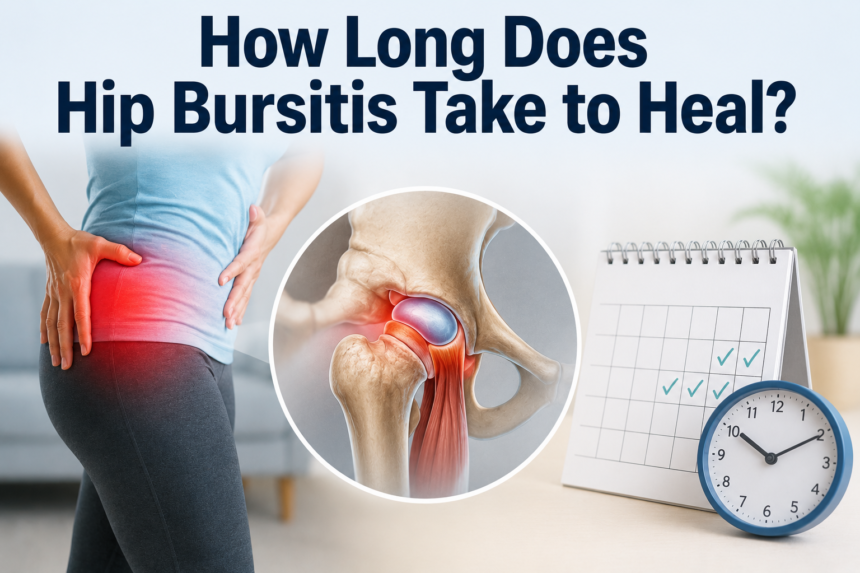
Hip bursitis usually takes between two weeks and six months to heal, depending on how severe the inflammation is and how consistently it’s treated. Mild cases often settle down within two to six weeks with basic rest and home care.
Moderate cases tend to take six to eight weeks, especially when physical therapy is introduced early. Chronic or long-standing cases can take three to six months to resolve, particularly if the underlying cause isn’t addressed.
Recovery speed also depends heavily on whether the hip joint is rested properly or continues to be aggravated by repetitive movement. Understanding these timelines can help you set realistic expectations and choose the right treatment path for faster relief.
Key Takeaways
- Mild hip bursitis typically heals in 2–6 weeks with rest and home care.
- Moderate cases usually take 6–8 weeks, especially with physical therapy.
- Chronic or severe cases can take 3–6 months to fully resolve.
- Rest, physical therapy, and addressing underlying causes all speed up healing.
- Persistent pain beyond a few months may require medical evaluation or injections.
What Is Hip Bursitis?
Hip bursitis happens when the small, fluid-filled sacs that cushion the hip joint become inflamed and irritated. These sacs, called bursae, normally reduce friction between bones, tendons, and muscles, but overuse, injury, or pressure can cause them to swell and become painful.
Types of Hip Bursitis
The two most common forms are trochanteric bursitis, which affects the outer point of the hip, and iliopsoas bursitis, which occurs deeper in the groin area. Trochanteric bursitis is far more frequent and usually causes sharp pain when lying on the affected side. Iliopsoas bursitis tends to cause deeper, achier discomfort that worsens with hip flexion, such as climbing stairs.
Common Causes and Risk Factors
Hip bursitis often develops from repetitive activities like running, cycling, or standing for long periods on hard surfaces. It can also result from a direct fall, prior hip surgery, or underlying conditions like arthritis or leg-length differences. People with tight hip muscles or poor posture are more prone to developing it, since uneven pressure on the bursa accelerates irritation over time.
Typical Healing Timeline by Severity
Recovery time is closely tied to how severe the inflammation is at the time treatment begins. Mild irritation resolves quickly with simple care, while chronic inflammation takes considerably longer and often needs a more structured treatment plan.
Mild Cases (2–6 Weeks)
Mild hip bursitis, often caught early, tends to respond well to rest, ice application, and reduced activity. Pain usually decreases noticeably within the first two weeks if the hip isn’t overworked. Full comfort during daily movement typically returns by the four-to-six-week mark for most people.
Moderate Cases (6–8 Weeks)
Moderate cases usually involve more persistent swelling and discomfort that doesn’t fully settle with rest alone. Adding targeted physical therapy and stretching during this stage significantly shortens recovery. Most people notice steady improvement by week six, with near-full function returning by week eight.
Chronic or Severe Cases (3–6 Months)
Chronic bursitis, especially when linked to arthritis or ongoing biomechanical issues, can take three to six months to heal fully. These cases often need a combination of physical therapy, activity modification, and sometimes corticosteroid injections. Healing is slower because the underlying trigger keeps re-irritating the bursa unless it’s directly addressed.
Factors That Affect Recovery Time
Several variables determine whether someone heals in a few weeks or several months, and most of them are within a person’s control. Recognizing these factors early can make a meaningful difference in how quickly symptoms improve.
Rest and Activity Modification
Continuing to walk, run, or stand for long periods on an inflamed hip slows healing considerably. Reducing high-impact activity while staying gently mobile allows the bursa to calm down without stiffening the joint. People who ignore early symptoms and keep pushing through pain often see their recovery stretch out by weeks or months.
Physical Therapy and Stretching
A structured stretching and strengthening routine helps correct the muscle imbalances that often trigger bursitis in the first place. Physical therapists typically focus on the hip abductors, IT band, and glutes to reduce pressure on the inflamed area. Patients who follow a consistent home exercise plan tend to recover noticeably faster than those relying on rest alone.
Corticosteroid Injections
For pain that doesn’t improve with conservative care, a corticosteroid injection can bring relief within days by directly reducing inflammation at the bursa. This isn’t a long-term fix on its own, but it often creates a window where physical therapy becomes more effective. Doctors generally limit these injections to avoid weakening nearby tendons with repeated use.
Underlying Conditions
When bursitis stems from arthritis, leg-length discrepancy, or prior hip surgery, healing takes longer unless that root cause is managed. Addressing the underlying issue, whether through orthotics, targeted therapy, or medication, prevents the bursitis from continually returning. Ignoring the root cause often leads to a cycle of temporary improvement followed by repeated flare-ups.
Treatment Options That Speed Healing
Effective treatment usually starts conservatively and only escalates if symptoms persist beyond a few weeks. Combining several of these approaches together, rather than relying on just one, tends to produce the fastest results.
At-Home Care
Icing the hip for fifteen to twenty minutes several times a day helps control swelling during the early, most painful stage. Over-the-counter anti-inflammatory medication, alongside rest from aggravating movements, forms the foundation of early-stage treatment. Most mild cases respond well to this approach alone within the first few weeks.
Physical Therapy Approaches
Beyond general stretching, physical therapists often use manual therapy techniques and targeted strengthening exercises to correct muscle imbalances. Sessions are typically spread over several weeks, gradually increasing in intensity as pain decreases. This structured approach is one of the most reliable ways to shorten moderate-to-chronic recovery timelines.
Medical Interventions
When home care and therapy aren’t enough, doctors may recommend fluid aspiration to relieve pressure from a swollen bursa. Corticosteroid injections are commonly paired with this step to reduce inflammation more directly. These interventions are usually reserved for cases that haven’t responded to several weeks of conservative treatment.
When Surgery Is Considered
Surgical removal of the bursa, known as a bursectomy, is rare and only considered after all other treatments have failed over several months. Recovery from this procedure typically takes additional weeks of rehabilitation before normal activity resumes. Because it’s a last resort, most people never reach this stage of treatment.
Treatment Approach vs. Expected Recovery Time
The table below summarizes how different treatment approaches typically compare in terms of recovery speed, giving a quick reference point for what to expect at each stage.
| Treatment Approach | Typical Recovery Time | Best Suited For |
| Rest, ice, and activity modification | 2–6 weeks | Mild, early-stage bursitis |
| Physical therapy and stretching | 6–8 weeks | Moderate cases or muscle imbalance |
| Corticosteroid injection + therapy | 4–8 weeks | Persistent pain not improving with rest |
| Addressing underlying conditions | 3–6 months | Chronic bursitis linked to arthritis or biomechanics |
| Bursectomy (surgery) | Several months post-op | Severe, treatment-resistant cases |
Signs Your Hip Bursitis Isn’t Healing Properly
Not every case improves on schedule, and recognizing warning signs early can prevent a minor issue from becoming a long-term problem.
Warning Signs to Watch For
Increasing pain rather than gradual improvement, new swelling, redness, or warmth around the hip, and pain that disrupts sleep are all signs that healing isn’t progressing normally. Fever alongside hip pain is a particularly important warning sign, since it can indicate infection rather than typical inflammation.
When to See a Doctor
If symptoms haven’t improved after four to six weeks of consistent home care, it’s worth scheduling a medical evaluation. A doctor can rule out other causes, such as a labral tear or hip fracture, and may recommend imaging if the pain doesn’t match a typical bursitis pattern.
Tips to Prevent Recurrence
Preventing hip bursitis from coming back largely comes down to protecting the hip from repeated strain once symptoms subside. Gradually returning to activity rather than jumping back in at full intensity gives the bursa time to fully settle.
Maintaining flexibility in the hip flexors and IT band through regular stretching reduces the friction that often triggers irritation. Using supportive footwear and avoiding prolonged pressure on one side, such as sleeping on the affected hip, also helps keep symptoms from returning.
FAQs
How do I know if my hip bursitis is healing? Pain gradually decreases, swelling reduces, and daily movements like walking or climbing stairs become noticeably easier over a few weeks.
Can hip bursitis heal without treatment? Mild cases sometimes improve with rest alone, but most people recover faster and more fully with structured care like stretching or therapy.
Is walking good or bad for hip bursitis? Gentle walking is usually fine, but high-impact or prolonged walking during the acute phase can slow healing and worsen irritation.
Does hip bursitis ever fully go away? Yes, most cases resolve completely with appropriate treatment, though addressing underlying causes helps prevent it from returning.
Conclusion
Hip bursitis healing time ranges from a few weeks for mild cases to several months for chronic ones, with treatment consistency playing the biggest role in recovery speed.
Rest, physical therapy, and addressing root causes together offer the fastest path back to pain-free movement.
If symptoms persist beyond a few months despite conservative care, consulting a doctor ensures nothing more serious is being overlooked.
Related Articles
Dermatologist on Acne Scars: Causes, Types, and Proven Treatment Options
Lesions on Feet: Types, Causes, Symptoms, and Treatment Options
Bone Spurs on Spine: Causes, Symptoms, Treatment Options, and Prevention Tips
How Long Does a Broken Elbow Take to Heal? Timeline, Stages & Recovery Tips


